
 By admin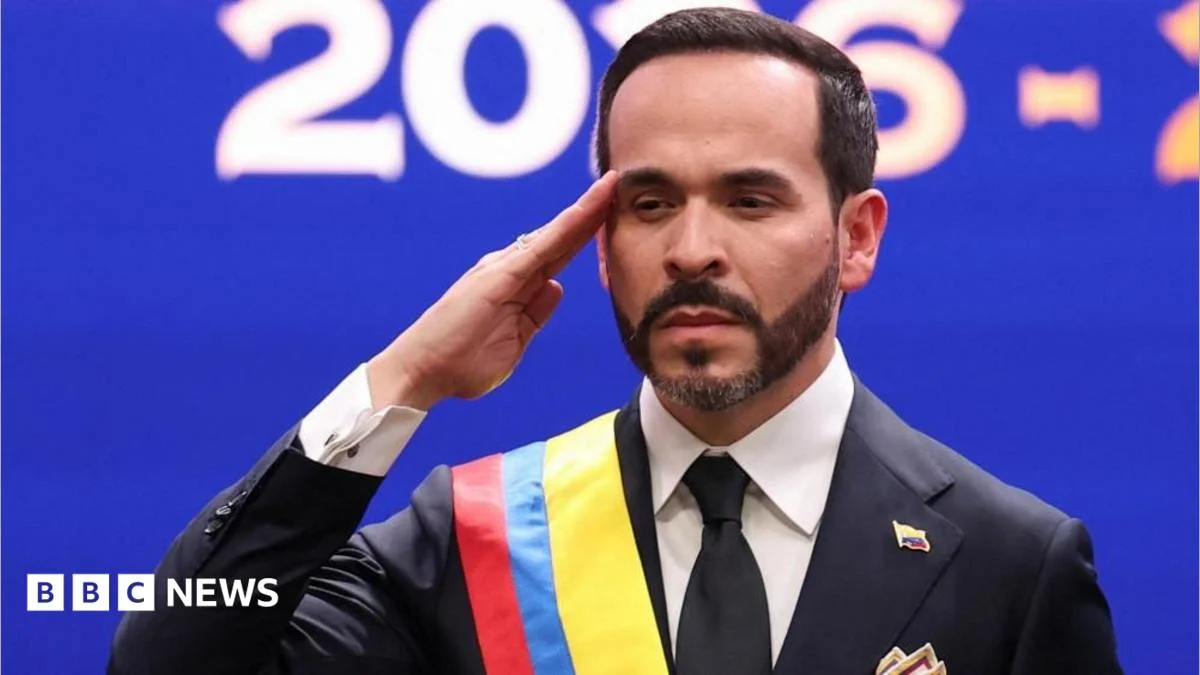
In a significant geopolitical realignment, the United States has committed a substantial $1 billion aid package to Colombia, a move that underscores a broader shift in Latin American political landscapes and a renewed focus on security cooperation under the new administration of right-wing populist President Abelardo de la Espriella. The pledge, announced mere hours after de la Espriella’s inauguration, signals a stark departure from the policies of his predecessor and aligns Colombia more closely with the security and immigration priorities championed by the Trump administration.
President de la Espriella, a figure who has openly admired Donald Trump and echoed many of his campaign rhetoric and policy stances, used his maiden speech to declare an "all-out war" on the nation’s entrenched drug cartels. This aggressive stance, promising an "iron fist" against criminal elements, directly contrasts with the "total peace" strategy pursued by former President Gustavo Petro. Petro’s approach prioritized negotiation and incentivizing farmers to abandon coca cultivation as a means to quell the country’s protracted internal armed conflict. However, critics argue that Petro’s methods proved insufficient, citing the recent expansion of armed group membership and a brutal conflict along the Colombia-Venezuela border that displaced tens of thousands last year.
The US State Department, in its statement regarding the security package, articulated that this financial assistance would empower de la Espriella to achieve "our shared goals," explicitly naming the fight against organized crime and illegal immigration. These are precisely the issues that Donald Trump repeatedly criticized Petro’s administration for mishandling, linking them to the flow of drugs and undocumented migrants into the United States. Trump, who had previously endorsed de la Espriella, predicting a "much better relationship" with Colombia after his election, views the new president as a crucial ally in his broader regional strategy.
De la Espriella, a lawyer and businessman by profession, has cultivated an image as a maverick outsider determined to restore order and security to Colombia. His fiery inaugural address, delivered to troops at a nearby military base, was a clear declaration of intent. He vowed to crush armed insurgents, rebuild the nation, and defend democracy "by reason or by force." The president invoked his self-styled nickname, "the Tiger," to signify a new era of forceful and decisive state action against crime. "There will not be a single place in our territory where criminals can feel safe," he declared, a sentiment that resonates with similar hardline approaches adopted by right-wing populist leaders such as Nayib Bukele in El Salvador and Daniel Noboa in Ecuador.
The $1 billion US aid package is expected to bolster Colombia’s military and law enforcement capabilities, enabling more aggressive counter-narcotics operations and enhanced border security measures. This increased US investment in Colombia’s security apparatus reflects a broader trend across Latin America, where several nations are experiencing a political pendulum swing towards the right. This shift is largely attributed to prevailing economic hardships, widespread concerns about escalating gang violence, and a growing public appetite for strong leadership that promises swift solutions to complex societal problems.
Donald Trump has notably intensified his engagement with Latin America during his second term, actively cultivating relationships with leaders who align with his political ideology while distancing himself from those he deems ideologically opposed. This strategic courtship aims to solidify US influence in a region historically characterized by its complex political dynamics and varying degrees of reliance on external powers. De la Espriella’s willingness to embrace US security initiatives, including joining the "Shield of the Americas" security partnership founded by Trump, is a testament to this aligned geopolitical vision.
The US State Department lauded de la Espriella’s "pro-growth agenda," suggesting it creates an opportune environment to "increase trade and deepen economic ties between our countries." This statement hints at a potential recalibration of economic relations, moving away from the more critical stance the US often took towards Petro’s administration. The renewed emphasis on economic partnership, coupled with the security cooperation, positions Colombia to become a key player in a US-centric regional bloc, mirroring the approach taken with other right-wing governments in the region.
Argentina, under its libertarian President Javier Milei, whom de la Espriella has openly admired, serves as a prime example of this evolving relationship. Argentina recently received a significant $20 billion bailout from the US Treasury, with Trump suggesting that US support would be contingent on the nation maintaining its right-leaning trajectory. Conversely, Trump has consistently threatened to impose similar sanctions and punitive measures on Cuba’s communist government as those imposed on Venezuela’s Nicolás Maduro, signaling a clear ideological divide in his regional foreign policy.
The rise of leaders like de la Espriella and Keiko Fujimori in Peru signifies a diminishing number of left-wing political allies for figures such as Brazil’s Luiz Inácio Lula da Silva. This consolidation of right-wing governments in the region presents a distinct geopolitical landscape, one that is more amenable to the foreign policy objectives of the Trump administration. Lula da Silva, however, will face his own challenges in the upcoming October elections, potentially contending with Flávio Bolsonaro, the son of former President Jair Bolsonaro, a far-right populist with close ties to Trump.
De la Espriella’s foreign policy agenda also includes a strong military alliance with the United States and Israel. This stance stands in stark contrast to Petro’s, who had severed ties with the Israeli government over its actions in Gaza and was a vocal advocate for the Palestinian cause. This shift in diplomatic alignment further solidifies Colombia’s repositioning on the global stage and its embrace of a more assertive, security-focused foreign policy.
The former President Gustavo Petro had been a vocal critic of Trump’s influence in Latin America, particularly the US administration’s actions against Venezuela’s socialist President Nicolás Maduro and his wife, Cilia Flores, who were indicted on drug charges in the US. Petro had also argued against Colombia becoming a "vassal" of the United States, a sentiment echoed by his chosen successor, Iván Cepeda. The current administration’s embrace of US security and economic initiatives suggests a significant departure from this more independent and critical stance towards US regional policy.
The economic implications of this $1 billion pledge are substantial for Colombia, a nation that has grappled with persistent economic challenges, including inflation and poverty, exacerbated by years of internal conflict and drug trafficking. The aid is expected to be channeled into upgrading military equipment, enhancing intelligence gathering capabilities, training security forces, and supporting programs aimed at disrupting illicit economies. This injection of capital, coupled with potential increases in trade and investment driven by closer economic ties with the US, could provide a much-needed boost to Colombia’s economy.
However, the focus on a hardline security approach also raises questions about its long-term effectiveness and potential human rights implications. Critics of similar strategies implemented in other Latin American countries have pointed to increased prison populations, potential for abuses of power, and the risk of alienating communities that may feel targeted rather than protected. The success of de la Espriella’s "iron fist" policy will likely depend on its ability to balance robust law enforcement with comprehensive social and economic development initiatives that address the root causes of crime and instability.
The geopolitical implications of this alliance are also far-reaching. The strengthening of US ties with Colombia, a strategically important nation in South America, could influence regional dynamics and potentially create a more unified front against perceived threats, such as organized crime, drug trafficking, and left-wing political movements. The "Shield of the Americas" initiative, if it gains broader traction, could represent a significant expansion of US security influence in the hemisphere.
In conclusion, the $1 billion US pledge to Colombia under President Abelardo de la Espriella marks a pivotal moment, signaling a significant shift in both domestic and foreign policy for the South American nation. It reflects a broader regional trend towards right-wing populism and a renewed alignment with US security and economic interests. While the promise of increased security and economic prosperity is appealing, the long-term success of this new direction will hinge on the de la Espriella administration’s ability to navigate complex challenges, foster sustainable development, and uphold democratic principles while waging its promised "all-out war" on crime. The coming years will reveal the true impact of this strategic realignment on Colombia and the wider Latin American region.
