
 By Isnaini Azizah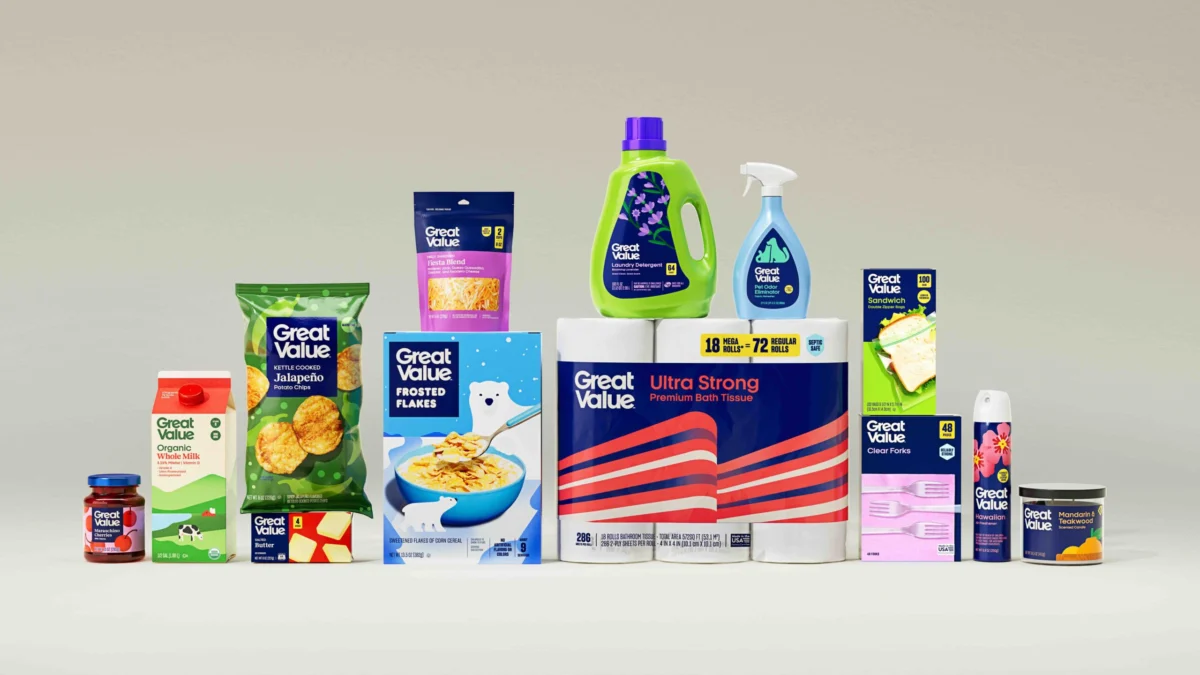
Walmart, the world’s largest retailer and the primary grocery provider for millions of Americans, has announced a comprehensive brand refresh for its crown jewel of private labels: Great Value. Beginning in May, the retail giant will initiate a massive rollout of updated packaging across its staggering portfolio of approximately 10,000 items. This move represents the first significant aesthetic transformation for the brand in over a decade, signaling a pivotal shift in how the company intends to compete in an increasingly crowded and sophisticated grocery landscape. From the LED lightbulbs in the hardware aisle to the gallons of milk and frozen chicken nuggets in the refrigerated sections, the familiar blue-and-white motifs that have defined Great Value since its last update are being phased out in favor of a more modern, vibrant, and "Instagrammable" aesthetic.
The timing of this overhaul is far from coincidental. While the products inside the boxes and the prices on the tags will remain unchanged, the visual language of the brand is being recalibrated to meet the evolving expectations of the American consumer. Walmart’s leadership, including Scott Morris, senior vice president of private brands for Walmart U.S., has indicated that the rollout will be a marathon rather than a sprint. Initial waves of the new packaging will debut in the snack, cereal, cream cheese, and sour cream categories, with the complete transition expected to span 18 to 24 months. This measured approach reflects the sheer logistical complexity of updating a brand that boasts higher household penetration than any other store-owned label in the United States. According to data from market researcher Numerator, an incredible 87% of U.S. households purchased at least one Great Value item in the past year. Furthermore, Walmart’s dominance in the private label sector is absolute; the firm notes that all of the top five private label brands by household penetration in the country belong to the Bentonville-based retailer.
Despite this market dominance, Walmart’s decision to refresh Great Value is an offensive maneuver designed to protect its territory from a new generation of competitors. The private label sector, once relegated to the status of "generic" or "budget" alternatives, has undergone a radical transformation. Today, retailers like Costco, with its Kirkland Signature line, and Trader Joe’s have built cult-like followings by offering high-quality products that often outperform national brands in taste tests and consumer loyalty. Meanwhile, Amazon’s grocery ventures have seen meteoric growth, with its in-house brands becoming the fastest-growing private labels by unit volume since late 2023. European discounters like Aldi are also exerting pressure, expanding their U.S. footprint with plans to open more than 180 new stores this year alone. Aldi’s model, which relies almost exclusively on private labels, has forced traditional grocers to reconsider the visual and perceived value of their own store brands.
The psychological component of this refresh was a primary driver for Walmart’s creative team. David Hartman, vice president of creative at Walmart, revealed in an interview with CNBC that extensive customer research highlighted a disconnect between product quality and brand presentation. While shoppers expressed high levels of satisfaction with the taste and efficacy of Great Value products, many admitted to a sense of "compromise." There was a lingering stigma associated with the brand’s appearance—a feeling that the packaging looked "cheap" or "utilitarian." Hartman noted that customers didn’t necessarily feel proud to display these items in their homes or serve them to guests. The new design aims to eliminate this "badge of shame" by utilizing crisper typography, bolder colors, and more appetizing food photography. The goal is to create a brand that feels like a choice rather than a concession.
Beyond the aesthetics of the kitchen pantry, the refresh serves a critical functional purpose in the era of omnichannel retail. As more consumers migrate to the Walmart app and website for their grocery needs, packaging must be "thumb-stopping" and easily identifiable on small mobile screens. The more modern and colorful design is intended to make products pop in digital galleries, helping busy shoppers find exactly what they need with minimal friction. This efficiency extends to the physical store as well, specifically for Walmart’s army of personal shoppers. These employees, who fulfill online orders by picking items directly from store shelves, rely on clear visual cues to maintain the speed and accuracy required for the company’s massive delivery and pickup operations. Morris emphasized that clearer, more concise packaging will directly support these frontline workers, ultimately improving the customer experience through faster order fulfillment.

The Great Value refresh is also a key component of Walmart’s broader strategy to capture and retain high-income shoppers. In recent years, the retailer has seen significant gains among households with annual incomes exceeding $100,000. These wealthier consumers are increasingly turning to Walmart not just for low prices, but for convenience and an improved product assortment. To cater to this demographic, Walmart recently launched "Bettergoods," a more upscale private label featuring chef-driven flavors, plant-based options, and trendy ingredients like hot honey and oat milk. By elevating the look of Great Value, Walmart ensures that its entry-level brand does not look out of place next to its premium offerings, creating a cohesive and attractive "house of brands" that appeals to a wide socio-economic spectrum.
The economic context of the last few years has also played a significant role in the rise of private labels. Persistent inflation has squeezed household budgets, driving many consumers to experiment with store brands for the first time. Once these shoppers realize that the quality of a store-brand cereal or detergent is comparable to the national brand at a 20% to 30% lower price point, they rarely return to their old habits. This "sticky" consumer behavior has helped private labels grow their market share in the U.S. to roughly 20%. While this is still well below the 45% to 50% market share seen in many European countries, experts like Steve Zurek, NielsenIQ’s vice president of advanced analytics, point out that the growth is accelerating. A decade ago, the U.S. share was closer to 15%, suggesting a long-term structural shift in American shopping habits.
Perhaps the most influential factor in the long-term success of brands like Great Value is the changing attitude of younger generations. Gen Z shoppers, in particular, show a marked lack of brand loyalty compared to their parents and grandparents. For these younger consumers, the "stigma" of the store brand has largely evaporated. In many circles, finding a high-quality "dupe" or store-brand alternative is viewed as a sign of savvy shopping—a "badge of honor," as Zurek describes it. This demographic shift is forcing retailers to treat their private labels as brands in their own right, rather than just cheaper copies of national leaders.
Walmart’s investment in the Great Value refresh is a testament to the brand’s importance to the company’s bottom line. As the nation’s largest grocer, Walmart’s scale allows it to negotiate better terms with suppliers and maintain margins that other retailers struggle to match. By modernizing Great Value, Walmart is doubling down on its most powerful tool for customer retention. The move signals to the market that Walmart is no longer content with being the "low-price leader"; it aims to be the "value leader," where value is defined as the intersection of quality, price, and aesthetic appeal.
As the new packaging begins to populate shelves this spring, the retail industry will be watching closely. The success of this transition could set the standard for how large-scale private labels evolve in the mid-2020s. For Walmart, the stakes are high. Great Value is not just a brand; it is a fundamental pillar of the company’s identity and a primary touchpoint for nearly 90% of American homes. By shedding its "utilitarian" skin for a more modern look, Great Value is preparing for a future where the distinction between "store brand" and "national brand" is increasingly irrelevant to the consumer’s heart—and their wallet. The next two years will reveal if a fresh coat of paint can truly transform a household staple into a source of pride for the modern shopper.
