
 By admin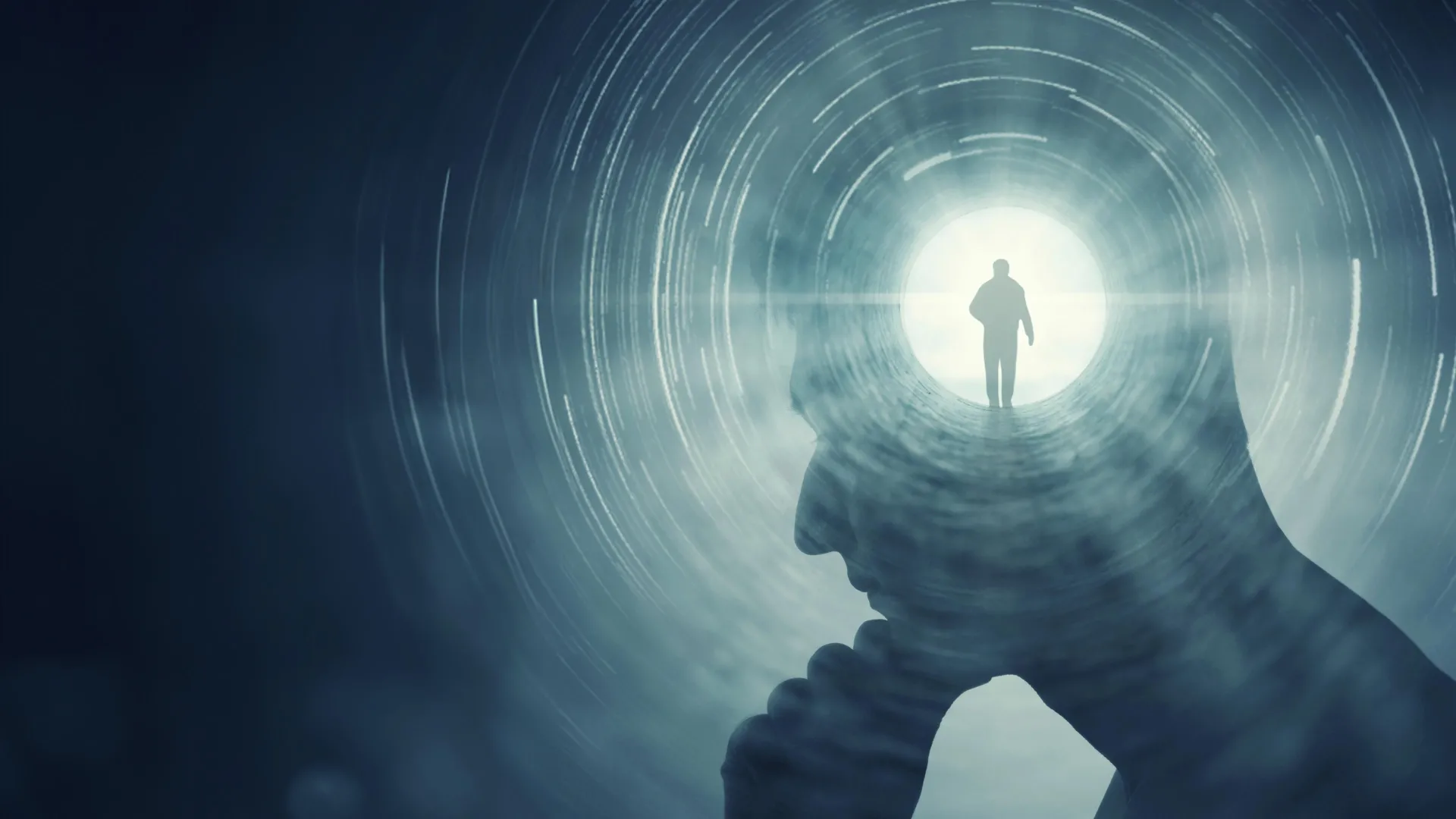
The mystery of consciousness extends far beyond merely understanding how neurons process information or how brain regions coordinate to perform cognitive tasks. While neuroscientists can meticulously map which parts of the brain become active when an individual perceives an object, registers pain, retrieves a memory, or makes a complex decision, they still grapple with explaining why these intricate physical processes are invariably accompanied by an inner, felt experience. This gap represents a chasm between the objective, observable world of brain activity and the subjective, unobservable realm of conscious awareness. Researchers are adept at studying the brain’s computational and physiological operations – the "what" and "how" of its functioning – but the transformative leap from electrochemical signals to the vivid, personal feeling of being aware, of "being me," continues to baffle even the most brilliant minds. It’s the difference between knowing the ingredients and recipe of a dish, and understanding the subjective taste of it.
The "Hard Problem" of Consciousness and Materialism’s Limits
Koch’s presentation critically examined the limitations inherent in materialism, the dominant scientific worldview that posits everything in existence can ultimately be explained solely through matter, energy, and the fundamental physical laws governing them. Materialism has been incredibly successful, forming the bedrock of modern physics, chemistry, and biology, allowing us to understand the universe from subatomic particles to galaxies. Within neuroscience, this perspective has fueled unprecedented progress, identifying specific brain regions, neural networks, and biochemical pathways associated with various aspects of awareness, cognition, and emotion. We know, for instance, that damage to the hippocampus impairs memory formation, and activity in the visual cortex correlates with seeing.
However, even with these profound insights, neuroscience has not, according to Koch and many philosophers, solved what is famously dubbed the "hard problem" of consciousness. Coined by philosopher David Chalmers in 1995, this term refers to the profound difficulty of explaining how electrical and chemical activity in the brain gives rise to subjective experience – the very sensations, emotions, thoughts, and the overarching personal feeling of being alive. Unlike the "easy problems" of consciousness, which involve explaining cognitive functions like discrimination, integration of information, or verbal reporting (all of which can potentially be addressed by studying neural mechanisms), the hard problem asks why there should be any subjective experience at all. A detailed brain scan might reveal the precise neural firing patterns and chemical cascades that occur when someone sees the color red, for example, but it fundamentally cannot reveal why seeing red feels like anything at all – why it has that specific, ineffable qualitative character, or "qualia." The objective measurement never seems to bridge the gap to the subjective feeling.
Experiences Science Still Struggles to Explain
In his quest to push the boundaries of scientific understanding, Koch articulated three major areas of uncertainty that he believes warrant deeper investigation. The first, as discussed, is the formidable challenge of reducing conscious experience entirely to physical processes within the brain. This is the crux of the hard problem, questioning whether our current scientific tools and conceptual frameworks are adequate to fully capture the essence of subjective reality.
The second area involves profound questions raised by modern physics about what should fundamentally be considered "real." Quantum mechanics, for instance, challenges classical notions of reality with phenomena like superposition, entanglement, and the observer effect, where the act of observation appears to influence reality itself. While often misinterpreted, these findings hint at a universe far more subtle and interconnected than the macroscopic, deterministic world we typically perceive. Such complexities in the very fabric of reality could imply that our understanding of physical laws might be incomplete when it comes to consciousness, suggesting that consciousness might not merely be an emergent property of matter but could play a more integral role in reality’s fundamental constitution.
The third and perhaps most provocative area concerns unusual human experiences that remain exceedingly difficult to explain using conventional scientific models. These include phenomena such as near-death experiences (NDEs), mystical states, and episodes of terminal lucidity. Near-death experiences, reported by individuals who have been clinically dead or very close to death, often involve striking commonalities: out-of-body sensations, encounters with deceased loved ones, a review of one’s life, feelings of profound peace and love, and visions of intense light. While some scientists attribute NDEs to physiological responses of a dying brain (e.g., oxygen deprivation, endorphin release), the consistency and profound nature of these reports, sometimes occurring when brain activity is thought to be minimal or absent, challenge purely reductionist explanations. Researchers like Dr. Sam Parnia and Dr. Bruce Greyson have extensively documented NDEs, highlighting their often transformative impact on individuals’ lives and the persistent questions they raise about the brain-mind relationship.
Mystical states, often induced through deep meditation, prayer, psychedelic substances, or intense spiritual practices, are characterized by overwhelming feelings of unity with the cosmos, a loss of ego, timelessness, and ineffable insights. These experiences, while subjective, are reported across cultures and throughout history, suggesting a common underlying mechanism or a profound access to deeper layers of reality. They challenge the notion that consciousness is solely confined to the processing of sensory input and rational thought, hinting at broader capacities for awareness.
Perhaps the most perplexing of these phenomena is terminal lucidity. This refers to an unexpected and often dramatic return of mental clarity and memory shortly before death, sometimes observed in individuals who had suffered from severe dementia, Alzheimer’s disease, or other neurological conditions that had left them unable to communicate normally for years. For instance, a patient who has been non-verbal and disoriented for a decade might suddenly engage in coherent conversation, recognize family members, and recall distant memories with startling accuracy just hours or minutes before passing away. From a purely materialist perspective, where consciousness is directly dependent on brain function, such an event appears paradoxical. A severely degenerated brain should, by all accounts, be incapable of producing such organized and complex cognitive function. While rare and difficult to study systematically due to their unpredictable nature, reports of terminal lucidity, meticulously collected by researchers like Michael Nahm, challenge the assumption that consciousness is inextricably tied to the structural integrity of the brain.
Koch emphasizes that such experiences do not necessarily prove that consciousness can exist independently of the brain or that a soul departs the body. However, he argues forcefully that they deserve serious and unbiased scientific investigation. Ignoring them simply because they don’t fit neatly into current scientific models would be a disservice to empirical inquiry. Instead, these anomalies may expose critical gaps in our current understanding of the brain, consciousness, and even the fundamental nature of reality itself, urging scientists to expand their investigative horizons.
Is Consciousness a Fundamental Part of Reality? Reconsidering Philosophical Ideas
In light of these persistent challenges and unexplained phenomena, Koch believes that researchers may need to reconsider long-standing philosophical ideas, such as idealism and panpsychism, while steadfastly continuing to apply rigorous modern scientific methods. This represents a significant shift for a prominent neuroscientist, moving beyond the traditional materialist framework that has dominated scientific thought for centuries.
Idealism, in its broadest sense, proposes that consciousness or mind is not merely a product of matter but is, in fact, central to the fundamental nature of reality. Rather than matter giving rise to mind, mind (or consciousness) is seen as primary, and the physical world as we perceive it is either a manifestation, an appearance, or a construct of consciousness. Historically, figures like George Berkeley argued that "to be is to be perceived," implying that objects only exist insofar as they are perceived by a mind. Immanuel Kant’s transcendental idealism suggested that our experience of the world is shaped by the innate structures of our minds, making objective reality in itself unknowable. While radical to a materialist perspective, idealism offers a direct solution to the hard problem: if consciousness is fundamental, it doesn’t need to be "created" by the brain. The brain, in this view, might be an interface, a receiver, or a localizer of consciousness, rather than its generator.
Panpsychism, another ancient philosophical concept experiencing a modern resurgence, suggests that consciousness is not limited to human beings or even complex animals, but may instead be a fundamental and pervasive property found throughout nature in varying degrees. This isn’t to say that rocks or atoms are conscious in the human sense, but rather that they possess some rudimentary, proto-conscious properties – a basic form of experience or "mind-stuff" that contributes to the emergence of more complex consciousness in more organized systems. Proponents like philosopher Philip Goff argue that panpsychism offers a compelling way to bridge the gap between mind and matter, avoiding the explanatory chasm of materialism and the counter-intuitive nature of idealism. If consciousness is a fundamental property of the universe, like mass or charge, then it doesn’t magically appear once a brain becomes sufficiently complex. Instead, it would be an underlying feature of reality itself, with complex brains merely acting as highly sophisticated integrators and amplifiers of this inherent property, giving rise to our rich, subjective human experience.
Integrated Information Theory Offers a Radical Possibility
Christof Koch is not just a philosophical explorer; he is a leading supporter and collaborator in the development of Integrated Information Theory (IIT), a groundbreaking scientific theory that attempts to describe consciousness mathematically. Developed primarily by neuroscientist Giulio Tononi, with significant contributions from Koch, IIT offers a highly ambitious and radical framework for understanding consciousness.
The core premise of IIT is that subjective experience arises in systems that possess a high degree of "integrated information." This means consciousness depends not only on how much information a system contains (its complexity) but crucially on how deeply its parts are interconnected and causally interdependent, forming a unified whole that is more than the sum of its parts. A system with high integrated information (quantified by the mathematical measure "Phi," Φ) is one where the system as a whole has more information than the sum of the information contained in its independent parts, and where this information cannot be reduced to the activity of its individual components. In essence, it measures the extent to which a system’s current state specifies its past and future states, and how irreducible that specification is.
According to IIT, a system possessing a high degree of Φ would therefore possess some form of subjective experience. This theory posits five phenomenological axioms (existence, composition, information, integration, exclusion) that characterize consciousness, and then attempts to translate these into physical postulates. For example, the "integration" axiom suggests that consciousness is unified and irreducible, while the "information" axiom suggests that consciousness specifies a particular way of being, differentiating it from other possibilities.
This idea has been described as a scientific version of panpsychism because it allows for the possibility that consciousness could exist in systems other than the human brain. If consciousness is linked to integrated information, then any system that exhibits a sufficiently high Φ value could potentially be conscious. This might include certain complex artificial intelligence systems, sophisticated computer networks, or even, in its most radical interpretation, very simple biological systems or fundamental particles, though the Φ value for these would likely be minuscule. IIT provides a specific, albeit complex, mathematical framework for determining the presence and degree of consciousness, making it a powerful, albeit highly debated, contender in the scientific study of consciousness. Critics often question the measurability of Φ in real-world systems, the theory’s falsifiability, and whether it truly explains the qualitative aspect of experience (qualia) rather than just its structural properties.
Searching for Awareness in Unresponsive Patients: From Theory to Practice
Beyond his theoretical and philosophical explorations, Christof Koch is also a researcher at the Allen Institute for Brain Science and previously served as a distinguished professor at MIT and Caltech, working closely with Nobel laureate Francis Crick on the "neural correlates of consciousness" (NCCs). This practical, empirical work demonstrates his commitment to advancing our understanding of consciousness through rigorous scientific investigation.
His work has included the development of innovative approaches for detecting possible signs of awareness in patients who appear unresponsive. Conditions like the vegetative state (VS) or minimally conscious state (MCS) pose immense diagnostic and ethical challenges. While some patients in these states might exhibit rudimentary reflexes or appear awake (eyes open), they are often thought to lack conscious awareness or the ability to communicate meaningfully. However, groundbreaking research, notably by Adrian Owen and his team, has demonstrated that some of these patients may retain conscious brain activity despite their outward unresponsiveness. Using functional magnetic resonance imaging (fMRI) or electroencephalography (EEG), researchers can ask patients to imagine performing certain actions (e.g., playing tennis, walking through their house) and observe corresponding, distinct patterns of brain activity that are indistinguishable from those of healthy conscious individuals performing the same mental tasks.
Koch’s involvement in developing and refining these reliable detection methods is profoundly important. Accurate diagnosis can significantly impact treatment decisions, end-of-life care planning, and even the emotional well-being of families. Identifying hidden awareness in these patients grants them a measure of dignity and opens avenues for potential communication, even if rudimentary. This clinical work underscores the critical need to understand consciousness not just as an abstract philosophical problem, but as a tangible aspect of human experience with immense practical implications for medicine and ethics.
By meticulously examining the limits of materialism, fearlessly confronting the unanswered questions of neuroscience, and giving serious consideration to experiences that remain difficult to classify, Christof Koch is not merely asking how the brain works. He is profoundly questioning what the brain truly is in relation to consciousness – whether it unequivocally creates it, or if it may instead be an organ designed to interact with, filter, or localize something more fundamental, a deeper feature of reality itself. His multifaceted approach, blending cutting-edge neuroscience with speculative philosophy and rigorous clinical application, exemplifies the ongoing, courageous human endeavor to unravel the ultimate mystery of existence: the nature of consciousness.
