
 By Rifan Muazin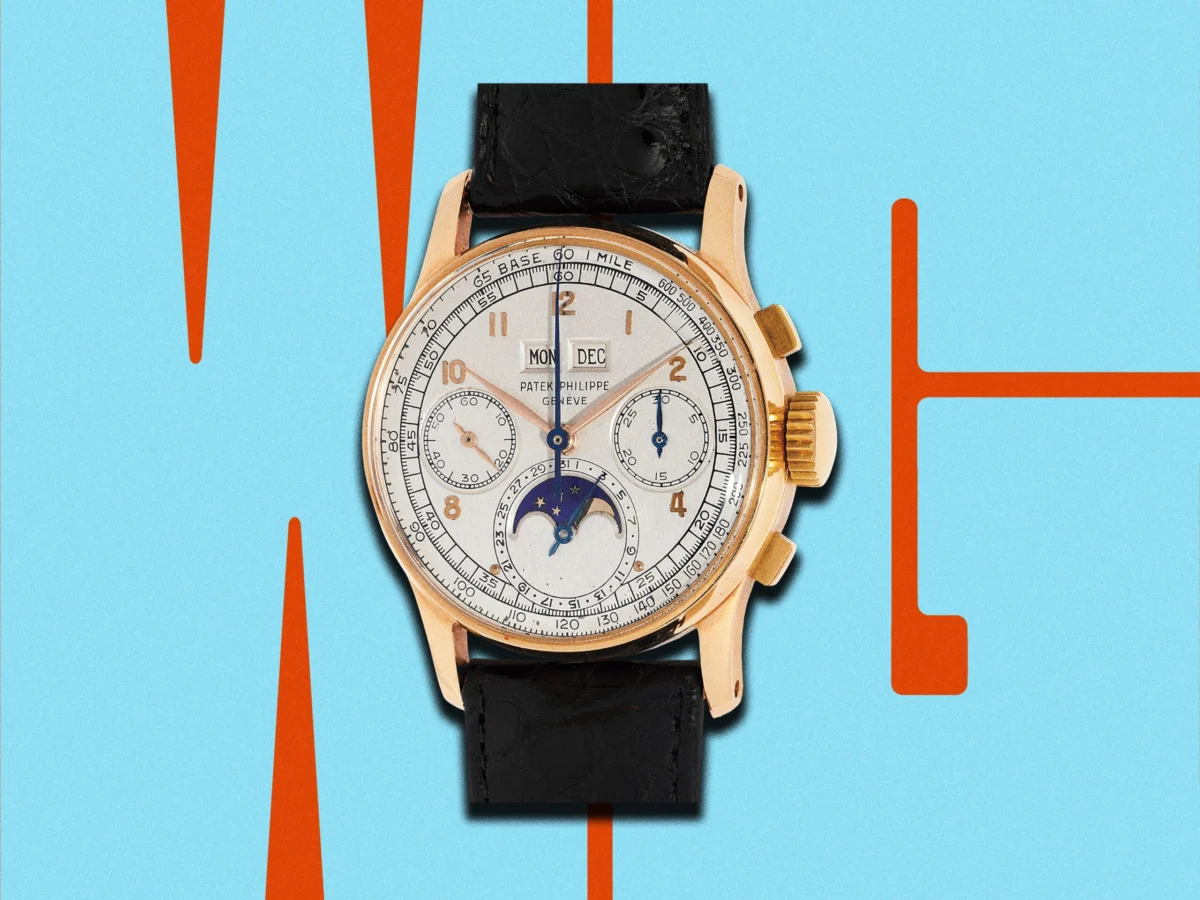
The Reference 1518, launched in 1941, was a masterstroke of mechanical engineering and miniaturization. At its core, a perpetual calendar is a mechanical "computer" designed to track the date, day, month, and moon phase while accounting for the varying lengths of months and the quadrennial occurrence of leap years. To combine this with a chronograph—a stopwatch mechanism that requires significant energy and space—within a 35mm case was a feat of Katie Ledecky-style dominance in the field of micro-mechanics. During this period, the Swiss watch industry operated under the "établissage" system. Unlike the modern obsession with "in-house" movements, the 20th-century tradition saw even the most prestigious firms like Patek Philippe, Vacheron Constantin, and Cartier sourcing base movements, or "ébauches," from specialized manufacturers. For the 1518, Patek Philippe utilized the Valjoux 13”’130 Q, a base movement which they then meticulously modified, finished, and regulated to their exacting standards. Only 281 examples of the 1518 were produced until 1954, mostly in yellow gold, with a smaller number in pink gold. However, the four known examples in stainless steel represent the ultimate "holy grail" for collectors; one such steel model commanded a price of over $11 million at auction, illustrating the astronomical demand for these early pioneers.

As the 1950s dawned, Patek Philippe sought to refine the aesthetic established by the 1518, leading to the birth of the Reference 2499 in 1950. While the 1518 was the breakthrough, many scholars and collectors view the 2499 as the pinnacle of Patek’s design language. Produced over a 35-year span, the 2499 increased the case diameter to a more contemporary 37.5mm, providing a more balanced canvas for the complex dial. The production of the 2499 is traditionally categorized into four distinct series, each reflecting subtle shifts in mid-century design. The first series featured square chronograph pushers and applied Arabic numerals, echoing the 1518. The second series transitioned to round pushers, while the third and fourth series saw the removal of the tachymeter scale and the introduction of baton hour markers and sapphire crystals. Despite its long production run, the rarity of the 2499 is staggering; only 349 pieces were ever made, averaging fewer than ten watches per year. This scarcity, combined with its flawless proportions, has made the 2499 a permanent fixture at the top of the auction market, with rare "Asprey" signed versions or platinum editions fetching multi-million dollar sums.
The mid-1970s and early 1980s brought the "Quartz Crisis," a period of existential dread for the Swiss mechanical watch industry as inexpensive, highly accurate Japanese quartz watches flooded the market. While many historic brands shuttered or pivoted to battery power, Patek Philippe doubled down on mechanical tradition. In 1986, they replaced the 2499 with the Reference 3970. This model marked a significant technical shift: Patek moved away from the Valjoux base in favor of a heavily modified Lemania 2310 ébauche, designated as the Caliber CH 27-70 Q. The 3970 was slightly smaller than its predecessor at 36mm, a move that reflected the classicist tastes of the era. However, it introduced more information to the dial, including a leap year indicator and a 24-hour day/night display. Because the 3970 was produced in roughly 4,000 units over nearly two decades, it remains one of the more "accessible" entry points into this specific Patek Philippe complication lineage, though "accessible" in this context still refers to six-figure price tags.
.jpg)
The turn of the millennium saw a shift in global fashion toward larger, more "wrist-present" timepieces. Patek Philippe responded in 2004 with the Reference 5970. Though it retained the Lemania-based movement of the 3970, the 5970 was a radical aesthetic departure, featuring a 40mm case with flared lugs and a return to the tachymeter scale. This model is often cited by modern enthusiasts as the "perfect" Patek Philippe, bridging the gap between vintage charm and modern wearability. It was the final perpetual calendar chronograph from the brand to use an external ébauche, making it a transitional piece of history. With a production life of only seven years and approximately 2,800 examples, the 5970 has seen a rapid appreciation in value, particularly in the rare platinum or "end-of-series" configurations.
The most significant turning point in the modern era occurred in 2011 with the release of the Reference 5270. This model signaled Patek Philippe’s full independence from external movement suppliers for this complication, featuring the entirely in-house Caliber CH 29-535 PS Q. The transition to an in-house movement was not merely a matter of pride; it allowed Patek’s engineers to implement several patented innovations, including optimized tooth profiles for the gears and improved synchronization between the chronograph and the calendar. The 5270 grew slightly to 41mm and introduced a cleaner, more technical dial layout, including small circular apertures for the day/night and leap year indicators. The 5270 has seen several "series" or dial variations, including the controversial "double chin" tachymeter of the second series and the more refined, classic layouts of the current production. Today, the 5270 is available in various metals, including a striking platinum version with a green lacquered dial or "Grand Complication" versions adorned with baguette-cut rubies or diamonds.
.jpg)
The cultural impact of these watches extends far beyond the quiet rooms of Swiss ateliers or the high-stakes podiums of Geneva auctions. The Patek Philippe perpetual calendar chronograph has become a symbol of ultimate success among the world’s elite. Musicians like John Mayer, who is a noted horological scholar, and Jay-Z have been spotted with various iterations, from the vintage 2499 to the modern 5270. Actors like Sylvester Stallone and Kevin Hart have also cemented the watch’s status as a staple of the "heavy hitter" collection. This celebrity endorsement is not merely about flash; it reflects an appreciation for a machine that can track the celestial dance of the moon and the intricacies of the Gregorian calendar for centuries without intervention, provided it is kept wound.
While other "Holy Trinity" manufacturers like Audemars Piguet and Vacheron Constantin, as well as German powerhouses like A. Lange & Söhne, produce exceptional perpetual calendar chronographs, Patek Philippe remains the definitive authority in the category. This is due to their "first-mover" advantage and their refusal to compromise on the architecture of the complication. Even as they moved to in-house production, they maintained the traditional horizontal clutch and column-wheel architecture that collectors prize for its tactile feel and visual beauty. The lineage from the 1518 to the 5270 is a 80-plus-year thread of continuity, representing a commitment to mechanical excellence that survived the quartz revolution and continues to thrive in the digital age. For the serious collector, these watches are more than just tools for telling time; they are historical documents, mechanical sculptures, and the ultimate expression of what is possible when human ingenuity meets the relentless march of time. Whether it is the wartime innovation of the 1518 or the in-house precision of the 5270, the Patek Philippe perpetual calendar chronograph remains the yardstick by which all other high-complication watches are measured.
