
 By admin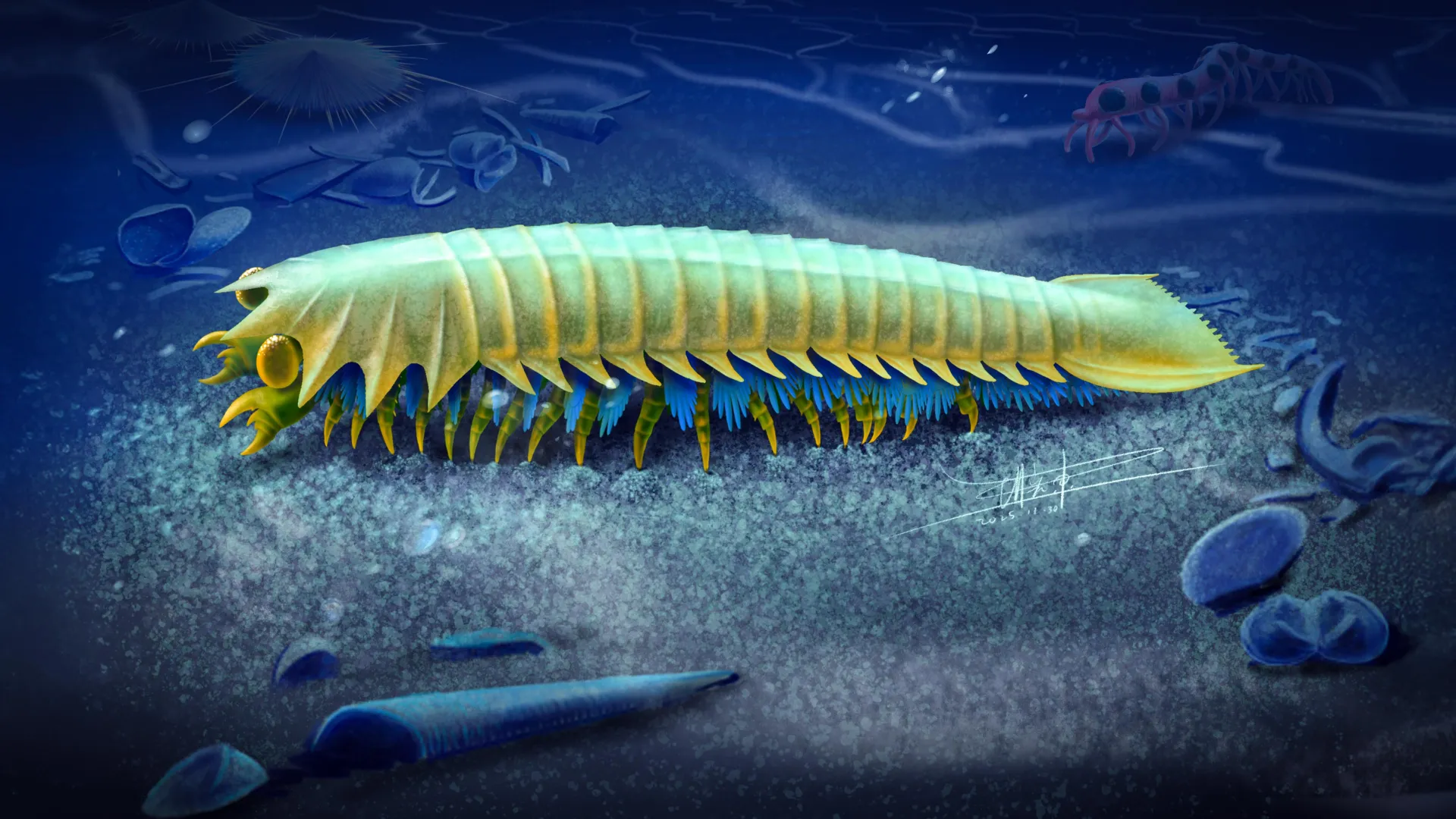
Whether invoked to inspire fear in horror films like Arachnophobia or to grant superpowers to fictional heroes like Spider-Man, the fang is arguably the most recognizable and defining feature of spiders. These formidable appendages are not merely tools for injecting venom but are central to a spider’s ability to capture prey, defend itself, and even play a role in mating rituals. Their evolutionary story, however, extends far beyond the appearance of modern spiders, weaving a complex narrative through the ancient oceans of the Cambrian Period. This new study, recently published in the prestigious journal Nature, meticulously traces the deep evolutionary roots of this powerful hunting instrument to Urokodia, a diminutive marine creature that inhabited the Earth’s oceans during the early Cambrian, a period often referred to as the "Cambrian Explosion" due to its unparalleled burst of biological diversification.
The Ancient Origins of Chelicerate Appendages
Spiders are members of a vast and incredibly successful group of invertebrates known as chelicerates. This diverse subphylum of arthropods also encompasses other familiar creatures such as scorpions, ticks, mites, and horseshoe crabs, collectively accounting for well over 100,000 described species across a multitude of ecological niches. Chelicerates are distinguished by several key morphological features: they possess jointed limbs, a hard external exoskeleton that provides both protection and structural support, and, most notably, a pair of specialized anterior appendages called chelicerae. These chelicerae, positioned near the front of the body, are the defining characteristic of the group and exhibit remarkable functional diversity. Depending on the species and its specific predatory strategy, chelicerae can manifest as robust pincers for grasping and tearing, sharp piercing structures for injecting venom, or stout stabbing implements for subduing prey. The discovery of Urokodia‘s ancient chelicerae offers a crucial window into the initial evolutionary stages of these versatile structures.
The exceptionally preserved fossils of Urokodia were unearthed at the world-renowned Chengjiang fossil site in Yunnan Province, located in southern China. This site is celebrated globally for its extraordinary Lagerstätte – a sedimentary deposit that preserves soft-bodied organisms with exceptional detail, providing an unparalleled snapshot of early animal life. The significance of this discovery was further underscored by the fact that the study’s publication coincided with the 42nd anniversary of the Chengjiang site’s initial discovery, a testament to its enduring scientific importance and the continuous stream of revelations it provides about the dawn of animal life on Earth. The Chengjiang Biota is comparable in scientific value to the famous Burgess Shale in Canada, offering a unique glimpse into the diverse and complex marine ecosystems that flourished during the Cambrian Explosion, a pivotal period approximately 541 to 485 million years ago when most major animal phyla first appeared in the fossil record.
Urokodia itself was a modest creature, measuring only a mere 2 to 3 centimeters in length, making it a relatively small inhabitant of the ancient Cambrian seas. Its morphology was quite distinct from its much later descendants. It featured prominent eyes, which notably extended from stalks at the very front of its body, suggesting a keen visual sense perhaps adapted for detecting prey or predators in its environment. Its body was characterized by a segmented skeleton, a common trait among arthropods, and it possessed a series of jointed limbs attached beneath its relatively narrow frame. Superficially, its appearance bears little obvious resemblance to the more familiar and often fearsome spiders and scorpions that would eventually descend from its broader evolutionary lineage. This stark morphological difference highlights the immense evolutionary journey and diversification that occurred over hundreds of millions of years, transforming simple marine arthropods into the highly specialized terrestrial predators we recognize today. Studying Urokodia helps bridge the vast morphological gap between these early forms and their modern relatives, illustrating the gradual evolutionary modifications that led to the diverse array of chelicerate body plans.
Advanced Imaging Reveals Preserved Soft Anatomy
The groundbreaking insights into Urokodia‘s internal structures and soft anatomy were made possible through the application of cutting-edge imaging technology. Researchers from Yunnan University, China, in collaboration with scientists from the University of Leicester in the United Kingdom, employed high-resolution X-ray tomography to meticulously examine the rock matrix encasing the delicate fossil. This non-invasive technique allowed the team to peer inside the opaque rock without causing any damage to the invaluable specimen. The resulting scans revealed an astonishing level of preservation: much of the animal’s soft anatomy, including delicate internal structures that rarely survive the fossilization process, had remained remarkably preserved in a mummified state for hundreds of millions of years. This exceptional preservation is a hallmark of Lagerstätte sites like Chengjiang and is absolutely critical for understanding the evolutionary history of soft-bodied organisms and their appendages.
Most importantly, the detailed X-ray analyses unveiled the presence of two distinct pincer-like appendages, strategically positioned just behind the creature’s prominent stalked eyes. These structures represent what scientists have identified as an early, primitive form of chelicerae. This discovery provides compelling and direct fossil evidence of the evolutionary beginnings of the specialized pincers and fangs that are characteristic of all chelicerates today. The Urokodia chelicerae, while simpler than the highly evolved fangs of modern spiders, clearly demonstrate the foundational morphological plan from which the diverse array of chelicerate mouthparts would later diversify. This finding supports the hypothesis that chelicerae evolved from a pair of anterior-most appendages in a common arthropod ancestor, undergoing specialization over eons to perform highly specific functions related to feeding and defense.
Beyond the revelation of its nascent chelicerae, the Urokodia fossil also preserved other significant anatomical features. Remarkably, the X-ray scans revealed structures on Urokodia‘s legs that bore a striking resemblance to book gills. These leaf-like, folded structures are highly efficient respiratory organs, perfectly adapted for extracting oxygen from water. Their presence in Urokodia strongly suggests that the animal was fully aquatic, relying on these gills to breathe underwater. The preservation of book gills in such an ancient fossil provides a crucial link to extant aquatic chelicerates, most notably horseshoe crabs. These "living fossils" have maintained a remarkably similar body plan for hundreds of millions of years and still possess functionally identical book gills, offering a direct evolutionary connection and reinforcing the deep antiquity of this respiratory adaptation within the chelicerate lineage. The transition from aquatic book gills to terrestrial book lungs in land-dwelling chelicerates like spiders represents another fascinating chapter in their evolutionary journey, allowing them to conquer terrestrial environments.
A Successful Lineage of Apex Hunters
The chelicerates, having emerged from these early Cambrian forms like Urokodia, have proven to be one of the most remarkably successful and adaptable animal groups throughout Earth’s history. They have diversified extensively, colonizing virtually every known marine and terrestrial environment. Their evolutionary success is partly attributed to their versatile chelicerae and robust exoskeletons, which have allowed them to thrive in various ecological roles. Those chelicerates that eventually made the momentous transition from aquatic to terrestrial life evolved into exceptionally effective predators, shaping ecosystems for hundreds of millions of years. Fossil evidence unequivocally demonstrates that their ancestors, even in their primitive forms, had already been engaged in predatory behaviors for vast stretches of geological time, refining their hunting strategies and anatomical adaptations.
The evolution of sophisticated predatory tools like fangs and venom delivery systems in spiders is a prime example of an evolutionary arms race. Over millions of years, spiders and their prey have co-evolved, with each developing increasingly complex defenses or offensive capabilities. Spider venom, for instance, is a highly specialized cocktail of neurotoxins, enzymes, and other compounds, precisely engineered to rapidly subdue prey that is often many times smaller and weaker than the spider itself. Despite the often-frightening portrayal of spiders in popular culture, such as the dramatic depictions in movies, the vast majority of the world’s approximately 50,000 known spider species pose absolutely no danger to humans. Their venom and bite mechanisms have evolved through natural selection to incapacitate insects and other small invertebrates, not to harm large mammals like people. The rare instances of medically significant spider bites are usually accidental and represent a misdirection of a highly specialized predatory tool. Indeed, spiders play an indispensable role in ecosystems worldwide, acting as crucial natural pest controllers and contributing significantly to biodiversity.
The pivotal research that brought Urokodia‘s secrets to light was spearheaded by Professor Yu Liu of Yunnan University, who also holds a Visiting Professorship at the University of Leicester, highlighting the international collaborative nature of modern paleontological research. Professor Liu vividly recounted the moment of discovery: "We were using X-ray tomography analysis of these fossils to reveal their soft anatomy buried in the rocks for hundreds of millions of years, when suddenly we noticed the pincer-like limbs at the front of the animal. We knew immediately that this was a very exciting fossil and indeed a distant ancestor of living chelicerates like scorpions and spiders." This "aha!" moment underscores the thrill of scientific discovery and the power of advanced imaging techniques to unlock secrets hidden within ancient stones. The clarity provided by the X-rays allowed the team to definitively identify the structures as homologous to later chelicerae, solidifying Urokodia‘s place in the chelicerate family tree.
A Window Into the Dawn of Animal Life
The existence of Urokodia within the rich marine ecosystem of the Chengjiang Biota places it at a crucial juncture in the history of animal evolution. The Cambrian Period was a time of unprecedented biological innovation, often referred to as the "Cambrian Explosion" due to the rapid diversification of complex multicellular life forms. The Chengjiang fossils are an invaluable resource, preserving detailed evidence of more than 200 distinct types of animals that inhabited the bustling oceans over 500 million years ago. These organisms represent some of the earliest complex animal body plans, many of which laid the groundwork for the major animal phyla we see today.
Co-author Professor Mark Williams from the University of Leicester’s School of Geography, Geology and the Environment emphasized the broader significance of the discovery: " Urokodia was part of an ancient ecosystem of over 200 different types of animals living in the seas over 500 million years ago. These spectacularly preserved fossils provide real insights into how life was evolving on our planet at the very dawn of animals." This research not only illuminates the specific evolutionary path of spider fangs but also contributes to our understanding of how complex ecological communities assembled during the Cambrian, revealing the intricate food webs and interspecies relationships that characterized these primordial oceans. The study of Urokodia helps us piece together the puzzle of early arthropod evolution, shedding light on the origins of segmented bodies, jointed appendages, and specialized feeding structures that define this incredibly successful group.
This significant study was made possible through the generous support of a grant from the Department of Science and Technology of Yunnan Province (202401BC070012) awarded to Professor Yu Liu, who further benefits from funding provided by the Yunnan Revitalization Talent Support Program. Such financial backing is critical for enabling the meticulous fieldwork, advanced laboratory analyses, and international collaborations that underpin such transformative paleontological discoveries. The unearthing of Urokodia serves as a powerful reminder of the enduring scientific value of sites like Chengjiang and the continuous potential for new revelations about the deep history of life on Earth, forever altering our perception of the humble beginnings of some of nature’s most sophisticated predators. This discovery fundamentally reshapes our understanding of the evolutionary timeline of spider fangs, pushing their origins back into the earliest chapters of complex animal life and underscoring the ancient lineage of one of the planet’s most formidable hunting tools.
