
 By Lina Irawan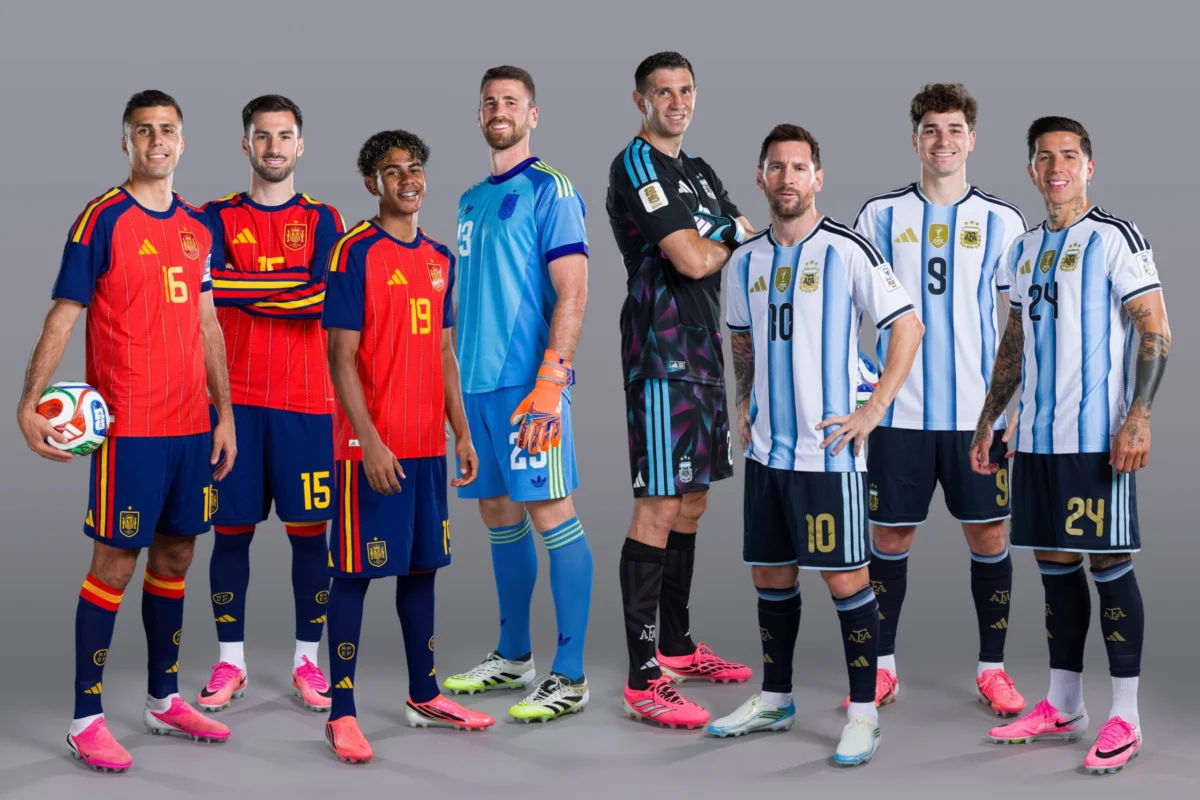
The sheer scale of financial activity surrounding this World Cup is staggering. According to comprehensive data released by Kalshi, a U.S. Commodity Futures Trading Commission (CFTC)-regulated prediction market, the contract specifically tied to the outcome of the Argentina-Spain final has already surpassed an astonishing $1.27 billion in trading volume. This particular market went live on Wednesday, immediately following Argentina’s thrilling victory over England in the semi-finals, and within a mere two days, it had eclipsed all prior records. As of mid-day Friday, market sentiment on Kalshi heavily favored the Spanish team, with their odds of prevailing over Lionel Messi’s formidable squad standing at a robust 61%. This real-time reflection of collective belief offers a fascinating snapshot of public and professional sentiment just hours before the grand finale.
Beyond this singular, high-stakes match, the broader impact of the World Cup on prediction markets is equally profound. As of Tuesday morning, the cumulative trading volume across all World Cup contracts on Kalshi had soared past an incredible $25 billion. To put this figure into perspective, it utterly dwarfs the volumes typically observed in other premier sports markets. For instance, the NBA Finals, a cornerstone of American sports betting, typically generates around $2 billion in trading volume, while the Super Bowl, arguably the biggest single sporting event in the U.S., sees approximately $1 billion. The World Cup’s capacity to attract such an immense flow of capital underscores its unparalleled global appeal and the growing sophistication of prediction market participation.
Polymarket, another prominent prediction market platform known for its decentralized approach, has experienced a parallel surge in activity. The Argentina-Spain final contract on Polymarket has rapidly approached nearly $3 million in trading volume as of Friday, showcasing robust interest even on platforms with different operational models. Polymarket further informed Fortune that an astounding 64,000 unique users had engaged with the match page three days before the final, a clear indicator of deep liquidity and widespread user involvement. Perhaps even more impressively, Polymarket’s overarching World Cup Winner market, which launched in July 2025, has generated a colossal $4 billion in cumulative trading volume. This makes it the largest single market in Polymarket’s history, even surpassing the highly contested 2024 U.S. presidential election market, which previously held that distinction. In June alone, Polymarket recorded nearly $11 billion in global monthly notional volume, a substantial portion of which was unequivocally driven by the electrifying World Cup action.
This unprecedented activity is not merely a transient phenomenon riding a World Cup wave; it is, more broadly, reinforcing the significant ascent of prediction markets within the United States and globally. These platforms are increasingly gaining traction as an accessible and engaging way for individuals to trade on a myriad of real-world outcomes, spanning from sports to politics, and even economic indicators. Their appeal lies in their user-friendly interfaces, allowing participants to take relatively small positions directly from their mobile phones. For a growing number of sports enthusiasts, prediction markets have become an integral part of the standard playbook for engaging with major events, standing alongside more traditional avenues like sportsbooks and fantasy leagues. They offer a unique blend of financial speculation, strategic analysis, and pure fan engagement, drawing in a diverse demographic eager to test their foresight against collective market wisdom.
The Mechanics and the "Wisdom of Crowds"
Prediction markets operate on the principle of the "wisdom of crowds," positing that the collective judgment of a large, diverse group of individuals is often more accurate than that of any single expert. Users buy and sell contracts representing the likelihood of a specific event occurring, with prices fluctuating based on supply and demand, ultimately converging on a probability. For instance, a contract trading at 61 cents would imply a 61% chance of that outcome. Kalshi, being CFTC-regulated, operates within a clear legal framework, offering a more traditional financial market experience for event outcomes. Polymarket, while also focusing on event prediction, often leverages blockchain technology and cryptocurrency, appealing to a different segment of users interested in decentralized finance and censorship-resistant markets.
The growth of these platforms also reflects a broader societal trend towards the financialization of information and events. As data becomes more ubiquitous and accessible, the ability to derive value from predicting future occurrences becomes more attractive. Regulators, particularly in the U.S., are still navigating the landscape of these novel instruments, balancing innovation with consumer protection. Kalshi’s regulatory clarity has been a significant factor in its ability to attract institutional interest and larger trading volumes, while Polymarket’s more global and decentralized nature allows it to tap into a wider, albeit sometimes less regulated, participant base.
Mixed Accuracy: The Unpredictability of Sport
While prediction markets offer a powerful tool to gauge public sentiment and assign probabilities to future events, their accuracy, particularly in the realm of sports, can be decidedly mixed. Unlike highly structured economic decisions where traders can draw on vast datasets, or political elections where polling and sentiment analysis offer clearer signals, sports outcomes are inherently far less predictable. Soccer, in particular, is renowned for producing some of the most surprising and unpredictable results in modern sports history, making it a uniquely challenging arena for even the most sophisticated forecasting models and collective market intelligence.
This inherent unpredictability was vividly illustrated in some of the most closely watched semifinal matchups of this World Cup. The clashes between France vs. Spain and Argentina vs. England provided compelling examples where early market pricing ahead of kickoff did not ultimately align with the eventual results. In both high-stakes matches, Kalshi markets initially gave roughly a 10% edge to the team that ultimately lost, demonstrating a significant initial misjudgment by the collective market. Polymarket mirrored this pattern, albeit with a slightly smaller percentage gap, indicating a consistent challenge in predicting the outcome of tightly contested, top-tier football matches.
The real-time dynamics of these games further highlighted the volatility. In the France vs. Spain encounter, for example, the odds dramatically flipped about 20 minutes into the game, precisely when Spain scored its first penalty goal. This rapid shift underscores how quickly market sentiment can pivot in response to unfolding events on the field. The England vs. Argentina match was even more volatile, with the odds largely tracking whichever team was ahead on the scoreboard, reflecting a moment-by-moment reaction to the ebb and flow of the game rather than a stable pre-game prediction. Given the exceptional caliber of all four teams involved in these semifinals, the results were especially unpredictable, defying initial market expectations.
However, it’s important to note that the accuracy of prediction markets tended to be significantly higher in earlier rounds of the tournament, where there was often a clearer disparity in team strength. When Morocco, the tournament’s underdog sensation, faced powerhouse France in the quarterfinals, Kalshi bettors strongly favored Kylian Mbappé’s side at 76%, while Polymarket users put the team at 62%. Both platforms accurately predicted France’s progression. Similarly, ahead of Argentina’s match against Switzerland, the odds were heavily tilted toward Messi’s team, a prediction that proved correct. Spain’s matchup against Belgium followed a similar pattern, with Lamine Yamal’s side favored at 73% on Kalshi and 59% on Polymarket, correctly forecasting Spain’s victory. Only in the Norway vs. England match was the gap slightly smaller, though still favoring the latter team, which also went on to win.
This pattern suggests that prediction markets are highly effective when there is a clear favorite, reflecting a robust "wisdom of crowds" in assessing perceived talent disparities. However, as the competition narrows and the teams become more evenly matched, the inherent randomness and dynamic nature of live sports introduce a level of unpredictability that even sophisticated market mechanisms struggle to fully account for. Expert analysts often point to factors like individual player brilliance, sudden tactical shifts, controversial referee decisions, or sheer luck as elements that can swing a game in ways no pre-match data can fully capture. This tension between statistical probability and real-world unpredictability is precisely what makes sports so captivating, and prediction markets so challenging, yet ultimately, so engaging.
The Future of Engagement and Financialization
The record-breaking World Cup activity on Kalshi and Polymarket signals a burgeoning future for prediction markets, particularly within the realm of major global events. This surge is not just about betting; it’s about a new form of engagement, where fans can invest in their beliefs, test their analytical skills, and feel a more direct stake in the outcomes of their favorite sports. For the platforms themselves, it represents a massive validation of their business model and their potential to disrupt traditional financial and entertainment sectors.
Looking ahead, the success of these platforms during the World Cup will likely accelerate their expansion into other domains and potentially attract more mainstream institutional interest. The data generated by these markets also offers valuable insights into collective sentiment and probability assessment, which could have implications beyond sports, impacting fields like policy-making, risk management, and even corporate strategy. As prediction markets continue to evolve and gain regulatory clarity, they are poised to become an increasingly significant part of the global financial landscape, transforming how we perceive, predict, and participate in the world’s most anticipated events. The World Cup 2026 has not only delivered unforgettable sporting drama but has also unequivocally cemented the prediction market’s place as a powerful, if sometimes imperfect, oracle of collective foresight.
