
 By admin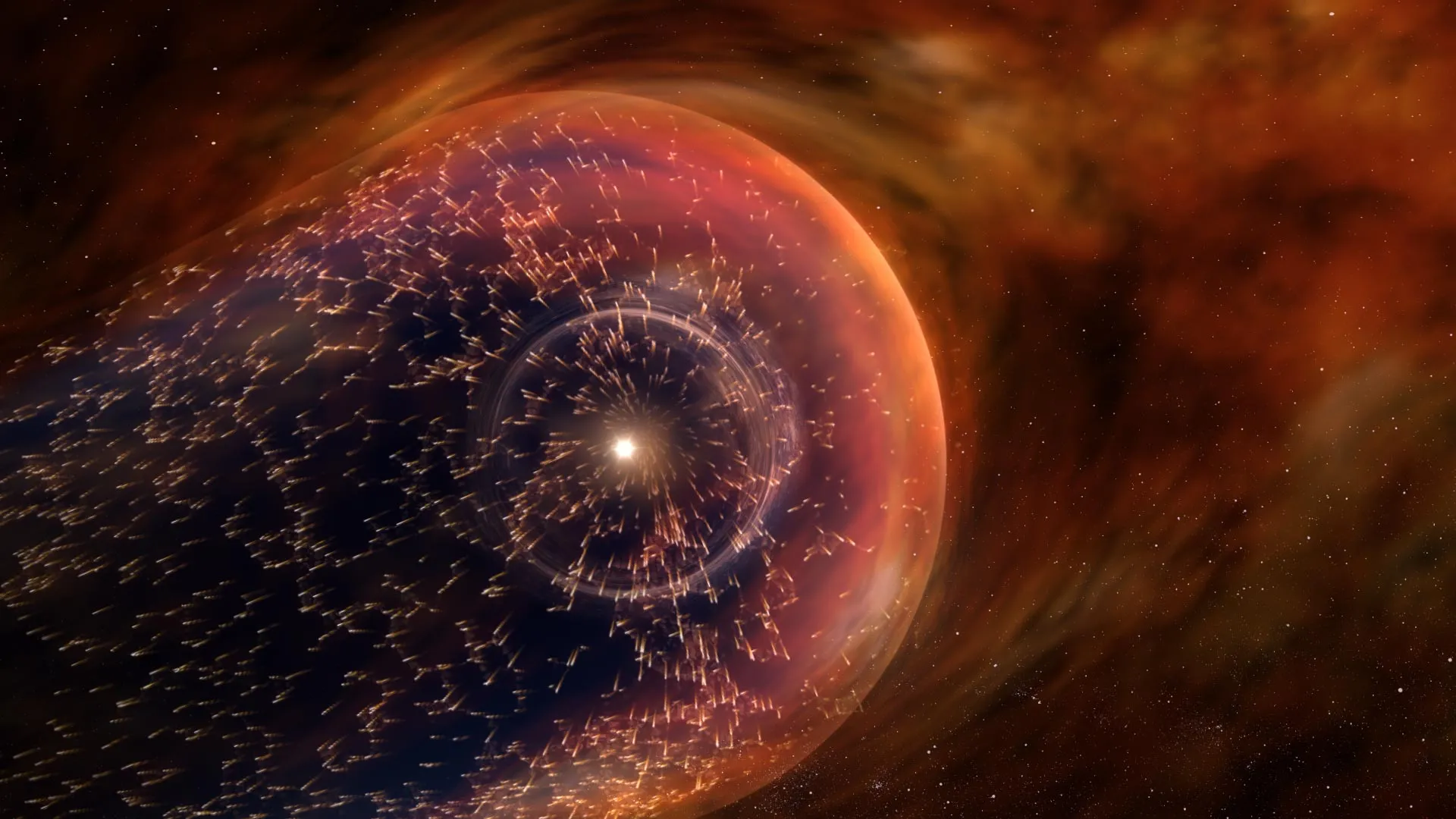
One of these compelling studies, originating from NASA’s SHIELD (Solar Wind with Hydrogen Ion charge Exchange and Large-Scale Dynamics) center—itself one of NASA’s innovative DRIVE (Diversify, Realize, Integrate, Venture, Educate) Science Centers—delves into the long, arduous journey of the heliosphere through the vast expanse of the Milky Way galaxy. The heliosphere is not merely a concept; it is a monumental, protective bubble of plasma and magnetic fields, continuously inflated by the solar wind, that envelops our entire solar system, shielding it from the harshest elements of interstellar space. Researchers found that as this colossal bubble navigated through various galactic environments over eons, changes in the surrounding interstellar medium may have profoundly affected conditions on Earth, including its climate.
A separate but equally significant study, spearheaded by a NASA scientist, tackles one of astrophysics’ enduring enigmas: the "Faint Young Sun Paradox." This paradox questions how a much dimmer young Sun, burning at only about 70% of its current luminosity, could have kept early Earth sufficiently warm for liquid water to persist—a prerequisite for the emergence of life—when theoretical models suggest it should have been a frozen wasteland. The findings from this research propose a dynamic and volatile solution: powerful solar eruptions, far more energetic and frequent than those observed today, may have been instrumental in generating potent greenhouse gases in Earth’s primordial atmosphere, thereby maintaining a habitable temperature.
The Sun’s Epic Journey Through the Milky Way and Its Climatic Legacy
Earth’s climate history is a tapestry woven with dramatic shifts, characterized by cycles spanning millions of years. Geological records reveal periods of intense glaciation, where global average temperatures plummeted, leading to extensive ice ages that reshaped continents. Conversely, other epochs saw repeated oscillations between warmer, interglacial periods and colder conditions. Traditionally, scientists have attributed these monumental climate transformations to intrinsic planetary factors: variations in Earth’s orbital parameters (Milankovitch cycles), fluctuating levels of atmospheric greenhouse gases like carbon dioxide, changes in ice coverage affecting planetary albedo, and even volcanic activity. However, new research now compellingly suggests that extrinsic factors—specifically, changes in the space environment surrounding our Sun—may have exerted a crucial, previously underappreciated influence.
The solar system exists within a vast, dynamic region created by the Sun, akin to how Earth is enveloped by its own atmosphere. This region, the heliosphere, is formed by the continuous outflow of charged particles, known as the solar wind, streaming outward from the Sun in every direction at supersonic speeds. This solar wind carves out a cavity in the interstellar medium, creating a protective sheath that deflects the vast majority of hazardous galactic cosmic rays—high-energy particles originating from supernova explosions and other violent events across the galaxy—away from the inner solar system, including Earth. Without this shield, Earth would be constantly bombarded by radiation, making surface life as we know it potentially impossible.
Reconstructing the Sun’s Galactic Path and Its Earthly Echoes
The heliosphere, along with our entire solar system, is not static; it embarks on a colossal journey, orbiting the center of the Milky Way galaxy once every approximately 230 million years. Over the Sun’s immense 4.6-billion-year lifespan, our solar system has traversed countless diverse galactic environments, from relatively empty voids to dense, cold clouds of gas and dust. Understanding these past encounters is key to deciphering their potential impact on Earth.
In a pivotal study published on August 21 in the prestigious Annual Review of Astronomy and Astrophysics, researchers affiliated with NASA’s SHIELD center employed sophisticated computer simulations to meticulously reconstruct the heliosphere’s past trajectory through the galaxy. Their detailed models indicate that certain regions the solar system encountered during its cosmic voyage may have indeed produced discernible and significant changes on Earth.
Merav Opher, the principal investigator for SHIELD at Boston University, and her dedicated team simulated specific encounters between the solar system and extraordinarily cold, dense regions of the interstellar medium—vast reservoirs of gas and dust that permeate the galaxy. Their intricate computational work suggests that the Sun passed through such challenging environments at least three times within the relatively recent geological past, specifically during the last several million years.
During these simulated encounters, immense interstellar "cold clouds," significantly denser than the typical interstellar medium, would have pressed against the heliosphere with immense force. This external pressure would have been sufficient to dramatically compress the heliosphere, potentially shrinking its protective bubble to an alarmingly small size—at times, even smaller than Earth’s own orbit around the Sun. Such an extreme contraction would have temporarily exposed our planet directly to the much harsher, unshielded interstellar environment.
When Earth May Have Lost Its Solar Shield and the Climate Consequences
The modeled periods of heliospheric compression align tantalizingly with geological records. These critical encounters are estimated to have occurred approximately 2 to 3 million years ago, 6 to 7 million years ago, and 13 to 14 million years ago. If the heliosphere contracted as profoundly as the simulations suggest, Earth’s atmosphere would have been directly exposed to a radically different interstellar environment during these epochs. This direct exposure would have allowed a greater influx of galactic cosmic rays and interstellar dust into Earth’s atmosphere, potentially triggering a cascade of climatic effects.
Crucially, the timing of these simulated events correlates remarkably well with existing geological evidence. Scientists have discovered specific elements, often associated with interstellar dust, in deep-sea sediment cores, Antarctic snow layers, and even samples retrieved from the Moon. These exotic isotopes, such as iron-60 and plutonium-244, are not typically formed on Earth but are known byproducts of supernovae, carried across the galaxy by the interstellar medium. Their presence and specific concentrations in these ancient samples correspond precisely to the time periods identified in Opher’s simulations, providing compelling independent corroboration for the heliosphere’s episodic collapse.
These episodes of heliosphere collapse, therefore, offer a novel and plausible explanation for some of Earth’s ancient climate patterns. In the simulations, the direct exposure of Earth’s atmosphere to a dense, cold cloud of galactic hydrogen—a primary component of the interstellar medium—resulted in a significant increase in atmospheric water vapor and altered conditions within the upper atmosphere. These complex atmospheric changes would have subsequently influenced conditions closer to Earth’s surface. For instance, increased cosmic ray flux could ionize atmospheric particles, potentially affecting cloud formation and thereby Earth’s albedo (reflectivity), leading to cooling.
The results raise the profound possibility that the solar system’s passages through colder, denser parts of the Milky Way contributed directly to some of the long-term climate changes observed on Earth, potentially even triggering or exacerbating major ice ages by altering atmospheric chemistry, cloud cover, and overall energy balance.
Building a Digital Twin of the Heliosphere for Future Discoveries
NASA funds SHIELD as one of several specialized centers designed to advance the critical field of heliophysics—the study of the Sun and its influence throughout the solar system. As a DRIVE Science Center, SHIELD uniquely brings together researchers with diverse areas of expertise, employing a wide array of methods and scientific perspectives. This interdisciplinary approach is vital for tackling such complex, multi-scale problems.
One of SHIELD’s ambitious long-term goals is to construct a highly detailed computational model, or "digital twin," of the heliosphere. This sophisticated model would integrate data from numerous spacecraft and ground-based observations, allowing scientists to simulate and predict how the Sun’s protective bubble responds when it encounters various features of the interstellar medium, such as dense interstellar clouds or turbulent magnetic fields. Such a digital twin would represent a revolutionary tool for understanding the dynamics of our cosmic neighborhood.
Beyond its immediate implications for Earth’s climate history, studying the history and intricate structure of our habitable solar system could also provide invaluable clues about how life originated and evolved on Earth. In the future, this enriched knowledge may prove instrumental for researchers aiming to identify other star systems in the vast cosmos that possess the necessary conditions to support habitable worlds—planets capable of harboring life beyond our own.
The Enduring Mystery of the Faint Young Sun and a Violent Solution
A second, equally fascinating study shifts its focus to a different yet related problem concerning the Sun’s early history and its crucial role in life’s emergence. Vladimir Airapetian, a distinguished scientist at NASA’s Goddard Space Flight Center in Greenbelt, Maryland, and his collaborators embarked on an investigation into one of planetary science’s most perplexing conundrums: how early Earth managed to remain warm enough for stable liquid water to exist when the young Sun, in its formative stages, produced significantly less energy than it does today.
Approximately three billion years ago, the Sun was a considerably dimmer star, radiating only about 70% of its current brightness. Based on this reduced energy output, standard astrophysical models suggest that Earth, at that time, should theoretically have been a frozen, ice-bound sphere, utterly inhospitable to life. Yet, geological evidence offers a starkly different narrative. Ancient sedimentary rocks, clear indicators of liquid water environments, date back to well over three billion years ago, unequivocally demonstrating the presence of stable liquid water on Earth long before the Sun reached its current luminosity. This profound contradiction between a relatively warm early Earth and a cooler, dimmer young Sun is famously known as the Faint Young Sun paradox.
A Violent Young Sun May Hold the Answer to Earth’s Early Warmth
Scientists are increasingly turning their gaze to young stars elsewhere in the Milky Way, seeking observational clues that might illuminate the behavior of our own Sun in its youth. These "toddler" stars, typically ranging from a few million to a few hundred million years old, are observed to be far more active and volatile than mature, stable stars like our present-day Sun. Observations from NASA’s now-retired Kepler space telescope, which meticulously monitored the light curves of thousands of distant stars, have revealed that young Sun-like stars can unleash enormous "superflares" on a daily basis. These superflares are dramatically more powerful than even the strongest flares observed from our Sun today, violently ejecting vast quantities of high-energy particles and radiation outward through space.
If the young Sun exhibited similar tempestuous behavior, Airapetian proposes that these frequent, energetic particle emissions could have played a crucial role in triggering specific chemical reactions within Earth’s early atmosphere, reactions that ultimately helped warm the planet. Such a mechanism would offer a compelling resolution to the Faint Young Sun paradox.
To rigorously test this innovative idea, Airapetian’s team meticulously recreated conditions thought to resemble the atmosphere of early Earth inside a specialized, sealed chamber in their laboratory. The researchers combined a specific mixture of gases believed to have been prevalent in Earth’s primordial atmosphere: molecular nitrogen (N2), ammonia (NH3), carbon dioxide (CO2), and carbon monoxide (CO).
They then subjected this gas mixture to a bombardment of high-energy protons, carefully calibrated to imitate the intense stream of energetic particles that would have been generated by the young Sun’s powerful superflares. This experimental setup allowed them to directly observe the chemical consequences of such solar activity on an early Earth-like atmosphere.
Superflares Could Have Created a Powerful Greenhouse Gas: Nitrous Oxide
The simulated particle bombardment indeed produced several significant chemical changes within the gas mixture, most notably the formation of nitrous oxide (N2O). Nitrous oxide is a potent greenhouse gas, known for its ability to trap heat in the atmosphere with remarkable efficiency—it is roughly 300 times more potent, molecule for molecule, than carbon dioxide over a 100-year timescale. The findings of this groundbreaking experiment were published in Astrophysical Journal Letters, providing strong evidence for this novel mechanism.
This newly formed nitrous oxide, if produced consistently and in sufficient quantities, could have been instrumental in helping early Earth retain enough heat to prevent its oceans from freezing solid. While the early Sun was dim, the atmosphere’s enhanced greenhouse effect, driven by N2O, would have compensated for the reduced solar input.
However, the researchers also acknowledged that not all of the nitrous oxide produced would have persisted indefinitely in the atmosphere. Intense ultraviolet (UV) radiation from the young Sun, while dimmer in visible light, would still have been powerful enough to break down some nitrous oxide molecules, separating them back into nitrogen and oxygen. This destructive process would have created a dynamic balance between N2O formation and destruction.
Even accounting for this atmospheric breakdown, the researchers found that surprisingly little nitrous oxide may have been needed to achieve the necessary warming. Their subsequent computer simulations, integrating these findings, showed that if just 10% of the nitrous oxide produced in their laboratory experiment survived the atmospheric processes, it could have been sufficient to raise temperatures near Earth’s equator to approximately 41 degrees Fahrenheit (5 degrees Celsius). Crucially, this temperature would have kept conditions comfortably above the freezing point of water, allowing for the widespread existence of liquid oceans.
Conditions That May Have Favored Early Life and Its Genesis
A cooler, yet unfrozen, Earth sustained by this mechanism may have offered another significant advantage, potentially providing conditions uniquely favorable for the very earliest stages of life.
The relatively smaller, yet still effective, amount of surviving nitrous oxide in the early atmosphere could have actively supported prebiotic chemical reactions—the complex series of chemical transformations that are thought to have preceded the emergence of self-replicating life. Research in astrobiology and origin-of-life studies has increasingly found that temperatures only slightly above freezing can be more effective than warmer conditions for the assembly of complex chains of amino acids and the formation of other vital organic molecules. These slightly cooler, but not frozen, conditions can promote stability and allow for the accumulation of more intricate structures necessary for life’s genesis.
This implies that the young Sun’s violent, superflare-driven activity may have achieved far more than merely preventing Earth from freezing solid. It may also have played a direct, catalytic role in creating the precise environmental conditions—a moderately warm, chemically active atmosphere—that were profoundly favorable to the intricate chemistry that ultimately led to the very first sparks of life on our planet.
How the Sun Helped Shape Earth: A Tale of Interconnectedness
Taken together, these two compelling studies fundamentally highlight the deep, intricate, and often surprising ways in which Earth’s entire history, from its climate to the very origins of life, is inextricably connected to the Sun. They paint a picture of a dynamic, ever-changing relationship, rather than a static one.
The solar system’s grand movement through the Milky Way galaxy, navigating through regions of varying interstellar density and composition, may have intermittently exposed Earth to changing interstellar environments capable of significantly influencing its climate over geological timescales. Billions of years earlier, the intense and frequently violent activity emanating from the young Sun may have provided the critical warming mechanism that prevented the planet from becoming a permanent iceball, even when its visible sunlight alone should not have been sufficient.
Earth, with its unique capacity for sustaining life, is unusual in many ways, but it has never existed in isolation. It formed within a larger, dynamic star-planet system and has remained intimately connected to the changing behavior and surrounding environment of the Sun throughout its entire history. This profound interconnectedness underscores that planetary evolution is not solely an internal process but is deeply intertwined with cosmic forces.
Understanding this multifaceted relationship between Earth and its star could unlock entirely new clues about Earth’s complex climate history, the intricate evolution of life, and, crucially, the specific conditions that might render other planetary systems across the galaxy truly habitable—capable of fostering life beyond our solitary blue marble. These studies reinforce the notion that to truly comprehend life’s existence, we must first understand its cosmic cradle.
