
 By admin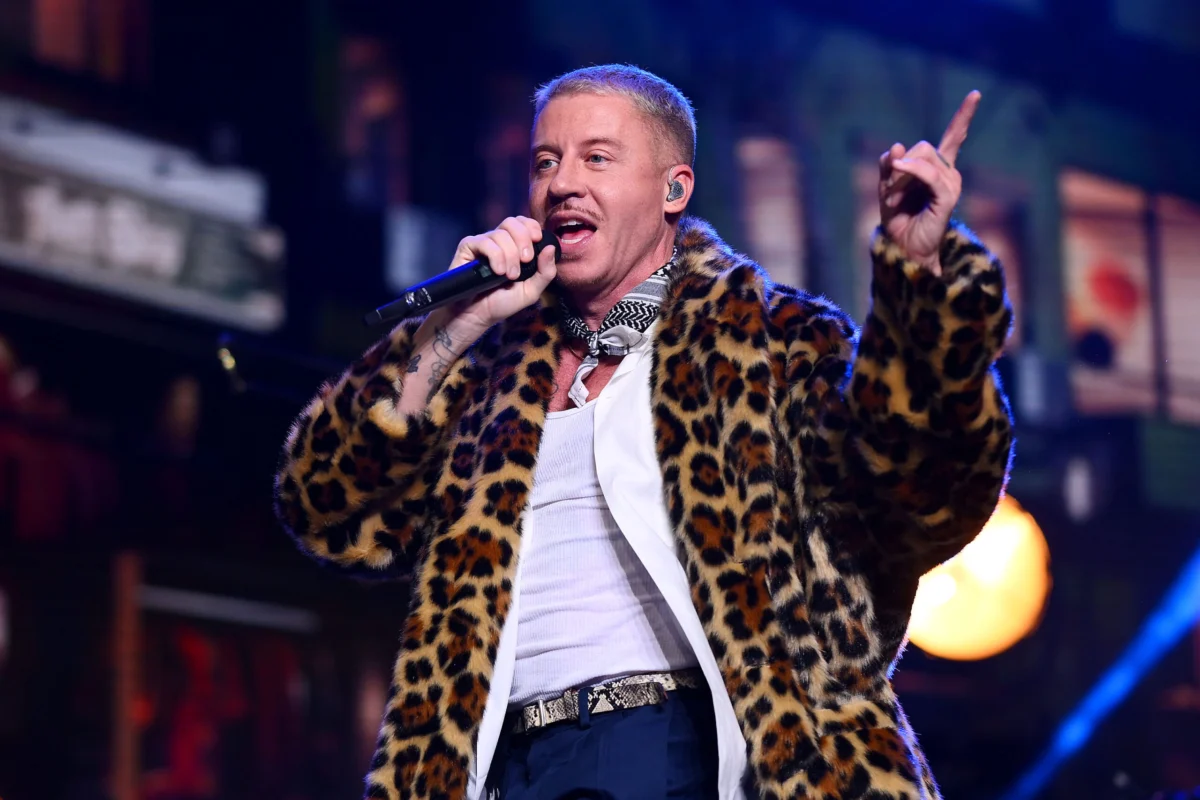
In a powerful and at times defiant address following a controversial on-stage statement during his opening set for Ed Sheeran at New Jersey’s MetLife Stadium, Grammy-winning artist Macklemore has further elaborated on his "Free Palestine" message, seeking to clarify his intentions and broaden his call for universal liberation. The rapper’s initial remarks, made on Friday night, ignited a firestorm of reactions, prompting a swift response from the Israeli American Council and sparking a wider debate about the intersection of artistic platforms and political activism.
Macklemore’s extended statement, delivered on Saturday night and reported by Newsweek, was a direct attempt to preempt and counter interpretations of his message as anti-Semitic. He began by addressing "all of my Jewish brothers and sisters," asserting, "criticism of Israel, criticism of apartheid, being against genocide in no way is a criticism of you." He emphasized that his core message is one of "peace; love for all human beings to be treated with dignity, respect, and equality." This careful framing suggests a strategic understanding of the sensitivities surrounding the Israeli-Palestinian conflict and a desire to resonate with a diverse audience, including those within the Jewish community who may feel targeted by generalized political pronouncements.
Expanding on his vision of global freedom, Macklemore declared, "So I say free Palestine, I say free Lebanon, I say free Cuba, I say free Congo, free Sudan, I say free all people in America living in fear of this terrorist organization, ICE." He concluded this segment with a potent, unifying statement: "None of us will be free until we are all free." This interconnected approach to liberation highlights a belief that struggles for freedom are intrinsically linked, suggesting that the fight for Palestinian rights is part of a larger, ongoing global movement against oppression and injustice. The inclusion of diverse regions and groups, from Lebanon and Cuba to the Congo and Sudan, alongside a critique of U.S. immigration enforcement, underscores his commitment to a broad spectrum of human rights issues.
The initial incident occurred during Macklemore’s Friday night performance, where he directly addressed the audience, stating his awareness of the ongoing conflict and his solidarity with those in Gaza and the West Bank. "I wanted to let the people in Gaza and the West Bank know that I have not forgotten about you," he reportedly told the crowd. "I believe that every human being walking on this earth deserves exactly the same freedom." This sentiment, delivered from a globally recognized platform, was a significant moment, amplifying the voices of those advocating for Palestinian rights to a massive audience, many of whom may have been primarily there to enjoy Ed Sheeran’s music.
The immediate fallout from this statement was substantial. The Israeli American Council (IAC) responded swiftly by launching a petition demanding Macklemore’s removal from the remainder of Ed Sheeran’s tour. The petition articulated a clear grievance: "This was an Ed Sheeran concert – not a political rally, not a protest, and not an activist event. The issue is not whether Macklemore has the right to hold political views. The question is where the line should be drawn when an opening act uses a global concert platform to advance a one-sided political agenda." This statement reflects a common argument against political activism at large-scale entertainment events, suggesting that such pronouncements can alienate segments of the audience and detract from the intended purpose of the event. The IAC’s stance highlights a perceived imbalance, arguing that Macklemore’s message was not a neutral call for peace but a specific political advocacy that was inappropriate for the context of a music concert.
To fully understand the context of Macklemore’s statement and the ensuing controversy, it’s crucial to consider the broader landscape of celebrity activism and the deeply entrenched nature of the Israeli-Palestinian conflict. For decades, the Israeli-Palestinian issue has been a focal point of international relations, human rights discourse, and political debate. The conflict, characterized by territorial disputes, occupation, and violence, has generated a wide range of perspectives, with strong arguments and deeply held convictions on all sides.
Macklemore, whose real name is Ben Haggerty, has a history of engaging with social and political issues through his music. His earlier hits, such as "Same Love," addressed LGBTQ+ rights, and his work has often touched on themes of social justice, inequality, and poverty. This latest intervention into the Israeli-Palestinian conflict is not an isolated act of political expression for the artist, but rather a continuation of a pattern of using his public platform to advocate for causes he believes in.
The decision to address the "Free Palestine" issue at a massive stadium concert, however, carries different implications than a statement made in a more intimate setting or through a more traditional media channel. Stadium concerts, especially those featuring global superstars like Ed Sheeran, attract diverse audiences with varying political viewpoints. For some, Macklemore’s words would have resonated deeply, offering validation and amplifying their own concerns. For others, particularly those with pro-Israel sentiments or who view the conflict differently, the message might have been perceived as unwelcome, biased, or even offensive.
The IAC’s petition raises a pertinent question about the responsibility of artists performing at sponsored events. While freedom of expression is a fundamental right, the use of a platform provided by a tour, which likely involves commercial sponsors and a broad, paying audience, introduces a layer of complexity. The argument presented by the IAC suggests that opening acts have a certain implicit contract with the headliner and the audience – to entertain and set the stage, rather than to introduce potentially divisive political agendas. This perspective emphasizes the commercial nature of such events and the potential for alienating a significant portion of the ticket-buying public.
Furthermore, the IAC’s characterization of Macklemore’s message as a "one-sided political agenda" reflects a common critique leveled against international calls for specific actions related to the Israeli-Palestinian conflict. Proponents of Israel often argue that such calls fail to acknowledge the security concerns of Israel, the complexities of the geopolitical situation, and the actions of Palestinian militant groups. They contend that a balanced approach is necessary, one that recognizes the legitimate security needs of Israel alongside the aspirations of the Palestinian people.
Macklemore’s counter-narrative, however, directly challenges this by framing his message as a universal call for human dignity and freedom. His assertion that criticizing Israel or apartheid is not a criticism of Jewish people is a crucial distinction. It aims to separate political actions and policies of a state from the identity of its people or the broader religious community. This is a delicate but important nuance in discussions about the conflict, as accusations of anti-Semitism are often raised when criticism of Israeli government policy is perceived as targeting Jews.
The rapper’s broad list of calls for freedom – Lebanon, Cuba, Congo, Sudan, and those fearing ICE – further reinforces his vision of interconnected struggles. This approach can be interpreted as an attempt to position the Palestinian cause within a larger global human rights framework, suggesting that the fight for Palestinian liberation is not an isolated issue but part of a worldwide movement against oppression. This can be seen as a strategic move to garner broader support and to demonstrate that his advocacy is not solely focused on one conflict but is rooted in a consistent philosophy of human rights.
The inclusion of ICE (U.S. Immigration and Customs Enforcement) in his list of entities causing fear is particularly noteworthy, as it directly connects an international issue to domestic concerns within the United States. This highlights the multifaceted nature of contemporary activism, where artists and activists often draw parallels between global injustices and domestic policies.
The debate ignited by Macklemore’s statement is emblematic of a larger ongoing conversation about the role of celebrities in political discourse. As celebrities gain immense visibility and influence, their pronouncements on sensitive issues carry significant weight. This can be a powerful tool for raising awareness and mobilizing support for causes, but it also carries the risk of oversimplification, alienating audiences, and inadvertently causing harm.
The effectiveness of Macklemore’s approach will ultimately be judged by its impact. Will his clarificatory statements help to bridge divides and foster understanding? Or will the initial controversy overshadow his message of universal liberation? The response from various stakeholders, including fans, critics, and advocacy groups, will continue to shape the narrative.
The Israeli American Council’s petition, which garnered thousands of signatures, demonstrates the strength of organized opposition to such political statements at entertainment events. The organization’s argument centers on the perceived inappropriateness of the venue and the artist’s responsibility to a diverse audience. Their stance is that a concert should be a space for shared enjoyment and escapism, not for the introduction of contentious political issues that may alienate a significant portion of the attendees.
Conversely, Macklemore’s supporters would argue that art has always been a vehicle for social commentary and that artists have a moral obligation to speak out against injustice, regardless of the venue. They might point to historical examples of musicians using their platforms to advocate for civil rights, peace, and social change. For them, Macklemore’s message is not about disrupting a concert but about using a moment of collective attention to amplify important humanitarian concerns.
The broader implications of this incident extend beyond the immediate controversy. It raises questions about the boundaries of artistic expression, the responsibilities of artists to their audiences, and the complex dynamics of political advocacy in the digital age. As global events continue to unfold, the intersection of popular culture and political activism is likely to remain a fertile ground for debate and discussion. Macklemore’s continued engagement with the "Free Palestine" issue, and his efforts to articulate a nuanced message of universal freedom, suggest that he is prepared to navigate this complex terrain, even in the face of significant backlash. His commitment to "peace; love for all human beings to be treated with dignity, respect, and equality" serves as his guiding principle, as he seeks to connect the struggle for Palestinian liberation to a broader vision of global justice. The challenge ahead for Macklemore and other artists engaging in similar activism lies in effectively communicating their messages in a way that fosters dialogue and understanding, rather than deepening existing divisions.
