
 By admin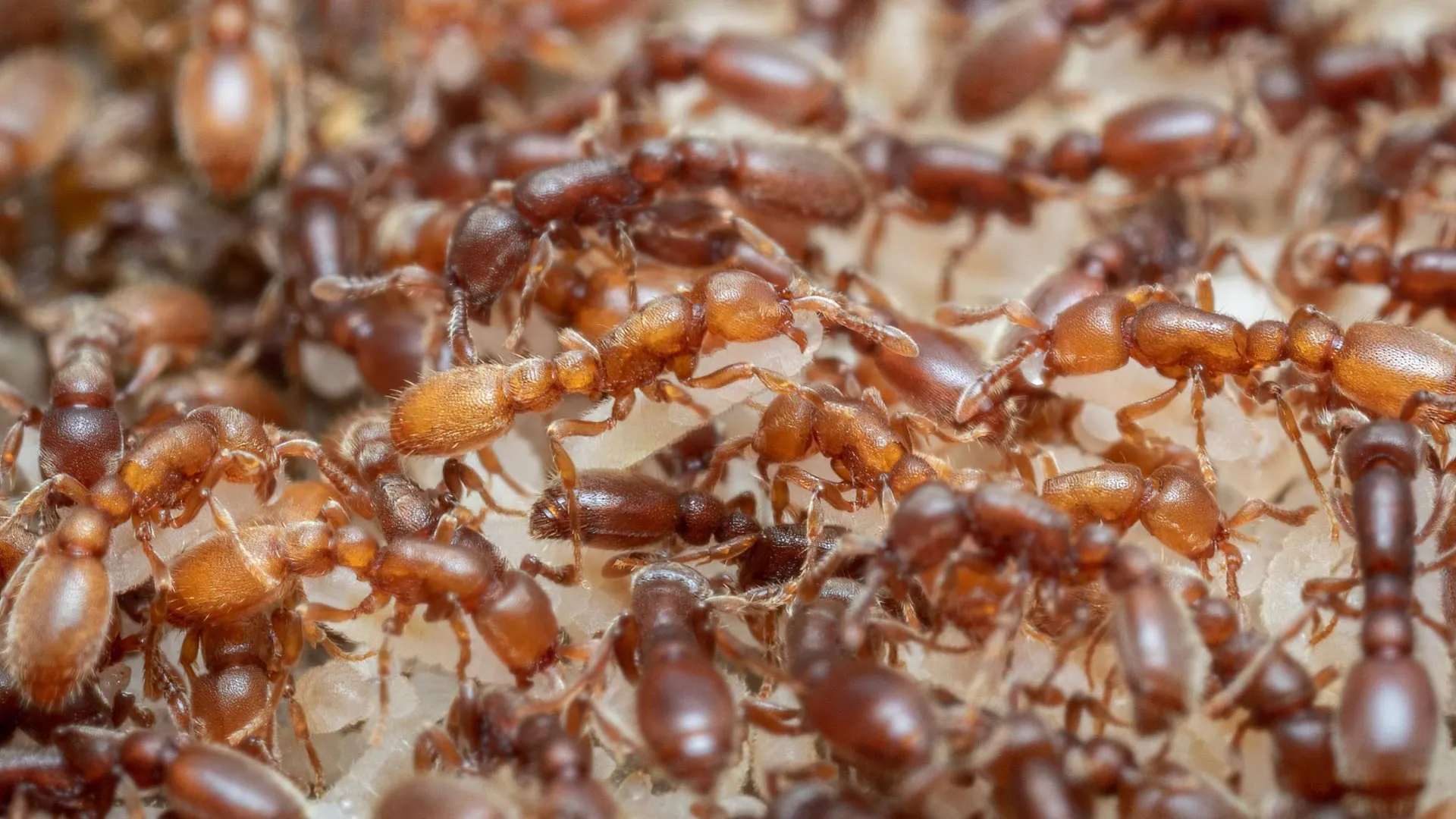
By meticulously studying clonal raider ants, Ooceraea biroi, researchers discovered that evolution may not have had to invent entirely new brain systems to produce the intricate dance of parental behavior. Instead, it appears to have ingeniously adapted ancient neural pathways—the very ones that originally regulated an organism’s own hunger and feeding instincts—giving them a powerful new role in social care. This revelation suggests a remarkable efficiency in evolution, a tendency to build upon existing structures rather than starting from scratch, even for something as complex and altruistic as parental nurturing.
The significance of these findings extends far beyond the ant colony. Ants and mammals, despite their vast evolutionary distance, utilize related brain signaling systems to help control caregiving. Moreover, ants exhibit a fascinating and predictable shift in their social roles as they mature, transitioning from dedicated caregivers to active foragers. This makes them an exceptionally valuable model for investigating not only how parenting evolved but also how behavior shifts and adapts as the brain ages. The insights gleaned from these tiny insects could ultimately offer crucial clues about similar processes in mammals, including humans, potentially shedding light on everything from maternal bonding to age-related cognitive changes.
"Our work is a prime example of how evolution seldom invents things from scratch," explains Daniel Kronauer, head of the Laboratory of Social Evolution and Behavior at Rockefeller and senior author of the study. "Evolution takes what it has and works with that, sometimes in very surprising ways." This principle of evolutionary parsimony underscores the elegance of nature’s solutions, where fundamental biological mechanisms are continually repurposed and refined to meet new adaptive challenges.
The Evolutionary Puzzle of Parental Care: From Neglect to Nurturing
For billions of years, life on Earth was characterized by a simple reproductive strategy: produce many offspring and leave their survival to chance. This R-selected strategy, still prevalent in many species today, minimizes parental investment in favor of sheer numbers. However, at various points in evolutionary history, a dramatically different strategy emerged: parental care. This K-selected approach, involving significant investment in a smaller number of offspring, includes behaviors ranging from nest building and protection to direct feeding and teaching. Mammals, for instance, are defined by their lactation, birds by their elaborate nesting and feeding rituals, and social insects like ants by their communal tending of larvae.
Scientists have long been captivated by the question of how such complex, energy-intensive caregiving behaviors could have evolved from ancestors that offered little or no care. What prompted the shift from purely self-serving survival instincts to altruistic, nurturing behaviors directed towards others, particularly one’s own progeny? One leading hypothesis, gaining increasing traction in recent decades, is that evolution often reuses or "exaptates" biological systems that already exist. Rather than developing entirely new neural circuits or molecular pathways for every new behavior, nature might simply adapt pre-existing ones to serve novel functions.
Earlier research in mammals provided tantalizing hints that certain neuropeptides—small, protein-like molecules used by neurons to communicate and modulate brain activity—might have undergone such a functional shift. Specifically, some studies suggested that neuropeptides originally involved in regulating hunger, metabolism, and satiety might have been co-opted and adapted to encourage and orchestrate parental behavior. Proving this direct connection, however, has been notoriously difficult due to the complexity of mammalian brains and the limitations of traditional model organisms.
Clonal Raider Ants: An Unprecedented Window into Evolution and Aging
The challenge in validating this "repurposing" hypothesis has been multifaceted. Traditional neuroscience models like fruit flies (Drosophila melanogaster) and roundworms (Caenorhabditis elegans), while excellent for genetic and neural circuit analysis, do not exhibit parental care, rendering them unsuitable for this specific line of inquiry. Mice, on the other hand, do provide extensive parental care, and scientists have identified several neuropeptides involved in these behaviors. However, the sheer complexity of the mouse brain, with its roughly 100 million neurons and intricate interconnections, makes it incredibly challenging to dissect the precise underlying neural circuits and trace their evolutionary origins.
This is where clonal raider ants, Ooceraea biroi, emerge as an unexpectedly powerful research model. These ants are unique in several ways: they reproduce clonally (without queens or males, through parthenogenesis), and their colonies are composed entirely of worker ants that cycle through distinct social roles. Crucially, Kronauer’s team found that some of the neuromodulatory mechanisms involved in caregiving overlap significantly between ants and mice, suggesting a deep evolutionary conservation of these systems.
The stark difference in brain complexity is a key advantage: an ant brain contains approximately 60,000 cells, a mere fraction of the roughly 100 million in a mouse brain. This simpler architecture allows scientists to study the underlying neural circuits in much greater detail and at a significantly faster pace. "This is a perfect example of convergent evolution in a sense," says Dr. Vikram Kay, a former postdoctoral fellow in the Kronauer lab and co-first author of the study, "where distantly related animals have independently evolved similar behaviors, but perhaps using similar molecular tools." This convergence makes ants an invaluable comparative model for understanding fundamental biological principles that might apply across divergent species.
Unraveling the Neural Basis: A Meticulous Methodology
To systematically investigate the neural underpinnings of ant caregiving, the researchers developed an innovative automated behavioral system. This sophisticated setup allowed them to place individual ants with individual larvae and precisely monitor hundreds of caregiving interactions over extended periods. This high-throughput approach generated a wealth of quantitative behavioral data, a critical foundation for linking specific neural changes to observable actions.
The next step involved a comprehensive biochemical analysis of the ant brain. The team meticulously identified and synthesized many of the chemical messengers, particularly neuropeptides, found within the ant brain. This involved a process known as "neuropeptidome" annotation. "We annotated the neuropeptidome of this ant, the complete set of neuropeptides," says Kay. "There were 70 that we could identify. It took a lot of hard work, but now we have a set of molecules that we can investigate in numerous ways." Each identified molecule was then systematically tested to determine whether it influenced the ants’ caregiving behavior.
A crucial aspect of clonal raider ant biology, which was central to the study, is their strict age-dependent division of labor. Younger ants, typically within the first few weeks of adulthood, primarily remain inside the nest and dedicate themselves to caring for the developing larvae. As they mature, they gradually transition out of nursing duties and become foragers, venturing outside the nest to search for food. The researchers aimed to understand how changes in brain chemistry precisely control this predictable transition. They investigated where the most promising molecules were produced in the brain, how their levels naturally changed over an ant’s lifetime, and, critically, what happened to behavior when the activity of these molecules was experimentally increased or reduced.
To directly test the link between caregiving and ancient feeding circuits, the team also compared ants that had been well-fed with those that had been deprived of food. This manipulation allowed them to observe whether the chemical signals involved in caregiving were still connected to the primal hunger and feeding pathways from which they were hypothesized to have evolved.
Two Brain Molecules: The Yin and Yang of Ant Behavior
The results were remarkably clear and provided compelling evidence for the study’s central hypothesis: caregiving in ants remains intimately tied to the brain systems that regulate hunger and feeding. The researchers pinpointed two specific signaling molecules, neuropeptide F (NPF) and Allatostatin A (AstA), that appeared to push ant behavior in opposite directions, depending on the ant’s age and internal physiological state.
Neuropeptide F (NPF) emerged as a potent promoter of caregiving, encouraging ants to tend to larvae. This neuropeptide is functionally analogous to Neuropeptide Y (NPY) in mammals, a powerful stimulator of appetite and feeding behavior. Conversely, Allatostatin A (AstA) had the opposite effect, making ants more likely to disengage from larvae and embark on foraging expeditions. AstA is known in insects for its role in inhibiting juvenile hormone synthesis and regulating metabolic processes, and its function here suggests a broader role in shifting an animal’s energetic focus.
The researchers observed a natural, age-related shift in the levels of these neuropeptides in important brain regions. Young ants, which are the primary caregivers, naturally exhibited higher levels of NPF and lower levels of AstA. As the ants aged and transitioned towards foraging, this pattern reversed: older ants showed lower NPF and higher AstA. This endogenous chemical shift perfectly matched the insects’ normal progression from nurturing larvae inside the nest to gathering food outside it, suggesting a finely tuned internal clock governing social roles.
Crucially, the researchers were able to experimentally manipulate this system. When they artificially increased the activity of NPF in older ants, those ants reverted to more caregiving behaviors. Conversely, when they increased AstA activity in young ants, these typically dedicated nurses became more inclined to forage. This direct manipulation demonstrated that NPF and AstA were not merely correlated with caregiving but actively influenced and controlled whether an ant nurtured larvae or went searching for food, providing strong evidence of a causal link.
Hunger’s Surprising Role: Fueling the Instinct to Care
Perhaps the most striking finding was the direct link between these molecules and hunger. Just as related signals do in mammals, NPF and AstA responded dynamically to the ants’ internal energetic state. Starved ants, experiencing genuine hunger, developed higher levels of NPF and, concomitantly, lower levels of AstA. This chemical imbalance pushed them towards behaving more like caregivers, despite their own need for food.
Once the ants were fed and their hunger satiated, the chemical balance reversed. NPF levels decreased, and AstA levels increased, causing them to become less focused on tending larvae and more inclined to forage for themselves. This observation provides a compelling explanation for the evolutionary repurposing of feeding circuits.
"We learned that parental behaviors build on the neural circuitry for feeding, and that makes some sense," Kronauer explains. "Parental behavior is a lot about feeding—not just yourself, but your offspring." This simple yet profound statement encapsulates the study’s core message: evolution didn’t create a completely new system for nurturing; it expanded the existing, fundamental drive to acquire and consume food to encompass the provisioning of nourishment for one’s progeny. This adaptive shift would have provided a powerful selective advantage, linking the survival of the individual to the survival of the group, and ensuring the propagation of genes through robust offspring care.
The findings strongly support the idea that parental care evolved by adapting and co-opting brain systems that were already responsible for finding and consuming food. Rather than inventing caregiving from nothing, evolution may have expanded the scope of feeding behavior so that animals became motivated to provide nourishment not only to themselves but also to their offspring. This fundamental reorientation of a primal drive represents a key evolutionary innovation that underpins the development of complex social behaviors across diverse taxa.
A Shared Blueprint for Parenting: Unifying the Animal Kingdom
The Rockefeller team is now poised to take the next crucial steps, planning to identify the specific neural circuits within the ant brain that are directly affected by NPF and AstA. Mapping these intricate pathways could reveal the precise mechanisms by which these chemical signals are translated into the observable behaviors of caregiving and foraging. This detailed circuit analysis, made feasible by the ant brain’s relative simplicity, promises to unlock a deeper understanding of how neuromodulators orchestrate complex behavioral states.
Intriguingly, mammals also appear to utilize some of the same or functionally analogous neuropeptides when caring for their young. Comparing the relevant neural circuits in ants and mammals may therefore help scientists uncover a shared biological strategy for parenting that extends across widely separated branches of the animal kingdom. This suggests that despite millions of years of divergent evolution, the fundamental "blueprint" for nurturing behavior might be remarkably conserved, a testament to the efficiency and constrained nature of evolutionary processes.
"It amazes me that similar parenting behaviors have evolved so many times in so many distinct animal lineages," says Kay. "Our paper suggests that the evolutionary routes to these sorts of behaviors are far more constrained than we may have naively imagined. That’s very exciting, because it may eventually lead to a blueprint of how these complex social behaviors evolve." This concept of evolutionary constraint implies that while diverse species may arrive at similar behavioral solutions, they might do so by repeatedly leveraging a common set of molecular and neural tools, indicating deep-seated principles of biological organization.
Beyond Parenting: Ants Could Also Reveal How Brains Age
The utility of clonal raider ants extends beyond illuminating the origins of parenting. Their highly predictable and age-dependent transition from dedicated caregivers to active foragers also positions them as an exceptional model for investigating how healthy aging subtly changes the brain and influences behavior.
Much of current aging research is heavily focused on understanding and combating severe neurodegenerative disorders that manifest late in life, such as Alzheimer’s or Parkinson’s disease. While critical, this focus often leaves a significant gap in our knowledge about the gradual, yet profound, changes that occur in a healthy brain across an individual’s normal lifespan. What are the molecular and cellular mechanisms that drive the natural shifts in behavior, cognition, and social roles as an organism matures?
Because these age-related changes in ant behavior are not random but are essential to the efficient organization and survival of the colony, ants offer a natural, genetically tractable system for studying how brain chemistry reshapes social roles over time. The researchers believe that similar chemical mechanisms, involving neuromodulators like NPF and AstA, may also influence age-related behavioral changes in other animals, including humans.
"There’s a lot of research and funding invested in studying late-stage neurodegenerative diseases, but we actually know very little about how the brain changes throughout the normal healthspan of an individual," Kronauer observes. "In ant colonies, these dynamics are central to the organization of the society. Our discovery provides a striking demonstration that neuromodulators can produce age-dependent changes in behavioral proclivities in ants, and I suspect that that’s the case in other animals as well, including in humans." This dual insight—into the evolution of caregiving and the mechanisms of healthy aging—positions clonal raider ants as a powerful model organism for tackling some of biology’s most enduring and complex questions. The humble ant, it seems, holds keys to understanding the very foundations of social life and the lifelong journey of the brain.
