
 By admin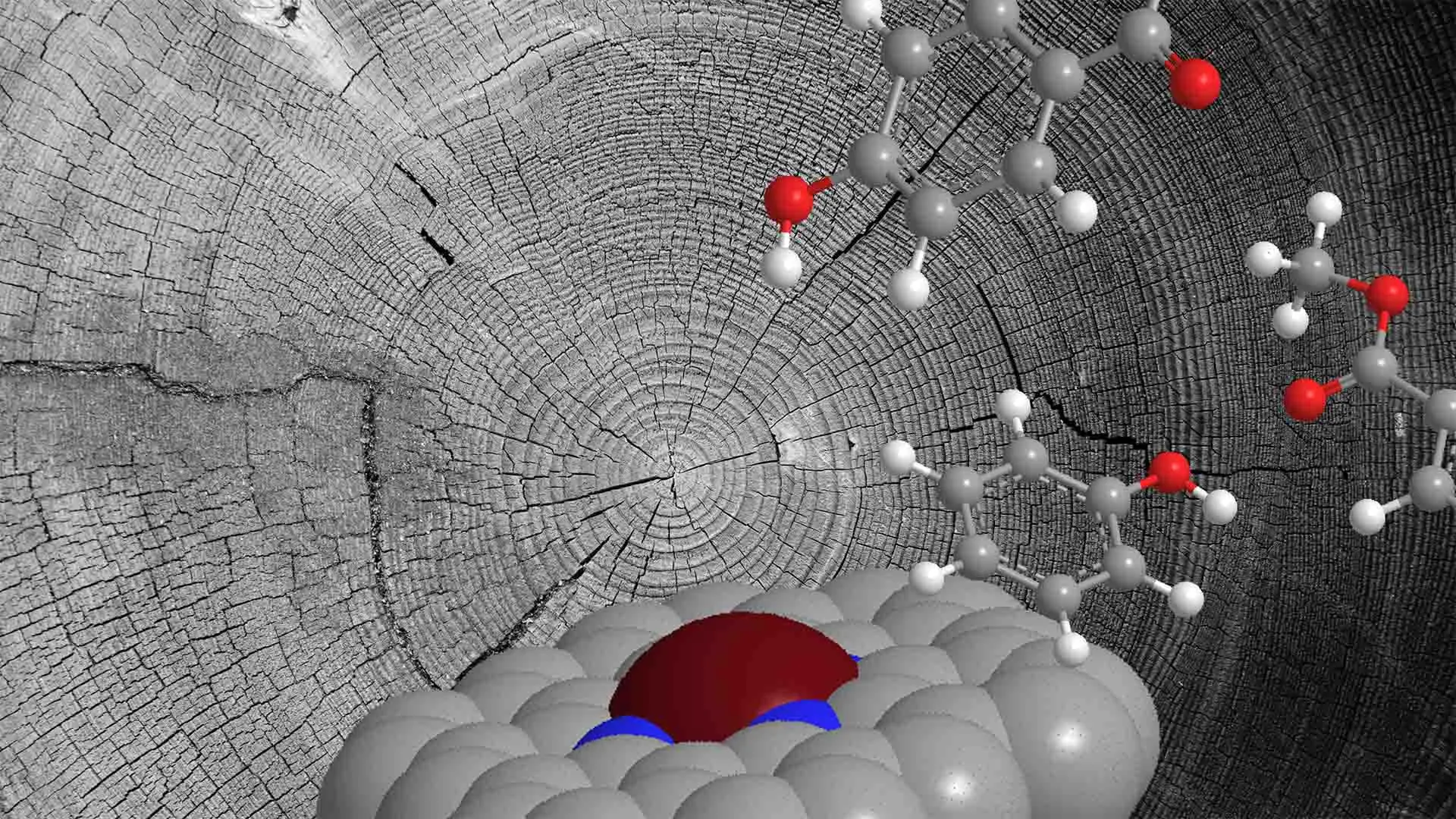
However, this long-standing challenge is now being actively addressed by pioneering research. In a groundbreaking study recently published in the prestigious journal ACS Catalysis, an international team of scientists has made a significant leap forward. This collaborative effort included prominent researchers such as Dr. Christopher Parlett, Xinyue Zhou, and Yutao Jiang from the Department of Chemical Engineering, whose expertise was central to the breakthrough. The team successfully developed a highly efficient "single-atom catalyst," a novel material designed to tackle lignin’s tough chemical bonds with unprecedented precision and efficacy. Beyond the catalyst’s creation, a critical aspect of their research involved meticulously determining, at the fundamental molecular level, precisely how this catalyst functions to break the strong chemical bonds that are responsible for lignin’s structural integrity and recalcitrance. This dual achievement – the development of an advanced catalyst and a detailed understanding of its mechanism – paves the way for a paradigm shift in biomass valorization.
Lignin, a complex biopolymer, is formed through the irregular polymerization of phenylpropane units, primarily coniferyl, sinapyl, and p-coumaryl alcohols. This intricate, amorphous structure is characterized by a network of strong carbon-oxygen (ether) and carbon-carbon linkages, making it exceptionally resistant to chemical degradation. Unlike cellulose, which can be relatively easily hydrolyzed into glucose, lignin’s heterogeneity and the strength of its inter-unit bonds have historically relegated it to low-value applications or simply energy generation. Yet, its inherent aromatic nature means it is a treasure trove of valuable platform chemicals such as phenols, guaiacols, syringols, and various aromatic carboxylic acids, which are currently predominantly derived from fossil fuels. Unlocking this potential is crucial for transitioning towards a circular bioeconomy, reducing reliance on petrochemicals, and mitigating environmental impact.
The innovative catalyst at the heart of this study represents a significant advancement in catalytic science. It features individual ruthenium (Ru) atoms meticulously embedded within a nitrogen-doped carbon material. This "single-atom catalyst" (SAC) design is revolutionary because it maximizes the efficiency of the precious metal. In traditional heterogeneous catalysts, metal atoms often cluster together to form nanoparticles, where only a fraction of the atoms on the surface are accessible for catalytic reactions. In contrast, by keeping the ruthenium atoms isolated and atomically dispersed, the design ensures that virtually every ruthenium atom acts as an active catalytic site. This ultra-high dispersion not only delivers exceptionally strong catalytic performance but also drastically reduces the amount of expensive ruthenium metal required, significantly improving both the economic viability and environmental footprint compared to conventional systems that rely on larger, less efficient metal particles. The nitrogen-doped carbon matrix plays a crucial role in stabilizing these isolated metal atoms, preventing them from aggregating even under harsh reaction conditions, and further tuning their electronic properties to enhance catalytic activity.
One of the most persistent and frustrating obstacles in lignin research has been the difficulty in precisely identifying which specific parts of a catalyst are responsible for initiating and facilitating the breaking of the material’s unusually strong chemical bonds. Without this granular, molecular-level understanding, researchers have been largely limited to trial-and-error approaches in designing more effective catalysts, hindering rational catalyst development. This study systematically addressed this challenge. The team’s meticulous investigation revealed a particular atomic arrangement within their catalyst that proved to be especially important: a "Ru-N₄ site." This site consists of a single ruthenium atom coordinated by four nitrogen atoms within the carbon support structure. These specific Ru-N₄ sites were found to play a pivotal role in activating oxygen molecules, a critical step that helps trigger the cascade of reactions necessary for cleaving both the robust carbon-oxygen and carbon-carbon bonds that form the backbone of the lignin polymer.
To reconstruct this complex process in exquisite detail, the researchers employed a powerful combination of advanced laboratory experiments and sophisticated computational modeling, particularly Density Functional Theory (DFT) calculations. Experimental techniques such as operando spectroscopy allowed them to observe the catalyst’s behavior under reaction conditions, providing real-time insights into active species formation and reaction intermediates. Complementary computational modeling provided atomic-level insights that are often inaccessible through experimental means alone. By simulating the interactions between the catalyst, oxygen, and lignin fragments, the researchers were able to elucidate the precise reaction pathway. They determined that the Ru-N₄ site first activates oxygen, leading to the formation of highly reactive oxygen species (e.g., superoxide or peroxide radicals). These highly potent species then act as powerful oxidants, initiating an attack on the recalcitrant lignin structure and systematically splitting it into smaller, more manageable molecules. This detailed mechanistic understanding is invaluable, moving the field beyond empirical observation towards truly rational catalyst design based on fundamental chemical principles.
The practical performance of the newly developed catalyst proved exceptionally promising. When rigorously tested under optimized conditions, the catalyst demonstrated remarkable efficiency, converting nearly all of the model lignin compounds—simplified molecules designed to mimic key structural elements of natural lignin—into desired products. Crucially, this high conversion was coupled with the generation of high yields of valuable chemical products, including phenol, a foundational aromatic compound used in the production of plastics (e.g., polycarbonates, phenolic resins), pharmaceuticals, and various fine chemicals. Furthermore, a significant advantage of this process is its operation under relatively mild conditions. Unlike many traditional lignin depolymerization methods that often demand extreme temperatures, high pressures, or harsh, corrosive chemicals (e.g., strong acids or bases), this catalytic approach avoids such severe requirements. This combination of high efficiency and mild operating conditions significantly enhances the economic viability, safety, and overall sustainability profile of the process, making it far more attractive for industrial implementation. Reduced energy input, less specialized and expensive equipment, and minimized hazardous waste generation are all direct benefits.
Moving beyond idealized model compounds, the researchers took a critical step towards real-world applicability by testing the catalyst on authentic lignin samples collected from various biomass sources. These included lignin extracted from agricultural residues such as corn stover and wheat straw, as well as forestry waste and industrial black liquor from pulp mills. The catalyst successfully converted these complex, heterogeneous natural lignin samples into a range of useful aromatic compounds. These bio-derived aromatic building blocks hold immense potential as sustainable precursors for a vast array of materials, including advanced biofuels, biodegradable plastics, high-performance polymers, and other specialty chemicals. This successful demonstration with real biomass validates the catalyst’s robustness and scalability potential, bridging the gap between fundamental research and practical application.
The profound findings of this study offer a more detailed and unprecedented picture of how single-atom catalysts operate at the atomic level during complex biomass conversion processes. This newfound, atomistic understanding is not merely an academic exercise; it serves as an indispensable guide for the rational design and development of even more efficient and tailored catalytic systems in the future. By knowing precisely where and how the chemistry occurs, scientists can fine-tune catalyst structures, optimize reaction conditions, and explore new material combinations with greater precision and predictability. Dr. Christopher Parlett, a Lecturer in Chemical Engineering and a key contributor to the research, underscored this critical point: "Understanding exactly how these catalysts work at the atomic level allows us to design better materials for converting renewable resources into valuable chemicals." This scientific insight is paramount for accelerating the development of the next generation of sustainable technologies.
Ultimately, by making it significantly easier and more efficient to upgrade lignin and convert it into higher-value products, this transformative research could play a pivotal role in supporting a broader and much-needed shift away from traditional, linear petroleum-derived chemical production. The current petrochemical industry, heavily reliant on finite fossil resources, is carbon-intensive and contributes significantly to environmental pollution. The ability to valorize lignin offers a viable pathway towards a more circular, biomass-based economy, where waste biomass is not merely discarded but is instead ingeniously transformed into a renewable feedstock for a diverse range of industrial products. This transition would not only enhance resource security and reduce carbon emissions but also foster new bio-based industries, create green jobs, and contribute to a more sustainable future for chemical manufacturing globally. While challenges remain, such as process scalability, product separation, and economic competitiveness with established petrochemical routes, this research represents a crucial scientific advance that brings the vision of a lignin-powered bioeconomy significantly closer to reality.
