
 By admin
The decision between the Capital One Venture X Rewards Credit Card and the Capital One Venture X Business represents a pivotal choice for high-spending travelers and entrepreneurs seeking to maximize their return on investment through the Capital One ecosystem. While both cards share a significant amount of DNA—including an identical $395 annual fee, similar earning structures, and a suite of premium travel perks—they are precision-engineered for distinct financial profiles. The personal Venture X is widely regarded as the card that disrupted the premium travel market by offering high-end benefits at a price point significantly lower than its primary competitors, such as the Chase Sapphire Reserve or the Amex Platinum. Conversely, the Venture X Business is a heavy-duty tool designed for business owners who manage high-volume overhead and require sophisticated expense management features without the constraints of a traditional credit limit.

When analyzing the value proposition of these two cards, the most striking divergence appears immediately in the welcome offers. The personal Venture X offers a relatively attainable bonus: 75,000 bonus miles after spending $4,000 on purchases within the first three months of account opening. Based on current industry valuations, which peg Capital One miles at approximately 1.85 cents each when utilized through transfer partners, this bonus yields a total value of roughly $1,388. This is a highly competitive offer for a consumer card, providing more than three times the value of the annual fee in the first year alone.
However, the Venture X Business operates on an entirely different scale. It currently features a massive, tiered welcome offer that can reach up to 300,000 bonus miles and a $1,000 travel credit. To unlock this full potential, a business owner must spend $150,000 in the first four months. Specifically, the card grants 150,000 bonus miles after $40,000 in spend, plus an additional 150,000 miles and the $1,000 Capital One Business Travel credit after hitting the total $120,000 threshold. While the spending requirement is steep—averaging $30,000 per month—the total value of this offer is estimated at a staggering $6,550. This makes it one of the most lucrative bonuses currently available in the commercial credit space, provided the business has the organic spending volume to meet the requirement without overextending its cash flow.

Beyond the initial bonuses, both cards are designed to effectively "pay for themselves" through a combination of annual credits and anniversary rewards. Each card provides a $300 annual credit for bookings made through Capital One Travel (or Capital One Business Travel for the business version). This credit is applied directly at the time of booking, which is a more user-friendly approach than the statement credit models used by many competitors. Additionally, both cards grant 10,000 bonus miles on every account anniversary, starting from the first renewal. At a valuation of 1.85 cents per mile, those 10,000 miles are worth $185. When combined with the $300 travel credit, the total annual value reaches $485, effectively netting the cardholder a "profit" of $90 per year against the $395 annual fee. This "negative effective annual fee" is the primary reason both cards are considered essential for long-term points strategies.
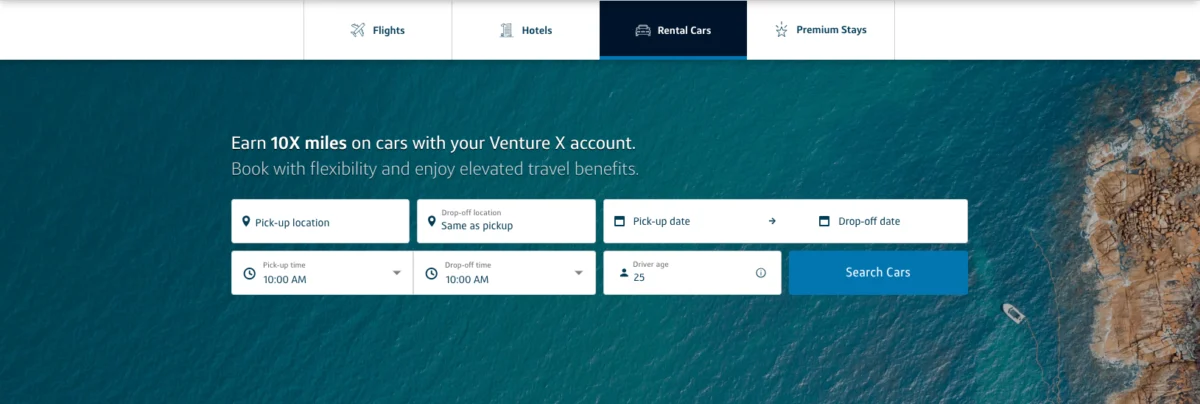
The earning structure for both cards is elegantly simple, which appeals to travelers who prefer not to manage complex "bonus category" spreadsheets. Both the personal and business versions earn a flat 2 miles per dollar on all everyday purchases. This "catch-all" earning rate ensures that even non-bonus spending, such as utility bills, office supplies, or medical expenses, earns a high rate of return. For travel booked specifically through the Capital One portal, the rewards are amplified: both cards earn 10 miles per dollar on hotels and rental cars, and 5 miles per dollar on flights. This portal, powered by the predictive technology of Hopper, includes features like price drop protection and price freezing, adding another layer of value for the savvy traveler.

Airport lounge access is another area where Capital One has made significant strides to compete with the industry’s titans. Cardholders of either version receive unlimited complimentary access to Capital One’s growing network of proprietary lounges. These lounges, currently located at Dallas Fort Worth (DFW), Washington Dulles (IAD), and Denver (DEN), have received critical acclaim for their high-quality dining options, wellness rooms, and modern design. Furthermore, both cards provide a full Priority Pass Select membership, opening the doors to over 1,300 airport lounges and experiences worldwide. One subtle but important distinction lies in the treatment of authorized users. On the personal Venture X, you can add up to four authorized users for free, and these users can receive their own lounge access privileges (subject to an optional fee for certain lounge types). This makes the personal card an extraordinary value for families or groups who travel together frequently.
The fundamental differences between the two cards emerge in the realm of financial mechanics and reporting. The Venture X Business is a "pay-in-full" card with no preset spending limit. This means that while the cardholder does not have a fixed "cap" on their spending—allowing for large business purchases that might exceed a standard credit line—the balance must generally be paid in full every month. This structure is ideal for businesses with high monthly turnover but may not suit those who need the flexibility of carrying a balance from month to month. Furthermore, the Venture X Business offers specialized tools such as itemized spending reports and integration with accounting software like Quicken and QuickBooks, which are essential for tax preparation and expense tracking.

A critical nuance for business owners to consider is how these cards affect their personal credit reports. While many business cards do not report activity to personal credit bureaus unless there is a default, Capital One has historically reported business card activity to personal credit bureaus for some of its products. However, the Venture X Business is specifically marketed as a tool that helps separate personal and business finances, and it is important for applicants to verify the current reporting terms to ensure their personal debt-to-income ratios are not negatively impacted by high business spending.
When it comes to redeeming rewards, the Capital One ecosystem offers unparalleled flexibility. Miles can be redeemed at a flat rate of 1 cent per mile to "erase" travel purchases made on the card within the last 90 days. This includes everything from boutique hotels and Airbnb stays to train tickets and rental cars. However, the true "pro" move is utilizing Capital One’s 15+ airline and hotel transfer partners. By transferring miles to programs like Air Canada Aeroplan, British Airways Executive Club, or Avianca LifeMiles, cardholders can often find redemption values well exceeding 2 or 3 cents per mile, particularly for international business and first-class flights. For instance, transferring miles to Choice Privileges can yield incredible value for stays in expensive European markets like Scandinavia, where cash prices for hotels are notoriously high.

For the frequent traveler, both cards also include a credit of up to $120 for Global Entry or TSA PreCheck every four years, ensuring a smoother journey through airport security and customs. They also provide Hertz President’s Circle status, which offers guaranteed upgrades and the widest selection of vehicles at participating locations. Additional protections, such as cell phone protection (up to $800 per claim with a $50 deductible) and primary rental car insurance, provide a safety net that further justifies the annual fee.
Ultimately, the choice between the Venture X and the Venture X Business hinges on two factors: the scale of your spending and the nature of your expenses. If you are a consumer looking for a premium travel experience with an easy-to-earn welcome bonus and the ability to add family members as authorized users, the personal Venture X is the clear winner. Its $4,000 spending requirement is manageable for most households, and its benefits are perfectly tailored to personal leisure travel.

If, however, you are a business owner with six-figure annual expenses and a need for a card that can scale with your company’s growth, the Venture X Business is a formidable alternative. The potential to earn 300,000 miles is a game-changer for business travel budgets, potentially funding multiple international trips in premium cabins. While the $120,000 spending requirement is high, for a business that spends $30,000 to $50,000 a month on inventory, advertising, or equipment, it is an attainable goal that yields a massive return.
In the evolving landscape of travel rewards, Capital One has managed to create two products that satisfy the same desire for luxury and value while respecting the different operational needs of individuals and enterprises. Whether you choose the personal or business path, the Venture X family remains one of the most compelling options for anyone looking to turn their everyday spending into extraordinary travel experiences.
