
 By Titik Puspa
In a significant pivot that underscores the dynamic and evolving nature of the AI infrastructure landscape, Crusoe, the Denver-based artificial intelligence data center startup, has terminated its landmark agreement to acquire stationary power plants from fellow Denver innovator, Boom Supersonic. This decision comes on the heels of Crusoe’s recent monumental funding round, securing an impressive $3.9 billion, a sum that has propelled it into the upper echelons of AI infrastructure providers. While the strategic implications for both companies are substantial, the move highlights Crusoe’s commitment to maintaining agility in its energy sourcing as it rapidly scales its operations nationwide.
Founded in 2018 with an initial focus on leveraging excess natural gas from oil fields to power bitcoin mining operations, Crusoe has undergone a remarkable transformation. It has rapidly ascended to become one of the preeminent builders of AI data centers, a sector experiencing exponential growth driven by the insatiable demand for computational power. The company’s impressive portfolio now includes a sprawling, massive campus in Abilene, Texas, which notably serves as a critical computing backbone for OpenAI, the leading artificial intelligence research laboratory. This strategic expansion into AI data centers signifies a broader trend of companies pivoting from cryptocurrency mining to the more lucrative and rapidly expanding field of AI compute. Crusoe’s ability to secure substantial funding and build such critical infrastructure demonstrates a keen understanding of market demands and the capital required to meet them.
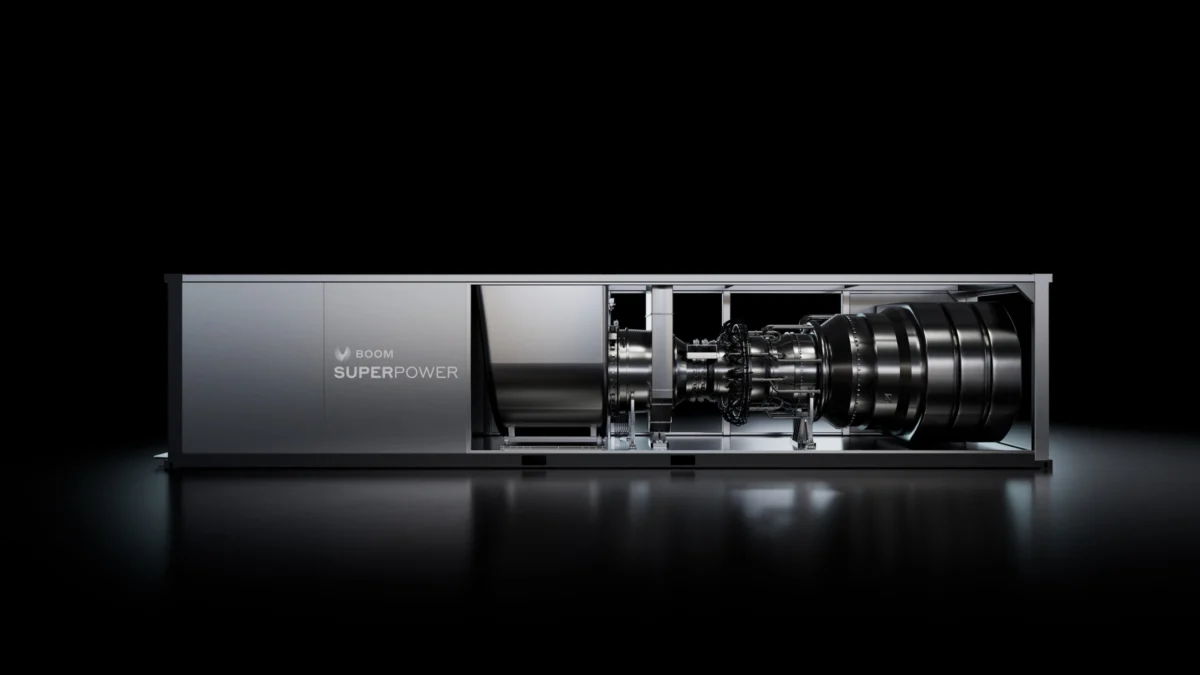
Boom Supersonic, a company renowned for its ambitious endeavor to develop Overture, a next-generation supersonic passenger jet, had recently ventured into the energy sector. Last year, it unveiled plans to market a terrestrial version of the engine designed for its airborne marvel as natural gas-fired stationary power plants. This innovative venture, dubbed Superpower, shares an astonishing 80% of its components with Symphony, the engine destined for the Overture jet. The synergy between aerospace engineering and power generation represents a novel approach to developing efficient and potentially high-performance energy solutions. The rationale behind this diversification for Boom Supersonic was clear: to create a revenue stream that could help underwrite the substantial development costs of its supersonic aircraft.
The partnership between Crusoe and Boom Supersonic was initially hailed as a significant win-win scenario. Crusoe had committed a staggering $1.25 billion to purchase 29 of Boom’s 42-megawatt Superpower turbines, with the initial deliveries slated to commence in 2027. This would have positioned Crusoe as Boom’s inaugural customer, providing crucial early adoption and validation for the Superpower product line. However, according to Blake Scholl, the CEO of Boom Supersonic, this ambitious deal has now fallen through. The unraveling of this partnership was publicly acknowledged by Scholl in a recent post on the social media platform X.
In his X post, Scholl extended congratulations to Crusoe’s founders, Cully Cavness and Chase Lochmiller, on their recent $3.9 billion funding success. He then candidly addressed the dissolution of the turbine launch partnership, stating, “The TL/DR is that turbines are no longer part of Crusoe’s near term primary power mix at Abilene/etc., so a launch partnership just didn’t make sense.” He further elaborated on Boom’s ongoing progress in the stationary power plant market, noting, “Boom will be delivering about 250MW of Superpowers next year to other sites, and we’re targeting 1GW in 2028. We’re grateful for the help Crusoe gave us in shaping Superpower and continue cheering for their successes. The future is long, and we look forward to potentially teaming up if/when turbines become part of their primary power mix.” This statement suggests that while the immediate partnership is off, the door remains open for future collaboration should Crusoe’s energy needs evolve.
Crusoe’s spokesperson, Andrew Schmitt, corroborated the news of the terminated business relationship with Boom Supersonic in an email to TechCrunch. Schmitt emphasized Crusoe’s core operational philosophy: "We build AI factories from the power up, and we’re bringing new campuses online across the country, powered by innovative energy sources." He further elaborated on the company’s strategic flexibility in energy procurement: "As our portfolio grows, we stay flexible, choosing the energy solutions that are right for each site as its needs evolve — including turbines, along with wind, solar, batteries and the grid. While Boom has been a great partner, the partnership isn’t the right fit today. We wish them well." This statement underscores Crusoe’s pragmatic approach to energy infrastructure, prioritizing adaptability to meet the specific requirements of each of its burgeoning data center locations. The company’s strategy appears to be one of diversification, not reliance on a single power source or technology.
The existing 1.2 gigawatt AI data center in Abilene, a facility developed in collaboration with Oracle and OpenAI, is currently powered by the local utility grid, according to Crusoe. This existing setup also includes a gas-turbine power plant, which is designated for backup power purposes only, indicating a layered approach to ensuring operational continuity. Looking ahead, Crusoe is actively constructing a new 900 megawatt data center in Abilene for Microsoft. This forthcoming facility is slated to be powered by on-site gas turbines, demonstrating a continued, albeit selective, interest in turbine technology for its new developments. This strategic decision for the Microsoft facility suggests that while the Boom Supersonic partnership was discontinued, Crusoe remains open to utilizing gas turbine technology from other providers or perhaps reconsidering its own internal development of such solutions.

For Boom Supersonic, the loss of its intended launch customer represents a significant setback, particularly given the substantial capital it raised. Last year, Boom secured $300 million, a significant portion of which was earmarked for the commercialization of its Superpower stationary power plant business. At the time of that funding announcement, Scholl had articulated the vision of using profits generated from the stationary power plant venture to fuel the development of the Overture supersonic jet. The termination of the Crusoe deal therefore impacts Boom’s projected revenue streams and potentially its broader financial strategy for advancing its aerospace ambitions. The company’s ability to secure new customers for its Superpower turbines will be critical in mitigating this impact.
The strategic rationale behind Crusoe’s decision to pull out of the Boom deal, while not fully detailed, can be inferred from several factors. The rapid pace of AI development and the concurrent explosion in demand for computational power necessitates a highly adaptable and scalable energy infrastructure. Companies like Crusoe are constantly evaluating the most cost-effective, reliable, and environmentally sustainable energy solutions for their vast data center operations. The decision to forgo the Boom turbines suggests that either Crusoe has identified alternative energy sources that offer a better cost-benefit ratio, greater scalability, or a more favorable environmental profile for its immediate needs, or that the timeline and technical specifications of Boom’s Superpower turbines no longer align with Crusoe’s rapidly evolving project requirements.
The evolving energy landscape for AI data centers is characterized by a multi-faceted approach. While grid power remains a primary source for many operations, the immense energy consumption of these facilities often necessitates the development of on-site generation and advanced energy storage solutions. This includes a growing reliance on renewable energy sources such as wind and solar, coupled with battery storage systems to ensure consistent power supply. Gas turbines, as evidenced by Crusoe’s plans for the Microsoft facility, continue to play a role, particularly for their dispatchability and ability to provide baseload power or rapid response during peak demand or grid outages. The competition among various energy providers and technology developers to supply these critical infrastructure needs is fierce, driving innovation and strategic partnerships.
Boom Supersonic’s Superpower turbines, designed to be highly efficient and share substantial commonality with its aerospace engines, offered a compelling proposition. However, the complexities of large-scale industrial power generation, including regulatory approvals, supply chain logistics, and long-term operational costs, can present significant hurdles. The fact that Boom is still projecting substantial deployments of its turbines to other sites in the coming years indicates that the Superpower business line is not entirely defunct, but rather that Crusoe’s specific initial partnership was not the right fit at this juncture. The company’s ability to pivot and secure alternative customers for its turbines will be a key indicator of its success in the energy market.
The broader implications of this development extend to the competitive landscape of AI data center infrastructure. Crusoe’s substantial funding and its role as a major provider of compute power, including its partnership with OpenAI and its burgeoning relationship with Microsoft, place it in a pivotal position. Its strategic decisions regarding energy sourcing directly influence the availability and cost of AI computing. As AI continues its rapid advancement, the demand for energy-efficient and reliable data centers will only intensify. Companies like Crusoe, which can navigate the complexities of power generation and infrastructure development, will be instrumental in shaping the future of artificial intelligence.
The future of Boom Supersonic’s energy division hinges on its ability to demonstrate the viability and economic attractiveness of its Superpower turbines to a wider range of customers. The initial investment and the technological overlap with its supersonic jet program offer a unique selling proposition. However, the energy market is notoriously challenging, with established players and a constant drive for cost optimization and sustainability. Boom’s success will depend on its capacity to scale production, secure new contracts, and potentially offer more flexible financing or partnership models. The potential for a future collaboration with Crusoe, as alluded to by Scholl, remains a possibility, contingent on the evolving energy strategies of both companies.
In conclusion, Crusoe’s decision to terminate its agreement with Boom Supersonic, while a notable shift, reflects a strategic imperative for flexibility and adaptation in the fast-paced world of AI data center development. The company’s substantial recent funding provides it with the resources to explore diverse energy solutions, from grid power and renewables to on-site generation. This move highlights the intricate dance between technological innovation, capital investment, and market demands that defines the cutting edge of the AI infrastructure industry. While Boom Supersonic faces a challenge in replacing its initial flagship customer, its broader ambitions in the stationary power plant market continue, with a stated goal of significant deployments in the near future. The ongoing evolution of energy solutions for AI will undoubtedly be a critical factor in the continued growth and accessibility of artificial intelligence technologies worldwide.
