
 By admin
The prospect of applying for a small-business credit card often carries an unnecessary weight of intimidation, particularly for entrepreneurs who do not view their operations through a traditional corporate lens. Many individuals believe that a business credit card is reserved for entities with glass-fronted offices, dozens of employees, and millions in annual revenue. However, the reality of the modern economy—fueled by the gig economy, digital marketplaces, and independent consultancy—has fundamentally shifted the landscape of commercial lending. American Express, a titan in the financial services sector, has positioned itself as a primary partner for businesses of all sizes, from multinational corporations to the solo freelancer selling handmade goods on Etsy. Understanding the nuances of the American Express business card portfolio, the specific application requirements, and the underlying logic of their approval process is essential for any business owner looking to optimize their cash flow and maximize travel rewards.
To begin the journey of securing an American Express business card, one must first dismantle the myth of what constitutes a "business." In the eyes of most financial institutions, and certainly within the framework of American Express’s underwriting, a business is any activity conducted with the intent to earn a profit. This broad definition encompasses a vast array of economic activities. You do not need a formal office space or an Employer Identification Number (EIN) to qualify. If you are an Uber or Lyft driver, a freelance graphic designer, a consultant, a landlord managing rental properties, or even someone who occasionally flips items on eBay or Poshmark, you are technically a business owner. According to recent data from the U.S. Small Business Administration, there are over 33 million small businesses in the United States, and a staggering 81% of them are "non-employer" firms, meaning they are operated solely by the owner. American Express recognizes this massive demographic and has tailored its application process to accommodate sole proprietors who use their own Social Security numbers as their primary tax identification.

When selecting which American Express business card is right for your specific needs, it is important to categorize them by their reward structures. American Express offers two primary types of cards: those that earn Membership Rewards points and those that are co-branded with travel partners like Delta Air Lines, Hilton, or Marriott Bonvoy. Membership Rewards points are often cited by financial experts as one of the most valuable "transferable" currencies in the world of points and miles. Because these points can be moved to various airline and hotel partners, they offer a level of flexibility that protects the cardholder against the devaluation of a single loyalty program. For example, the Business Platinum Card® from American Express is frequently favored by high-spending business owners who travel extensively, offering premium perks such as Centurion Lounge access and a 35% points rebate on flights booked through Amex Travel (up to a certain limit). Conversely, the American Express® Business Gold Card is designed for those whose primary expenses fall into categories like advertising, shipping, or technology, offering 4x points on the two categories where the business spends the most each month. For the smallest of businesses or those looking for a simple, no-annual-fee option, the Blue Business® Plus Credit Card from American Express is a standout, offering a flat 2x Membership Rewards points on the first $50,000 in purchases each year (then 1x).
The actual application process for an Amex business card is designed to be streamlined, yet it requires precision to ensure the highest probability of approval. The application is divided into two primary sections: business information and personal information. Under the business information section, the most critical field is the "Legal Business Name." For a sole proprietor, this is simply your own legal name. If you have registered a "Doing Business As" (DBA) name or formed an LLC, you would use that entity’s name. Similarly, for the "Tax Identification Number," a sole proprietor can use their Social Security Number (SSN), while more formal entities will use their EIN. One area where many applicants hesitate is the "Annual Business Revenue" field. It is a common mistake to think this number must be six or seven figures. If your business is a new "side hustle," it is perfectly acceptable to enter $0 or a very low number if you haven’t made any sales yet. American Express is often more interested in your personal income and creditworthiness when the business itself is in its infancy.
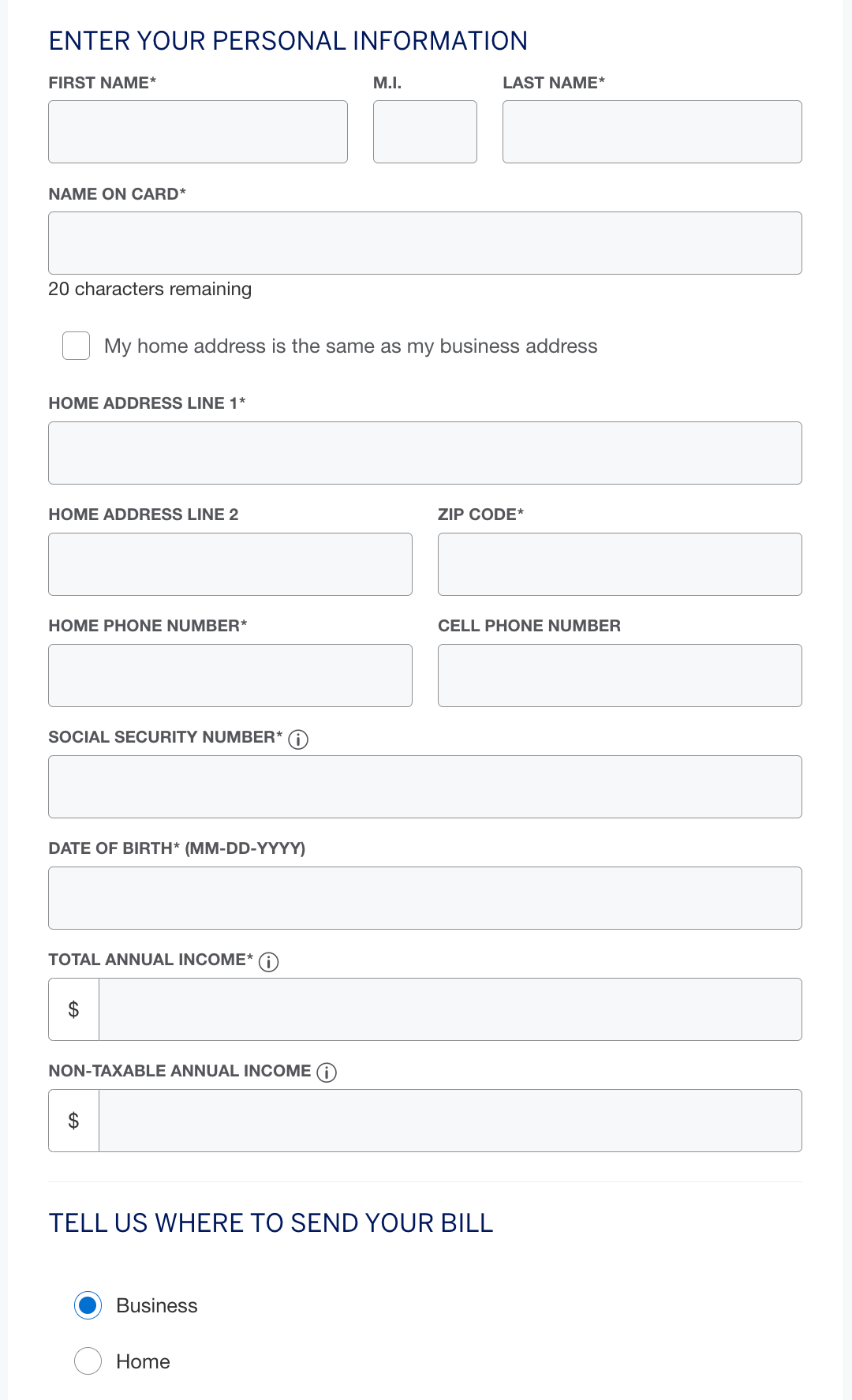
In the personal information section, American Express asks for your "Total Annual Income." This is a crucial metric because, for small businesses and sole proprietorships, the card issuer is essentially relying on your personal ability to repay the debt. When calculating this figure, you should include all sources of income that you have a reasonable expectation of access to. This includes your primary salary from a day job, investment income, and even your spouse’s income if it is used to support your household. This total income figure gives the issuer a clearer picture of your overall financial health beyond the specific revenue of the business venture. Additionally, American Express recently introduced a "Apply with Confidence" feature. This is a significant technological advancement in the lending space that allows applicants to see if they are approved for a card with a "soft" credit pull, which does not impact their credit score. Only if the applicant is approved and chooses to accept the card will a "hard" inquiry be placed on their credit report. This feature removes the risk of a credit score "ding" for those who are unsure of their eligibility.
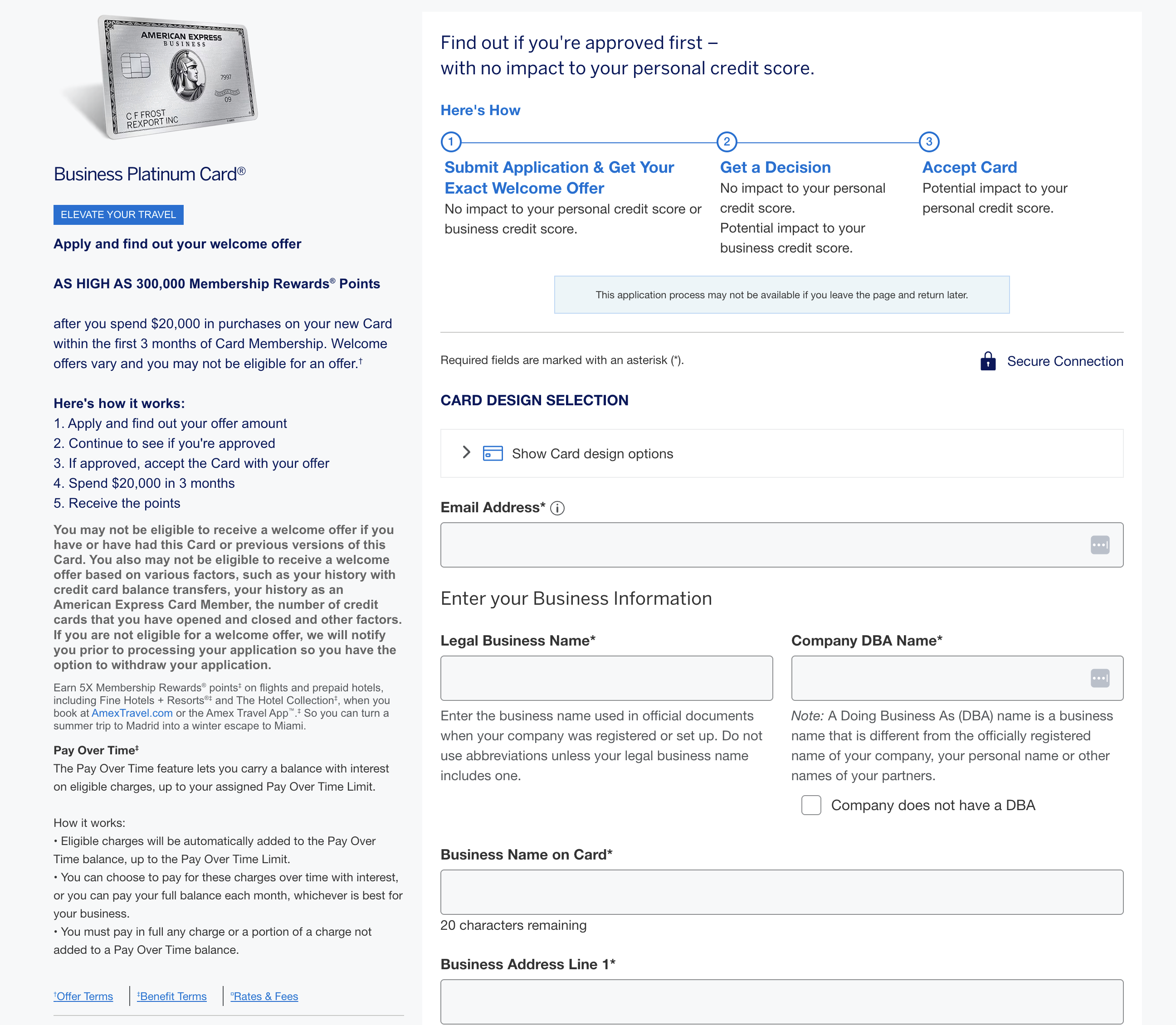
Beyond the basic requirements, one must navigate the specific rules and restrictions American Express has implemented to manage its risk and prevent "churning"—the practice of opening cards solely for the welcome offers. The most famous of these is the "once-per-lifetime" rule. Generally, American Express will only grant a welcome bonus on a specific card once in a cardmember’s lifetime. For instance, if you previously held the Business Gold Card five years ago and closed it, you may be approved for the card again, but you likely will not be eligible for the introductory points bonus. However, American Express has become more sophisticated in how it tracks this, often using a "pop-up" notification during the application process to inform an applicant if they are ineligible for a bonus before they officially submit the form. Furthermore, Amex typically limits individuals to holding five "credit cards" (cards with a defined credit limit) at any one time. It is important to note that "pay-in-full" cards (formerly known as charge cards), such as the Business Platinum and Business Gold, which do not have a preset spending limit, often do not count toward this five-card limit.
Another strategic advantage of American Express business cards is their impact—or lack thereof—on a personal credit report. Most American Express business cards do not report monthly activity to the personal credit bureaus, provided the account remains in good standing. This is a major benefit for business owners who may carry high balances for inventory or advertising expenses; since these balances don’t show up on personal reports, they don’t negatively impact the owner’s personal debt-to-credit utilization ratio. Furthermore, because these cards don’t usually appear on personal reports, they generally do not count toward the "Chase 5/24 rule," a famous restriction from Chase Bank that denies applicants who have opened five or more new credit cards from any issuer in the past 24 months. This makes Amex business cards an excellent choice for those who want to expand their credit capacity while keeping their personal credit profile "clean" for future mortgage applications or other personal loans.
If an application is not immediately approved, it often enters a "pending" status. This is not a cause for panic. Often, it simply means that the American Express fraud or underwriting department needs to verify a piece of information, such as your home address or the existence of your business. In some cases, they may request a "4506-C" form, which allows them to verify your income directly with the IRS. If an application is outright denied, the applicant has the right to a "reconsideration" phone call. During this call, you can speak with a representative to explain your business model, clarify your income, or offer to shift credit lines from an existing Amex card to the new one. Many denials are overturned simply by providing a human context to the automated algorithm’s decision.
Ultimately, the decision to integrate an American Express business card into your financial toolkit should be based on a clear analysis of your spending patterns and business goals. For a consultant who travels twice a month, the lounge access and hotel status provided by a premium card might save thousands of dollars and hundreds of hours of discomfort. For a retail reseller, the ability to earn 2x points on all purchases can result in "free" business-class flights for a family vacation. By treating the application process as a standard business task rather than a daunting hurdle, entrepreneurs can unlock a level of financial flexibility and reward potential that personal cards simply cannot match. American Express has built a bridge for the modern worker; crossing it requires only a clear understanding of one’s own business activity and a few minutes to navigate a straightforward application. As the economy continues to evolve toward independent and decentralized work, the utility of these financial products will only grow, making the "business card" a staple for anyone seeking to turn their professional efforts into tangible rewards.
