
 By admin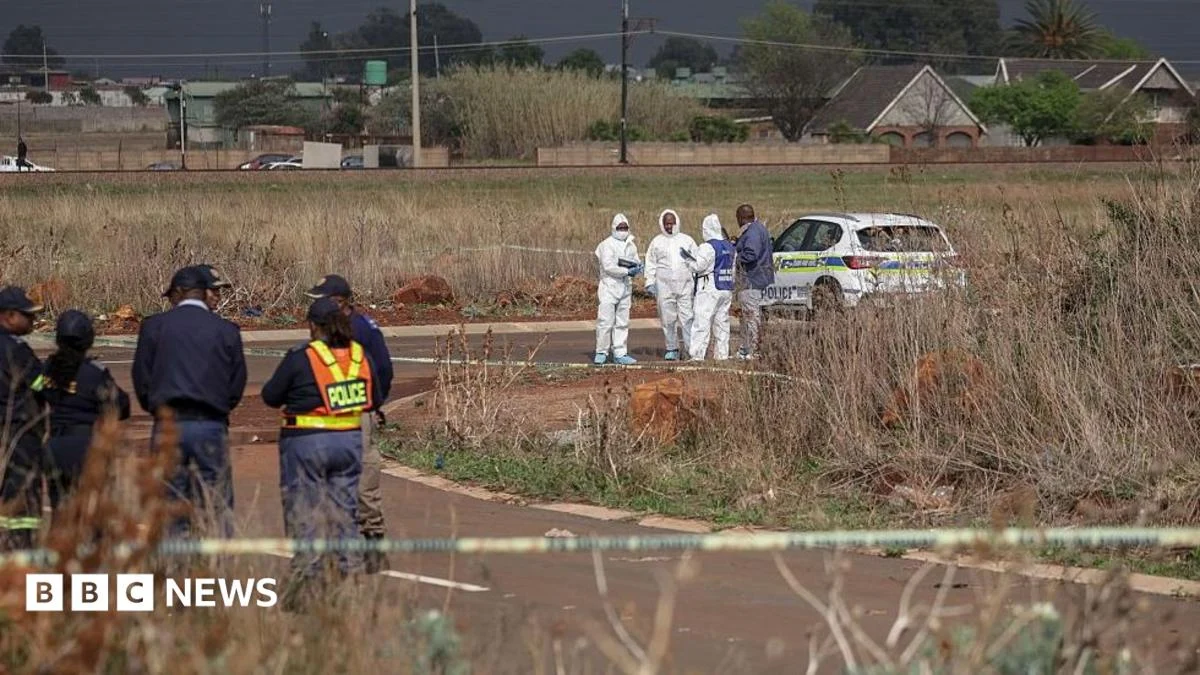
A chilling wave of fear has gripped the Ekurhuleni municipality, east of Johannesburg, as South African police confirm the grim discovery of a ninth woman’s body within a mere two-month span. The latest victim, found half-naked and shrouded in a sheet on the roadside in Dawn Park on Thursday morning, remains unidentified, adding another layer of distress to an already deeply unsettling situation. This grim revelation follows the discovery of eight other women’s bodies since July, sparking widespread alarm and fueling urgent calls for action. The sheer frequency and disturbing circumstances surrounding these deaths have ignited fears of a potential serial killer or a coordinated criminal operation targeting women in the region.
The gravity of the situation has not gone unnoticed by the highest echelons of government. President Cyril Ramaphosa has unequivocally vowed that “no stone will be left unturned” in the relentless pursuit of those responsible for these heinous acts. He acknowledged the profound impact these killings are having, stating they are “causing fear and uncertainty in our communities.” This commitment from the President signals a national priority to address the escalating violence and restore a sense of security to the affected areas.
Among the identified victims is 38-year-old Elizabeth "Tsontso" Moselakgomo, whose disappearance last week after setting out for an afternoon run sent shockwaves through her community. Her body was tragically discovered three days later behind a hotel in Kempton Park, a stark reminder of the vulnerability faced by women in the region. Further compounding the tragedy are the identities of two other victims: Itumeleng Kekana, who had been missing since July, and 38-year-old Dineo Evelyn Motapane, whose lifeless body was found by the roadside in KwaThema on Tuesday. The timeline of these discoveries paints a horrifying picture: the first of the nine bodies was unearthed in Kempton Park on July 15th. While a suspect was apprehended two days later in connection with that specific case and remains in custody, police have been cautious in linking this individual to the subsequent deaths. The grim discoveries continued through August and September, with bodies surfacing in Kempton Park, Olifantsfontein, Clayville, and KwaThema, underscoring the widespread nature of the crisis.
The most recent victim, believed to be in her 30s, reportedly displayed signs of bruising and stab wounds, according to local media reports, further intensifying the fear and speculation surrounding the nature of her death. This latest discovery has amplified the palpable fear pervading the area, particularly among women who no longer feel safe in their own communities. Bongeka Sebela, a local resident, articulated the pervasive sentiment of dread to the BBC: "We are scared to come out of our houses. We are scared to go to the shops. We are no longer free in a country where we are supposed to be safe as women." This poignant testimony highlights the devastating erosion of personal safety and freedom experienced by the women in Ekurhuleni.
In response to the escalating crisis, South African police have mobilized a formidable, multidisciplinary investigative team. This specialized unit comprises seasoned detectives, intelligence officers, forensic experts, and other specialists, all dedicated to meticulously piecing together the fragmented puzzle of these deaths. Their primary objective is to establish any potential links between the various cases and to identify the perpetrators. Authorities are reportedly pursuing a person of interest, though specific details regarding which case or cases this individual may be connected to remain undisclosed, underscoring the sensitive nature of the ongoing investigation.
Gauteng Premier Panyaza Lesufi, speaking on Thursday, conveyed a resolute stance, stating, "Let’s not get emotional, the gloves are off." He emphasized the authorities’ capacity to effectively address and resolve these killings, projecting an image of determination and competence. In a statement released on Thursday, the South African police acknowledged that the recent surge in serious and violent crimes against women is a “matter of grave concern.” They issued a vital advisory to women across the country, urging them to remain exceptionally vigilant about their personal safety. The police recommended practical safety measures, including avoiding solitary walks or the use of isolated routes, staying alert to strangers and suspicious vehicles, and sharing their location or travel plans with trusted individuals. Furthermore, they advised against wearing earphones or earbuds at high volumes, as this can significantly diminish situational awareness. The stark reminder that "Practising personal safety measures can save lives" underscores the immediate and practical steps individuals can take to mitigate risks.
To incentivize the flow of crucial information, authorities have announced a substantial reward of 400,000 rand (approximately $24,000 or £18,000) for any tip-offs that lead to arrests. They have also issued an earnest appeal to families who may have missing relatives to come forward and assist in the identification of the remaining unknown victims, a process that is critical for closure and for advancing the investigation.
The pervasive fear in Ekurhuleni, particularly around Kempton Park, is exacerbated by the backdrop of long-standing concerns about the alarmingly high levels of violence against women in South Africa. This is not an isolated incident but a symptom of a deeply entrenched societal problem. While police are not definitively linking the current deaths to a single serial killer at this juncture, they are actively exploring the possibility that a group of individuals may be orchestrating these crimes. Acting Police Minister Firoz Cachalia has cautioned against premature speculation, emphasizing that investigators are currently dealing with what appear, at this initial stage, to be "quite distinct, separate events." This measured approach, while necessary for an objective investigation, does little to assuage the public’s immediate anxieties.
The statistics surrounding gender-based violence (GBV) in South Africa are stark and deeply troubling. According to UN Women, the country experiences some of the world’s highest rates of GBV, with the rate at which women are killed being a staggering five times higher than the global average. This alarming reality is not a new phenomenon but a persistent and devastating aspect of South African society. In response to the overwhelming scale of this crisis, the country classified violence against women as a national disaster last November. This declaration followed a powerful online campaign that galvanized nationwide protests, highlighting the urgency and breadth of the problem. The current spate of deaths in Ekurhuleni tragically underscores the continued and urgent need for robust intervention, societal change, and effective law enforcement to combat the pervasive violence against women that continues to plague South Africa. The ongoing investigation and the collective efforts of law enforcement, government, and the community will be crucial in bringing an end to this terrifying chapter and ensuring the safety and security of women across the nation. The psychological toll on communities, particularly on women, is immeasurable, and the pursuit of justice must be swift and decisive to restore a semblance of order and peace. The economic impact, though secondary to the human tragedy, is also significant, with fear and uncertainty potentially disrupting daily life and economic activity. The government’s commitment to leave "no stone unturned" will require not only effective policing but also addressing the underlying societal issues that contribute to such high levels of violence against women.
