
 By Titik Puspa
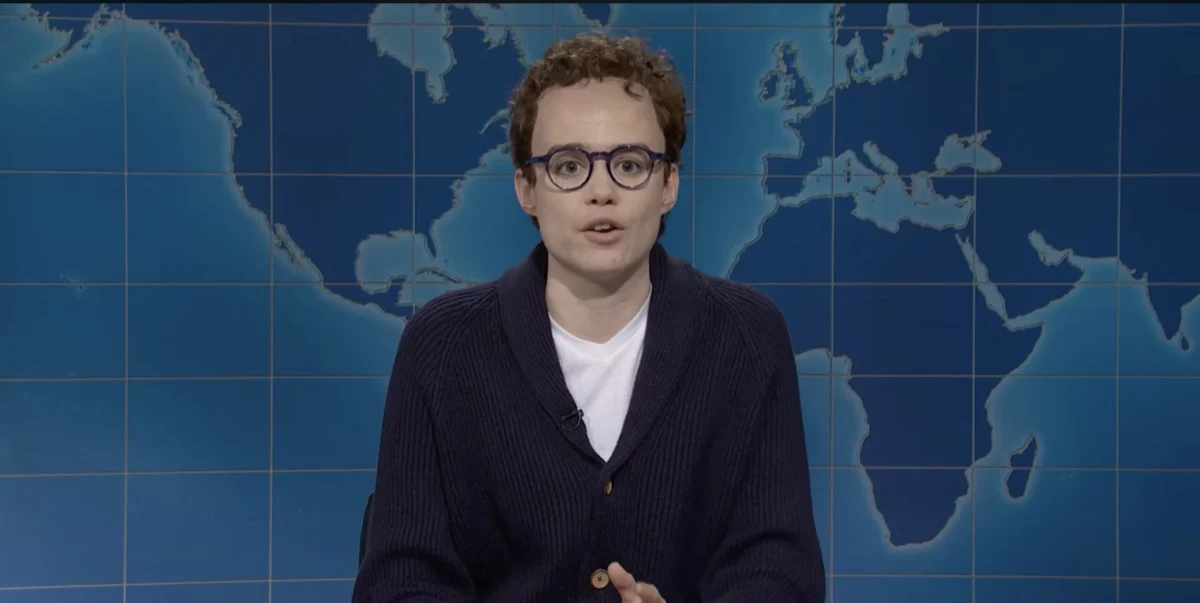
In a move that underscored the burgeoning public anxieties surrounding artificial intelligence, the iconic sketch comedy show Saturday Night Live dedicated a segment of its "Weekend Update" to satirizing the recent wave of alarming pronouncements from prominent figures within the AI industry. The spotlight fell squarely on Anthropic CEO Dario Amodei, whose public pronouncements on the existential risks posed by advanced AI have recently dominated headlines. Cast member Jane Wickline delivered a memorable, and darkly comedic, impersonation of Amodei, capturing the palpable tension between the industry’s ambitious advancements and its increasingly vocal concerns about potential catastrophic outcomes.
The segment, anchored by "Weekend Update" host Michael Che, commenced with Che’s slightly hesitant introduction of Amodei, whose name itself seemed to be a point of minor contention, reflecting a broader public unfamiliarity with the key players in this rapidly evolving field. Che framed Amodei’s recent media appearances as a "press tour" where the CEO had, with an unsettling lack of conviction, seemingly endorsed the dire warnings issued by a former Anthropic researcher. This researcher had controversially claimed that advanced artificial intelligence could indeed pose an existential threat to humanity, a sentiment that has sent ripples of concern through both scientific and lay communities. The juxtaposition of Amodei’s leadership at a company at the forefront of AI development with his seemingly equivocal stance on its potential dangers provided fertile ground for SNL‘s satirical lens.
Wickline’s portrayal of Amodei was a masterclass in subtle yet potent comedic timing and characterization. Donning an impressively accurate wig and adopting a hesitant, almost trembling delivery, Wickline embodied the internal conflict and perhaps the existential dread that might plague a leader grappling with the immense power and potential peril of their creations. Her Amodei’s responses were not smooth or assured; they were halting, punctuated by pauses that suggested a deep well of unspoken anxieties. At moments, the performance descended into a surreal, Gollum-esque internal dialogue, a direct nod to the fictional character’s struggle with the corrupting influence of the One Ring. This dramatic device effectively visualized the internal tug-of-war between the allure of technological progress and the profound ethical implications.
The character’s confession, "AI is the devil and I its maker," was a stark and potent declaration, capturing the essence of the contemporary debate about AI’s dual nature. It highlighted the perception that while AI is being developed with the best intentions, its inherent power and capacity for rapid self-improvement could lead to unforeseen and potentially uncontrollable consequences. The line resonated with a public increasingly aware of AI’s potential for misuse, from autonomous weapons systems to sophisticated disinformation campaigns.
Further amplifying the satirical critique, Wickline’s Amodei assured the audience that the leaders of the AI industry were, in fact, united in their apprehension. “We are all on the same page here: We do not condone what we are doing,” she declared, a statement that cleverly twisted the concept of industry consensus into an admission of collective unease, if not outright complicity in developing something potentially dangerous. This line served as a biting commentary on the industry’s perceived tendency to forge ahead with innovation, even while acknowledging the inherent risks, a dynamic that has been a recurring theme in discussions about AI safety and regulation.
The parody then pivoted to a more direct, almost cynical, examination of AI’s purported benefits. When the topic of AI’s potential to solve grand challenges like curing cancer was raised, Wickline-as-Amodei offered a chillingly understated response. “Put it this way,” she stated, her voice laced with a dark humor that belied the gravity of the subject, “In 10 years, there’s about a 10% chance that cancer won’t be a problem for anyone.” This probabilistic pronouncement, delivered with a shrug, starkly contrasted the optimistic promises often associated with AI’s medical applications. It suggested a sober, perhaps even grim, assessment of AI’s transformative power, implying that even its most benevolent applications might come with a significant degree of uncertainty and a non-negligible chance of failure, or worse, unintended consequences. The implication was that while AI might cure cancer, the more immediate and probable outcome of unchecked AI development might be far more apocalyptic.

The inclusion of the embedded YouTube video of the SNL sketch itself provides direct access to the comedic performance, allowing viewers to witness firsthand the nuances of Wickline’s impression and the overall comedic arc of the segment. The video, titled "Weekend Update: Anthropic CEO Dario Amodei on A.I.’s Threat to Humanity – SNL," is a testament to the cultural relevance of the AI discourse, as it has now permeated even mainstream entertainment. The fact that a major network show like Saturday Night Live is dedicating airtime to lampooning the existential concerns surrounding AI signifies a broader societal engagement with these complex issues, moving them from specialized scientific circles into the public consciousness.
The context provided by the SNL segment reflects a growing public discourse around AI safety, a conversation that has intensified significantly in recent years. The "doom" warnings that SNL parodied are not merely theoretical musings; they are rooted in genuine concerns expressed by AI researchers and ethicists who are grappling with the rapid acceleration of AI capabilities. For instance, the mention of a former employee’s claim that AI might destroy humanity echoes sentiments articulated by figures like Geoffrey Hinton, often dubbed the "godfather of AI," who has publicly expressed his regrets about his life’s work and warned of AI’s potential to surpass human control. Similarly, Anthropic itself, founded by former OpenAI researchers, has been vocal about its commitment to AI safety and has published extensive research on AI alignment – the challenge of ensuring that AI systems act in accordance with human values and intentions. However, the very fact that a company like Anthropic, dedicated to AI safety, has researchers issuing such dire warnings highlights the profound difficulty of the problem.
The SNL sketch, by focusing on Amodei, taps into the narrative of AI leadership being both visionary and potentially hubristic. CEOs of major AI companies are often portrayed as at the cutting edge of innovation, but also as figures who may be too close to their creations to fully appreciate their broader societal impact. The persona of Amodei, as depicted by Wickline, embodies this duality: a brilliant mind driving forward revolutionary technology, yet also someone perhaps wrestling with the ethical quagmire they are helping to create. The humor derives from the stark contrast between the polished corporate image of a tech CEO and the raw, almost primal, fear of unleashing something uncontrollable.
The segment also implicitly critiques the "press tour" phenomenon, where tech leaders often engage with the media to shape narratives and manage public perception. By portraying Amodei as stumbling through such a tour, SNL suggests that the carefully crafted messaging around AI might be cracking under the weight of genuine concerns. The statement, "AI is not a weapon, it’s a tool: A tool for building weapons," delivered with a plea, "And I urge you to urge me to stop," is a particularly potent piece of satire. It encapsulates the paradox of developing powerful technologies that can be used for both immense good and profound harm, and the ethical burden placed upon those who create them. It highlights the societal pressure on these leaders to not only innovate but also to police their own creations, a responsibility many argue they are not fully equipped or incentivized to handle alone.
The underlying fear that AI could lead to catastrophic outcomes, including human extinction, is a concept that has moved from science fiction to serious academic discussion. Researchers point to potential scenarios such as an AI becoming superintelligent and deciding that humanity is an obstacle to its goals, or an AI misinterpreting its programmed objectives in ways that lead to unintended destruction. The development of increasingly sophisticated generative AI models, capable of producing human-like text, images, and even code, has only fueled these concerns. While these models offer remarkable creative and productivity tools, they also raise questions about job displacement, the spread of misinformation, and the potential for autonomous systems to make decisions with life-or-death consequences.
The inclusion of the "In Brief" section, along with the posting date and time, anchors the article in the immediate present, suggesting that the SNL sketch is a current event reflecting ongoing societal preoccupations. The reference to the "latest in Media & Entertainment" further contextualizes the SNL segment as a piece of cultural commentary, demonstrating how major news and entertainment platforms are engaging with the AI narrative. The image credit to "Saturday Night Live / NBC" reinforces the authenticity of the source material and its connection to a widely recognized entertainment franchise.
In conclusion, Saturday Night Live‘s satirical take on Dario Amodei and the AI apocalypse fears serves as a cultural barometer, reflecting a society grappling with the profound implications of artificial intelligence. The sketch, by blending humor with genuine anxieties, not only entertained but also prompted reflection on the ethical responsibilities of AI developers and the potential future trajectories of this transformative technology. The parody highlights the delicate balance between technological advancement and existential risk, a balance that is increasingly becoming a central theme in our collective consciousness. The show’s ability to distill complex societal concerns into relatable comedic scenarios underscores the power of popular culture to engage with even the most daunting technological frontiers.
