
 By admin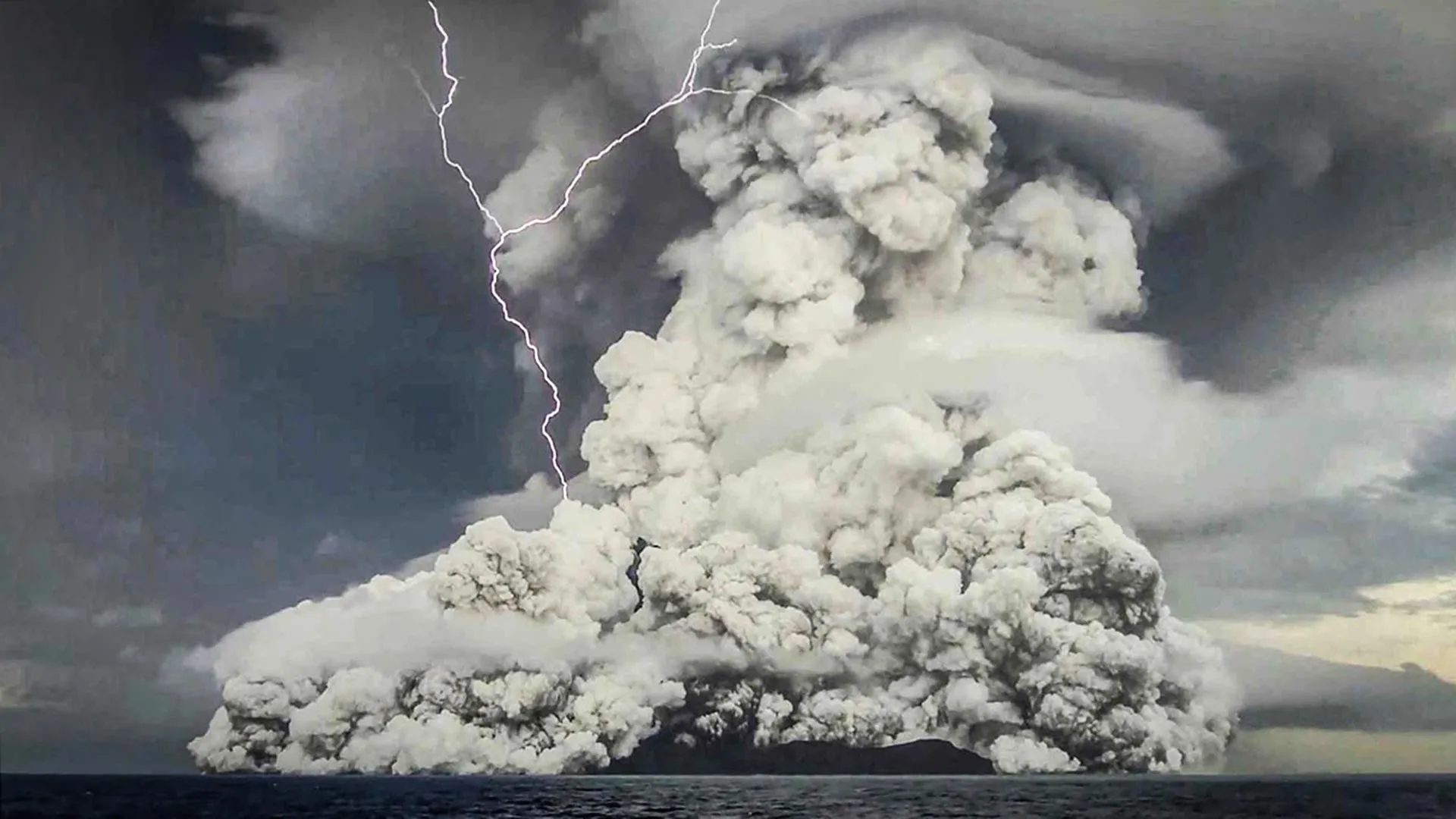
This groundbreaking finding, published in Nature Communications, not only sheds new light on the complex interplay of atmospheric chemistry and geological phenomena but also carries profound implications for our understanding of climate change mitigation. Scientists are increasingly focused on strategies to reduce atmospheric methane, a potent greenhouse gas that, despite its shorter lifespan compared to carbon dioxide, contributes significantly to global warming. Unraveling how natural processes can accelerate methane breakdown offers invaluable insights that could eventually inspire novel, engineered approaches to slow near-term warming and buy critical time for more comprehensive decarbonization efforts.
A Cataclysmic Event with Unforeseen Atmospheric Fallout
The January 15, 2022, eruption of Hunga Tonga-Hunga Ha’apai was an event of staggering scale and unprecedented characteristics. Located in the South Pacific island nation of Tonga, this submarine volcano unleashed an explosion so powerful it generated tsunamis across the Pacific, triggered atmospheric shockwaves that circumnavigated the globe multiple times, and injected an extraordinary volume of material directly into the stratosphere. Estimates suggest it was the most powerful volcanic eruption of the 21st century, comparable in energy release to some of the largest historical events.
What made Hunga Tonga particularly unique was its underwater location. The eruption propelled not only vast quantities of volcanic ash and gases but also immense amounts of seawater high into the atmosphere. This colossal injection of water vapor into the stratosphere – a layer of the atmosphere typically very dry – created a significant, albeit temporary, disruption to atmospheric composition, immediately drawing the attention of climate and atmospheric scientists worldwide. While the immediate focus was on the warming potential of this stratospheric water vapor and the aerosol effects of the ash, the subsequent discovery of its methane-destroying capabilities adds another layer of complexity to its environmental legacy.
Methane: A Potent, Yet Fleeting, Climate Driver
To fully appreciate the significance of this discovery, it’s crucial to understand the role of methane (CH₄) in Earth’s climate system. Methane is the second most abundant anthropogenic greenhouse gas after carbon dioxide, but its warming potential is far greater. Over a 20-year period, methane is approximately 80 times more potent than CO₂ in trapping heat, making it a critical driver of contemporary global warming. Its sources are diverse, ranging from natural wetlands and geological seepage to human activities like agriculture (livestock, rice cultivation), fossil fuel production (leakages from oil and gas infrastructure), and waste decomposition.
Unlike CO₂, which can linger in the atmosphere for centuries to millennia, methane has a relatively short atmospheric lifetime, typically around 10 to 12 years, before it is broken down through chemical reactions, primarily with hydroxyl radicals (OH). This shorter lifespan makes methane an attractive target for rapid climate action. Significant reductions in methane emissions today could yield tangible climate benefits within a decade, offering a quicker "emergency brake" on rising global temperatures compared to the slower response times associated with CO₂ reductions. While cutting methane emissions is not a substitute for the fundamental need to decarbonize and drastically reduce CO₂ emissions for long-term climate stabilization, it offers a crucial lever for mitigating near-term warming and potentially preventing the crossing of dangerous climate tipping points.
A Strange Signal in the Volcano Cloud: Formaldehyde as a Chemical Fingerprint
The discovery of methane destruction within the Hunga Tonga plume was entirely serendipitous, emerging from routine satellite observations. Researchers utilized data from TROPOMI (Tropospheric Monitoring Instrument), an advanced sensor aboard the European Space Agency’s Sentinel-5P satellite. TROPOMI is designed to monitor a range of atmospheric gases related to air pollution and climate change, providing daily global coverage.
As scientists analyzed TROPOMI data of the enormous plume generated by the eruption, they detected exceptionally high levels of formaldehyde (HCHO), a chemical compound that provided a crucial, albeit initially puzzling, clue. Formaldehyde is not a primary volcanic emission. Instead, it is a transient intermediate product in the chemical reactions that break down methane in the atmosphere. Because formaldehyde itself is short-lived, typically existing for only a few hours, the presence of unusually large and persistent amounts acts as a "chemical fingerprint," strongly indicating that methane destruction is actively occurring.
"When we analyzed the satellite images, we were surprised to see a cloud with a record-high concentration of formaldehyde. We were able to track the cloud for 10 days, all the way to South America. Because formaldehyde only exists for a few hours, this showed that the cloud must have been destroying methane continuously for more than a week," explains Dr. Maarten van Herpen from Acacia Impact Innovation BV, first author of the study. This prolonged detection of formaldehyde was critical, demonstrating that the methane breakdown was not a momentary event but a sustained process within the evolving volcanic plume.
He further adds, "It is known that volcanoes emit methane during eruptions, but until now it was not known that volcanic ash is also capable of partially cleaning up this pollution." This statement underscores the novelty of the finding, challenging previous assumptions about the net atmospheric impact of volcanic events, particularly concerning greenhouse gases.
Quantifying the Impact: Daily Emissions From 2 Million Cows
The researchers’ detailed calculations provided concrete figures to illustrate the scale of both methane emission and destruction. During the eruption, the Hunga Tonga volcano released an estimated 300 gigagrams (Gg) of methane. To put this into perspective, 300 Gg is roughly equivalent to the annual methane emissions of more than two million cows – a significant contribution to the global methane budget from a single event.
Remarkably, the subsequent analysis revealed that the volcanic plume simultaneously removed approximately 900 megagrams (Mg) of methane per day. This daily removal rate is comparable to the daily methane emissions of two million cows. While the total amount removed did not entirely offset the initial release over the short observation period, the sheer magnitude of daily destruction highlights an incredibly efficient, albeit previously unrecognized, natural atmospheric cleansing mechanism. This suggests that while large eruptions are methane sources, they might also trigger powerful, localized methane sinks.
Salt, Sunlight, and Unexpected Chemistry: A Stratospheric Revelation
The mechanism behind this methane destruction is believed to involve an unusual and highly specific combination of volcanic ash, seawater, and sunlight. This basic chemical process, involving "iron salt aerosols," was only recently identified by scientists in 2023, though in a vastly different environmental context.
That earlier research focused on the troposphere, the lowest major layer of Earth’s atmosphere where most weather occurs. It found that Saharan dust, transported thousands of kilometers across the Atlantic Ocean, could mix with sea salt released into the atmosphere by breaking ocean waves. These combined materials form tiny airborne particles known as iron salt aerosols. When sunlight strikes these microscopic particles, it triggers chemical reactions that release highly reactive chlorine atoms. Chlorine is an extremely potent oxidant, capable of rapidly attacking and breaking apart methane molecules. This discovery added a previously unappreciated pathway for methane destruction to scientists’ understanding of tropospheric chemistry.
"What is new – and completely surprising – is that the same mechanism appears to occur in a volcanic plume high up in the stratosphere, where the physical conditions are entirely different," says Professor Matthew Johnson from the Department of Chemistry at the University of Copenhagen, one of the researchers behind both discoveries. The stratosphere, located above the troposphere, is characterized by much lower pressures, temperatures, and a different chemical composition, making the observation of this specific chemistry there truly remarkable.
The Hunga Tonga eruption created uniquely favorable conditions for this stratospheric iron salt aerosol chemistry. Because the volcano erupted explosively beneath the ocean, it blasted enormous quantities of salty seawater, rich in various salts including sodium chloride, upward along with volcanic ash and other volcanic gases. A significant portion of this material, including both fine ash particles and evaporated sea salt, reached the stratosphere. Researchers propose that sunlight striking this mixture within the stratospheric plume produced the highly reactive chlorine atoms. These chlorine atoms then reacted vigorously with methane present in the plume, contributing to its breakdown. The extraordinary amounts of formaldehyde detected from space served as direct evidence that this powerful oxidative process was indeed taking place.
Stratospheric Chemistry: Expanding the Atmospheric Puzzle
The finding that this iron salt aerosol chemistry can occur in the stratosphere significantly broadens our understanding of atmospheric processes. The stratosphere plays a crucial role in Earth’s climate system, hosting the ozone layer that protects life from harmful ultraviolet radiation. While volcanic eruptions are known to inject substances like sulfur dioxide (which forms aerosols that can cool the planet) and water vapor into the stratosphere, the idea that they could also catalyze methane destruction through a novel chlorine-based mechanism is a substantial addition to atmospheric chemistry models. This discovery necessitates a re-evaluation of how stratospheric aerosols, whether volcanic or other mineral dusts, might influence the global methane budget and atmospheric cleansing processes.
Implications for Climate Action: A Natural Blueprint for Methane Removal?
Beyond its scientific novelty, the Hunga Tonga discovery carries significant implications for climate change mitigation. The fact that a natural phenomenon can destroy methane on such a large scale offers potential inspiration for emerging climate technologies. One active area of climate research is atmospheric methane removal (AMR), which explores whether chemical processes could safely and efficiently increase the rate at which methane already in the atmosphere is broken down, rather than solely focusing on preventing new emissions.
Hunga Tonga provides a dramatic, real-world demonstration of one such possible mechanism. If the conditions that led to methane destruction within the volcanic plume can be understood and potentially replicated, it could open new avenues for engineered methane removal technologies. However, a major challenge in this field is proving the effectiveness of any proposed technology. Atmospheric methane is distributed across vast areas, making it incredibly difficult to confidently measure relatively small changes in its concentration due to localized removal efforts.
"How do you prove that methane has been removed from the atmosphere? How do you know your method works? It’s very difficult. But here we address that problem by showing that methane breakdown can in fact be observed using satellites," says Dr. Jos de Laat from the Royal Netherlands Meteorological Institute, senior author of the study. The ability to monitor formaldehyde as a proxy for methane destruction from space, as demonstrated in this study, could be a critical tool for validating future AMR technologies.
Rethinking the Global Methane Budget
The findings also compel scientists to reconsider the global methane budget. The methane budget is essentially an accounting system that tracks the sources and sinks of methane in the atmosphere. Scientists estimate how much methane enters the atmosphere from various sources (natural wetlands, agriculture, fossil fuels, geological activity) and compare that with the amount removed through atmospheric chemistry, soil absorption, and other processes.
According to the researchers, the role of atmospheric dust – particularly volcanic ash and other forms of mineral dust – has not been fully incorporated into these calculations in the past. If volcanic eruptions and other dust events can indeed accelerate methane destruction through mechanisms like the iron salt aerosol chemistry, then current estimates of how methane moves through the atmosphere, and thus projections of future methane levels, may need to be adjusted.
"We now know that atmospheric dust – for example from a volcanic eruption – impacts the methane budget, meaning the budget of how much methane is added to the atmosphere and how much is removed. Because dust has not previously been taken into account, it is important that we correct the data on which these estimates are based," emphasizes Matthew Johnson. This calls for a more comprehensive approach to modeling atmospheric chemistry, integrating these newfound dust-driven pathways.
The Eye in the Sky: TROPOMI’s Pivotal Role
The success of this research hinged on the advanced capabilities of the TROPOMI instrument aboard the European Space Agency’s Sentinel-5P satellite. TROPOMI’s daily, high-resolution scans of Earth’s atmosphere provide invaluable data on trace gases. However, detecting formaldehyde within a dense, stratospheric volcanic plume pushed the instrument and its data processing well beyond its standard operating conditions.
"Retrieving formaldehyde from TROPOMI in a stratospheric volcanic plume is far outside the instrument’s standard operating conditions – we had to carefully correct the satellite’s sensitivity for the unusual altitude of the signal and account for interference from the high sulfur dioxide concentrations. Getting these corrections right was essential to confirm that what we were seeing was real," explained Dr. Isabelle De Smedt from the Royal Belgian Institute for Space Aeronomy. This meticulous work by the research team ensured that the unusually strong formaldehyde signal was genuine and could be reliably used to track the ongoing methane destruction within the volcanic cloud.
Looking Ahead: Could Scientists Copy What the Volcano Did?
The team believes that this extraordinary discovery could serve as a powerful catalyst for engineers and climate scientists to investigate whether the natural chemistry observed after Hunga Tonga can be safely and effectively reproduced. The concept of "geoengineering" or "climate intervention" often evokes caution due to potential unintended consequences, and any attempt to manipulate atmospheric chemistry would require exhaustive study and rigorous testing to understand its full environmental impact.
However, the Hunga Tonga event provides researchers with an unprecedented, large-scale, real-world example of methane destruction, coupled with a proven method for monitoring the process from space. "It’s an obvious idea for industry to try to replicate this natural phenomenon – but only if it can be proven to be safe and effective. Our satellite method could offer a way to help figure out how humans might slow global warming," concludes Matthew Johnson. The journey from a natural observation to a viable technological solution is long and complex, but the Hunga Tonga eruption has undeniably opened a fascinating new chapter in our quest to understand and mitigate climate change.
About the Study
The scientific article, titled "Volcanic ash-induced methane destruction in the Hunga Tonga–Hunga Ha’apai plume observed from space," was published in the prestigious journal Nature Communications.
The international team of researchers behind this groundbreaking study includes Maarten van Herpen (Acacia Impact Innovation BV, Netherlands); Isabelle De Smedt (Royal Belgian Institute for Space Aeronomy, Belgium); Daphne Meidan and Alfonso Saiz-Lopez (CSIC, Spain); Matthew Johnson (University of Copenhagen, Denmark); Thomas Röckmann (Utrecht University, Netherlands); and Jos de Laat (Royal Netherlands Meteorological Institute, Netherlands).
The vital research was supported by Spark Climate Solutions, an organization dedicated to accelerating climate solutions.
