
 By admin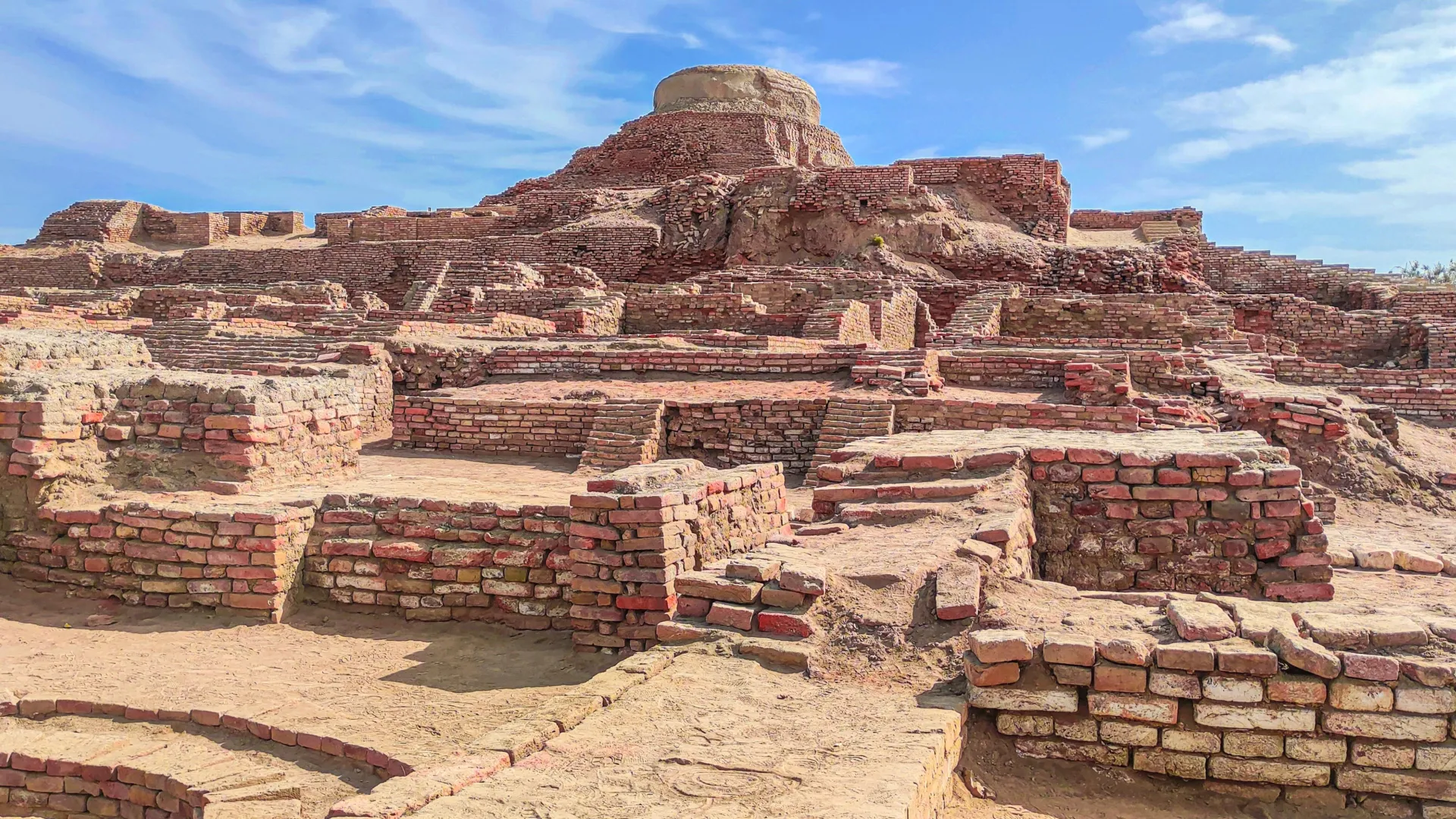
For centuries, historians and archaeologists have largely operated under a traditional model that posits an inherent link between the development of complex urban centers and the escalation of social stratification. This prevailing theory suggests that as small, egalitarian farming settlements transformed into bustling cities, a natural consequence was the emergence of powerful elites – kings, priests, and military leaders – who consolidated wealth, resources, and authority. This concentration of power, in turn, was believed to inevitably widen the chasm between the privileged few and the general populace, leading to increasingly stark divides between rich and poor. Examples from Mesopotamia, ancient Egypt, and early Greek city-states often serve to illustrate this model, with their monumental palaces, elaborate royal tombs, and hierarchical social structures seemingly confirming the universal applicability of this pattern. The construction of massive temples and ziggurats, requiring immense communal labor and resources, often points to a centralized authority capable of commanding such projects and, by extension, controlling the populace. Similarly, the opulent burial practices of pharaohs and Sumerian kings, replete with gold and precious artifacts, underscore a system where immense wealth was accumulated and displayed by a tiny, powerful elite.
However, a recent study conducted by the University of York, focusing on Mohenjo-daro – the largest and arguably most iconic city of the enigmatic Indus Civilization (also known as the Harappan Civilization) – presents a strikingly different picture. Far from conforming to the traditional model, Mohenjo-daro appears to have defied this trajectory, exhibiting an inverse pattern where wealth became more evenly distributed as the city matured and expanded. Researchers meticulously examined differences in house sizes across the sprawling urban landscape, a widely accepted proxy for socio-economic status and wealth distribution in archaeological contexts. Their findings indicate a remarkable trend: as Mohenjo-daro flourished over centuries, the disparity in dwelling sizes steadily diminished, suggesting a society that actively resisted, or perhaps inherently avoided, the accumulation of resources in the hands of a select few.
This unique trajectory positions Mohenjo-daro as an anomaly when compared to contemporaneous societies in regions like Mesopotamia and early Greece. While these other civilizations were developing increasingly dramatic distinctions between the grand estates of their wealthy elites and the modest abodes of ordinary citizens, Mohenjo-daro witnessed a progressive narrowing of the size gap between its largest and smallest homes. Dr. Adam Green, the lead author of the study from the University of York’s Department of Archaeology and Department of Environment and Geography, underscored the significance of these findings. "Legacy data from the ancient city shows that as the city matured, the gap between the largest and smallest homes narrowed," Dr. Green explained. "In fact, by its later years, the wealth gap in this massive urban center had dropped to levels typical of the first farming villages. This is a profound shift that fundamentally challenges our understanding of urban development."
Dr. Green further emphasized the stark contrast between Mohenjo-daro and its contemporaries. "While ancient Egyptians were building pyramids for god-kings, and the Greeks were constructing massive palaces at Knossos, the people of the Indus were building something entirely different," he noted. The architectural priorities of Mohenjo-daro were demonstrably distinct. Instead of focusing on monumental structures designed to glorify rulers or deities, the city’s inhabitants directed their collective efforts and resources towards sophisticated, practical infrastructure that benefited the entire populace. "Instead of gold-filled tombs and huge temples, Mohenjo-daro focused on sophisticated brick-lined drains and organized street layouts," Dr. Green elaborated. "Instead of allowing the perks of society to accumulate with a tiny elite, the city’s amenities were widely distributed amongst the everyday households."
The physical evidence from Mohenjo-daro vividly supports this interpretation. The city’s urban planning is renowned for its remarkable foresight and egalitarian design. Its streets were laid out in a precise grid pattern, indicative of meticulous planning and communal effort rather than organic, chaotic growth. These well-maintained thoroughfares provided easy access for all residents throughout the city. More strikingly, Mohenjo-daro boasted one of the most advanced urban sanitation systems of the ancient world. An intricate network of brick-lined drains ran beneath the streets, collecting wastewater from individual homes and channeling it out of the city. Many houses had private wells and bathing areas, directly connected to this public drainage system. This unparalleled investment in public health and hygiene underscores a societal value system that prioritized the well-being of the wider population over the construction of ostentatious symbols of power for a ruling class. The sheer scale and sophistication of these engineering feats imply a high degree of communal organization, resource pooling, and perhaps a form of civic administration that transcended individual elite control. The absence of fortifications around the city’s central administrative or residential areas, a common feature in other ancient cities to protect a ruling elite, further reinforces the idea of a less hierarchical and potentially more secure, internally cohesive society.
Further compelling evidence for this decentralized and equitable approach comes from the distribution of Indus seals. These small, intricately carved steatite objects, often depicting animals and undeciphered script, are believed to have served as important tools for trade, administration, and personal identification. In other ancient civilizations, similar administrative seals or markers are frequently found concentrated in palaces, temples, or elite residences, signaling their use and control by a powerful bureaucracy or ruling class. However, in Mohenjo-daro, archaeologists consistently find these seals distributed broadly across a wide range of residential structures, including ordinary homes. This widespread distribution suggests that the tools of commerce and administration were not monopolized by a single powerful leader or a tiny administrative elite. Instead, it points to a more decentralized economic system where a greater proportion of the populace, or at least a wider segment of the citizenry, participated in and had access to trade and administrative functions. The conspicuous absence of known palaces or grand temples in Mohenjo-daro further reinforces this idea; there is no clear central seat of power where a ruler or ruling class could have exclusively controlled these vital instruments of economic and social organization.
This pattern suggests that authority and wealth were not accumulated and wielded by a singular dominant figure or a hereditary aristocracy. Instead, the residents of Mohenjo-daro may have operated under a more cooperative or collective governance model, where households had broad access to the resources and infrastructure necessary for a comfortable and stable standard of living. This could imply a form of civic leadership that was more focused on public service and collective welfare rather than personal aggrandizement. The sustained investment in public services, such as drainage, road upkeep, and potentially public granaries, reflects a communal commitment to maintaining the city’s functionality and ensuring a baseline quality of life for all its inhabitants. These projects directly improved life across Mohenjo-daro, benefiting the entire urban community rather than primarily serving a small, privileged group at the apex of society.
Beyond the physical infrastructure, the economic practices of the Indus Civilization also hint at a deliberate move towards fairness and consistency. The widespread use of a highly standardized system of weights and measures across the entire Indus region is another testament to this ethos. From the largest urban centers like Mohenjo-daro and Harappa to smaller settlements, archaeologists have uncovered uniform sets of cubical weights and precise measuring instruments. By providing merchants and residents a common, reliable, and consistent way to measure goods, this system minimized opportunities for fraud and manipulation, thereby supporting fairer trade practices for everyone. This standardization suggests a regulatory framework that prioritized transparency and equity in economic exchanges, fostering trust and stability within the vast trade networks of the Indus Valley. It stands in stark contrast to systems where varying standards could be exploited by powerful individuals for personal gain.
The findings, published in the prestigious journal Antiquity, represent a significant challenge to the long-held belief that greater economic growth and urban complexity must inevitably be accompanied by increasing social inequality. The researchers argue that Mohenjo-daro stands as a powerful demonstration of how a technologically advanced and highly productive society could effectively distribute prosperity broadly among its populace, rather than allowing it to concentrate among a small, privileged elite. This challenges deterministic views of history and opens up new avenues for understanding the diversity of human societal organization in the ancient world.
Dr. Green eloquently summarized the unique legacy of Mohenjo-daro, stating: "Mohenjo-daro is often cited as being famous for what it doesn’t have, such as the absence of palaces for kings, gold-filled tombs, and no statues of rulers. But what it does have is so important." He continued, "In the period when inequality appears to be lowest, productivity appears to rise. It challenges the idea that prosperity requires us to concentrate decision-making powers in the hands of the few." This observation suggests a potential correlation, or even causation, between equitable distribution of resources and sustained productivity, implying that a more egalitarian society might be more resilient and efficient in the long run. The absence of the oppressive demands of a centralized, extractive elite might have freed up communal energy and resources for productive endeavors that benefited all.
The "Lesson From the Indus Civilization" offered by Mohenjo-daro holds profound relevance for modern societies grappling with issues of wealth disparity, social justice, and sustainable development. As contemporary debates often center on whether economic growth can be decoupled from increasing inequality, the ancient city of Mohenjo-daro provides a historical precedent for an alternative path. "It is quite an interesting lesson for modern societies, as the Indus civilization demonstrates clearly that an urban society can be highly productive and inventive at scale, whilst also ensuring that resources and power are shared equitably," Dr. Green concluded. "In fact, doing so may even have been essential to sustaining prosperity over the centuries." This suggests that far from being a hindrance to progress, a commitment to equitable resource distribution and shared power may have been a cornerstone of Mohenjo-daro’s remarkable longevity and success, offering a compelling ancient model for a more just and sustainable future. The legacy of Mohenjo-daro encourages us to reconsider the fundamental assumptions about human nature and societal organization, illustrating that the path to urban complexity need not be paved with increasing social divides, but can instead foster a communal prosperity that endures through millennia.
