
 By admin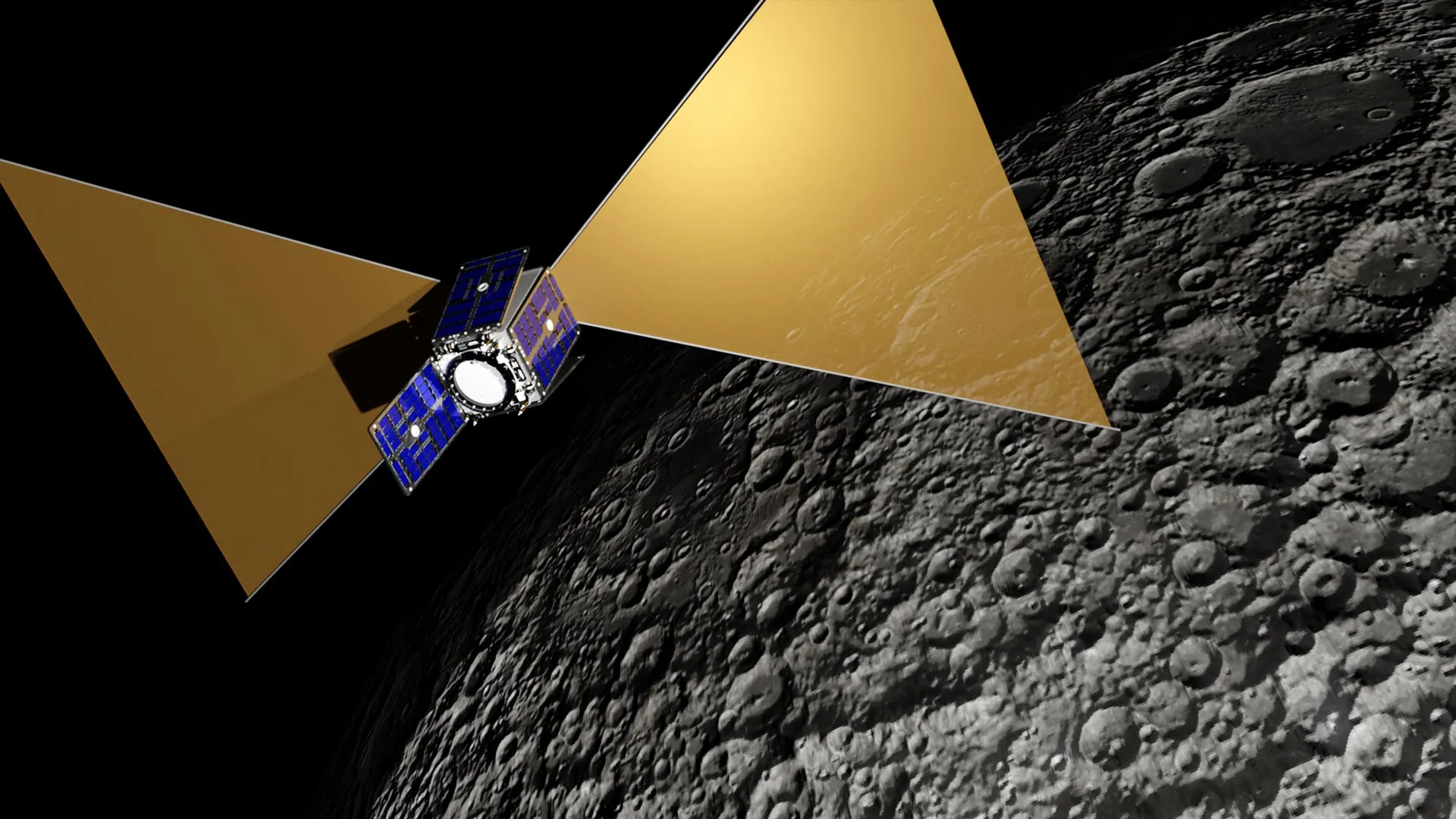
Developed in the UK, CosmoCube represents a new frontier in astrophysics, demonstrating how miniaturized technology can tackle some of the most profound questions about our cosmos. An international research team, primarily led by the University of Cambridge, plans to send this innovative spacecraft to lunar orbit. Its primary objective is to position itself on the far side of the Moon, an environment uniquely shielded from the cacophony of radio noise emanating from Earth. In this pristine, radio-quiet zone, CosmoCube will attempt to detect the elusive "21-centimeter line" – a faint radio emission left behind by the universe during its infancy.
Listening for the Universe’s First Whispers: The 21-Centimeter Line
The 21-centimeter line is a spectral signature originating from neutral hydrogen atoms, which were abundant in the universe during a critical phase known as the "Cosmic Dark Ages." This period spans roughly from 380,000 years after the Big Bang, when the universe cooled sufficiently for protons and electrons to combine into neutral hydrogen atoms (an event called recombination), until about 150 million years later, when the first stars ignited, marking the "Cosmic Dawn." Before the first stars, the universe was a relatively featureless, dark expanse, dominated by neutral hydrogen and helium, with no luminous objects to illuminate it. This era, therefore, represents a crucial "missing chapter" in our understanding of cosmic evolution.
Scientists have never directly observed this particular chapter of cosmic history. The 21-centimeter signal, which CosmoCube will diligently seek, originated more than 13.5 billion years ago. It arises from a quantum mechanical phenomenon called the hyperfine transition of neutral hydrogen. The electron in a hydrogen atom can have its spin aligned either parallel or anti-parallel to the spin of the proton in the nucleus. The anti-parallel alignment is a slightly lower energy state. When an electron "flips" its spin from the higher energy parallel state to the lower energy anti-parallel state, it emits a photon with a precise wavelength of 21 centimeters (or a frequency of 1420 MHz). This transition happens very rarely for any single atom, but given the immense abundance of neutral hydrogen in the early universe, the cumulative signal is theoretically detectable. The precise frequency of this signal, shifted by the universe’s expansion (redshift), can provide invaluable information about the density, temperature, and distribution of neutral hydrogen during the Dark Ages, offering a direct probe into the conditions that led to the formation of the first stars and galaxies.
Overcoming Terrestrial Interference: The Moon’s Shielding Solution
Detecting this extraordinarily faint, redshifted 21-centimeter signal from Earth is fraught with immense challenges. Our planet’s ionosphere acts as a natural barrier, preventing radio frequencies below approximately 10 MHz from reaching ground-based observatories. More critically, the modern world is saturated with radio interference. Terrestrial FM broadcasts, television signals, satellite communications, mobile phone networks, and even human-made electronics produce a cacophony of radio emissions that can utterly overwhelm the delicate cosmic signal, which is expected to be hundreds of thousands of times fainter than local noise.
The Moon, however, offers a natural and elegant solution to this interference problem. When CosmoCube passes behind the Moon, the lunar body will act as a physical shield, blocking radio noise originating from Earth. During each two-hour orbital pass, CosmoCube will enjoy approximately 40 minutes of unprecedented radio silence. Over the spacecraft’s expected two-year mission, researchers hope to accumulate around 1000 hours of observations from one of the final largely unexplored eras in the universe. These measurements hold the potential to unlock secrets about how the cosmos transformed from a dark, relatively homogeneous, and empty expanse into the rich, complex universe of stars, galaxies, and intricate large-scale structures we observe today.
The project has garnered significant funding from the UK Space Agency, underscoring its national importance and scientific ambition. Researchers are optimistic that CosmoCube could be ready for launch within the next five years. The intricate details of this groundbreaking mission and its scientific objectives have been rigorously peer-reviewed and published in the prestigious scientific journal Nature Astronomy, solidifying its position at the forefront of astrophysical research.
Searching for Dark Matter’s Early Influence
CosmoCube’s scientific ambitions extend beyond merely characterizing the period before the first stars. Researchers also hope its meticulously gathered observations will shed crucial light on the enigmatic nature of dark matter and its profound influence on the formation of the universe’s earliest cosmic structures. Dark matter, despite its elusive nature, is understood to constitute about 27% of the universe’s mass-energy budget. It cannot be seen directly, as it does not interact with light or other electromagnetic radiation. However, its gravitational effects are indispensable for explaining how galaxies, galaxy clusters, and other large-scale structures hold together and evolve.
In the early universe, tiny fluctuations in the distribution of dark matter are believed to have acted as gravitational seeds, attracting ordinary baryonic matter (like hydrogen and helium) to coalesce. These overdensities eventually collapsed to form the first stars and galaxies. By studying the precise characteristics of the 21-centimeter signal from the Dark Ages, scientists can infer the properties and distribution of matter, including dark matter, during this formative period. "This emission from hydrogen after the Big Bang, but before the first stars, will hopefully allow us to understand the role of dark matter in the early universe, how it worked to pull together hydrogen into the first stars and galaxies," explained lead author Professor Eloy de Lera Acedo from Cambridge’s Cavendish Laboratory. The 21cm signal is particularly sensitive to the thermal and ionization state of the gas, which in turn is influenced by the gravitational potentials created by dark matter halos.
To reach this ancient period and capture its faint echoes, CosmoCube will observe radio frequencies between 10 and 50 MHz. These frequencies are precisely those that are largely inaccessible to telescopes operating from the ground due to the Earth’s ionosphere. This inherent limitation makes the Moon, and specifically its far side, an exceptionally valuable and indeed indispensable location for this type of experiment. "There’s no other place where you can get the sort of shielding you need to detect such a faint signal, while at the same time looking at the whole of space," added de Lera Acedo, who is also affiliated with the Kavli Institute for Cosmology. "The far side of the Moon is really the only option: it solves multiple problems at once, opening a clear window to the very early universe."
Turning the Moon Into a Radio Shield: Technological Precision
Upon successfully reaching lunar orbit, CosmoCube will deploy a long, lightweight radio antenna, specifically designed to capture these ancient, low-frequency radio waves. As the spacecraft maneuvers behind the Moon, this sensitive antenna will diligently search for the redshifted 21-centimeter hydrogen signal from the early universe, while the solid mass of the lunar surface effectively blocks out the overwhelming interference from Earth.
Detecting such an incredibly weak signal requires engineering of extreme precision and ingenuity. CosmoCube will incorporate a sophisticated ‘Dicke switched’ calibrator. This system is crucial for mitigating self-interference and ensuring the accuracy of measurements. It will continually alternate between observing the sky (collecting the cosmic signal) and measuring several internal reference sources. This rapid switching process is designed to identify and precisely remove tiny, intrinsic changes or electronic noise generated by the spacecraft itself. Without such a mechanism, these internal fluctuations could easily be mistaken for a genuine, albeit faint, signal from the deep cosmic past, leading to erroneous conclusions.
Furthermore, the data collected by CosmoCube will undergo extensive and advanced processing after it is transmitted back to Earth. Researchers will employ sophisticated Bayesian statistical techniques to meticulously separate the desired 21-centimeter signal from foreground radio emissions, particularly those produced by our own Milky Way galaxy. These galactic emissions, while originating much closer, are far brighter than the cosmological signal and must be accurately modelled and subtracted. Computer simulations and detailed measurements gathered during the mission will also enable researchers to precisely reconstruct how CosmoCube’s antenna responds to different regions of the sky. This intricate understanding will allow scientists to correct for any remaining distortions or biases that might otherwise interfere with the integrity of the results, ensuring the highest possible fidelity for the cosmic signal.
"Aside from the science, what makes our mission unique is its size: we’re probing the earliest, deepest parts of the dark ages that others don’t reach, but with a compact, relatively low-cost platform," emphasized de Lera Acedo. This philosophy of "small satellite, big science" is a testament to modern engineering capabilities and strategic mission planning.
A Small Satellite With an Ambitious Mission: UK Leadership and Global Impact
The radio silence afforded by the lunar far side is not only valuable but becoming increasingly recognized and sought after by the global scientific community. Space agencies from the US (e.g., NASA’s LuSEE-Night mission), India, and other countries are also planning or proposing missions intended to take advantage of the unusually quiet radio environment on the lunar far side, highlighting the strategic importance of this region for future radio astronomy. CosmoCube, with its compact design and focused mission, is poised to be a trailblazer in this emerging field.
At the heart of CosmoCube’s technological innovation is a highly integrated miniature radiometer that combines cutting-edge analog and digital technologies. This is achieved through the use of ‘RF Systems on Chip’ technology (RFSoCs), which allows for the miniaturization and integration of complex radio frequency components onto a single chip, significantly reducing the size, weight, and power consumption of the instrument – critical factors for a small satellite mission.
The CosmoCube spacecraft platform itself, designated ‘SSTL-21’, is being developed in the UK by Surrey Satellite Technology Limited (SSTL). SSTL is a world-renowned company specializing in the design and manufacturing of small satellites, providing significant expertise in delivering high-performance, cost-effective space solutions. Development of the sophisticated instrument is already well underway. Working laboratory prototypes have been successfully built, rigorous environmental tests are being carried out to ensure its resilience in the harsh space environment, and researchers are actively collaborating with industry partners to refine and integrate the various components. Key UK academic partners include Portsmouth University and STFC RAL Space, while the project also benefits from the participation of researchers from EU countries, including Malta, underscoring its international collaborative nature.
The CosmoCube team recently showcased their vision by participating in the European Space Agency’s (ESA) mini Fast missions Call for Ideas. The proposed mission, with its lean and efficient design, is targeting an impressive cost below 50 million Euros, further emphasizing the project’s commitment to delivering high-impact science within a remarkably modest budget for deep space exploration. "CosmoCube is aiming to do some ambitious science from a very small satellite in a challenging environment, and to do that requires some clever design techniques," noted co-author Dr. Will Grainger from STFC RAL Space. "We’ve worked with the project partners to develop representative models of the satellite and its payload. These have been tested in our facilities to ensure the thermal performance allows the payload to operate and perform the required sensitive measurements under the different temperature conditions it will experience whilst in orbit around the Moon. In the future, we hope to further develop the full payload in preparation for a full mission." This meticulous testing and development process are crucial for the success of such a sensitive and demanding mission.
A New Window Into the Cosmic Dark Ages: Unlocking Profound Questions
If successful, CosmoCube could fundamentally reshape our understanding of the earliest universe and demonstrate a powerful new paradigm for space science. It would prove that major discoveries about the most remote and challenging periods of cosmic history do not necessarily require colossal, multi-billion-dollar spacecraft. Instead, a compact, agile satellite strategically positioned in one of the quietest radio environments available near Earth can provide scientists with unprecedented access to an era that has, until now, remained tantalizingly beyond direct observation.
"This could be a real UK success story: the hardware, the software, the implementation and the technology is all being developed here, and it could help us answer one of the most profound questions in the universe," concluded de Lera Acedo. The potential for CosmoCube to not only deliver groundbreaking science but also to champion a new era of cost-effective, high-impact space exploration from a small satellite platform makes it a truly exciting and transformative mission. By carefully listening to the faint echoes from the cosmic dawn, CosmoCube promises to open a clear window into the universe’s long-lost youth, revealing the origins of the structures that ultimately led to stars, galaxies, and even life itself.
The work was supported in part by the UK Space Agency, the Kavli Foundation, and the Science and Technology Facilities Council (STFC), part of UK Research and Innovation (UKRI). Eloy de Lera Acedo is a Fellow of Selwyn College, Cambridge.
