
 By admin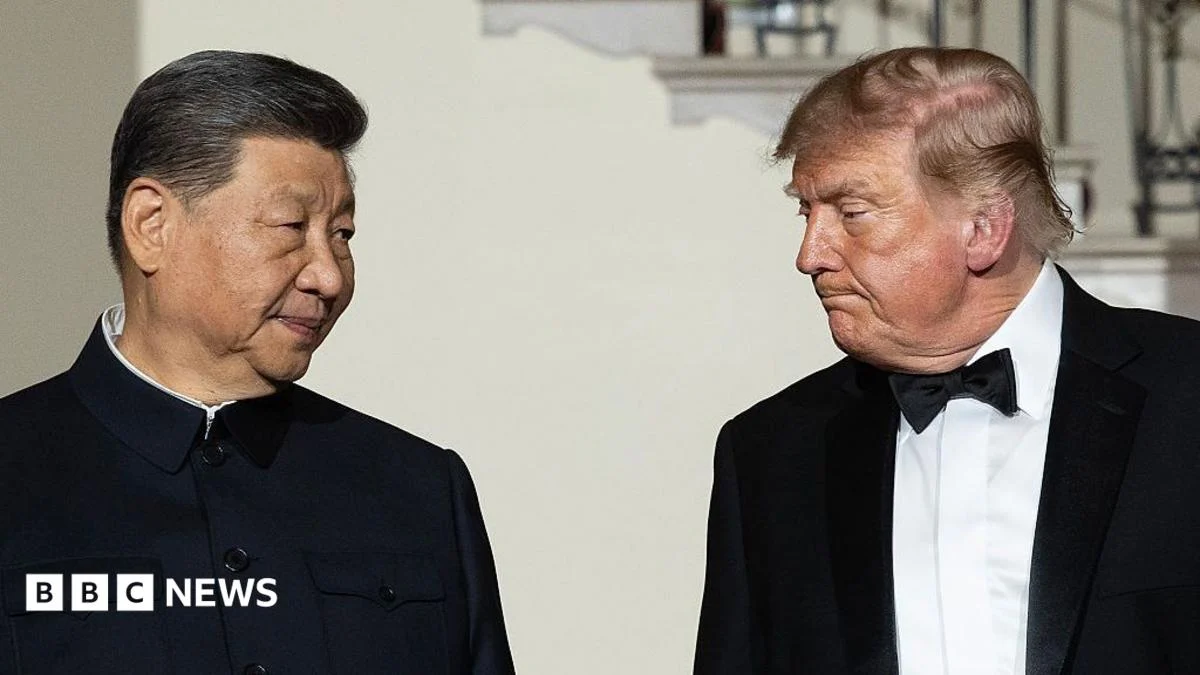
Chinese state media has officially confirmed that the delicate trade truce between the United States and China has been extended, albeit for a relatively short period of two months, concluding on January 10th. This brief extension, while averting an immediate escalation of trade hostilities, represents a modest gain rather than a significant breakthrough in the protracted economic conflict. The decision ensures that leaders from the world’s two largest economies, President Donald Trump and President Xi Jinping, will have opportunities to engage in further discussions at major international gatherings later this year. Trump is slated to attend the Asia Pacific Economic Cooperation (APEC) summit in Shenzhen in November, while Xi is expected to travel to Miami for the G20 summit in December. Such frequent high-level interactions between the leaders of these economic powerhouses are indeed rare, underscoring the continued importance of managing their complex bilateral relationship.
Beijing, however, had reportedly harbored hopes for a more substantial extension of the trade truce, seeking a longer period of stability to allow for more meaningful negotiations and a clearer path towards de-escalation. The two-month reprieve, while welcome, leaves much of the fundamental disagreement unresolved. Nevertheless, China did secure a notable concession: lower tariffs on approximately $30 billion worth of goods entering the United States. This reduction is expected to be met with reciprocal tariff cuts from Beijing, offering a measure of relief to businesses on both sides of the Pacific. Chinese products destined for American shelves, ranging from ubiquitous toys and essential small household appliances to festive Christmas decorations, will now benefit from these reduced import duties. This specific tariff adjustment signals a targeted effort to address certain consumer goods and alleviate some of the immediate cost pressures felt by American consumers and retailers.
Beyond tariff adjustments, the Trump administration also announced that Beijing has committed to purchasing at least 10 million metric tons of coal annually for the years 2027 and 2028. This commitment, while long-term, represents a significant boost for American coal producers, who have faced declining demand and increasing competition in recent years. The inclusion of this coal purchase agreement highlights the administration’s focus on specific sectors and its aim to create tangible economic benefits for American industries.
However, what is perhaps more striking about this latest trade development is what was conspicuously absent from the official pronouncements. Notably, there was no mention of any agreement to increase China’s exports of rare earth minerals to the United States. Rare earth minerals are critical components in a wide array of modern technologies, from smartphones and electric vehicles to advanced defense systems, and the US has been seeking to diversify its supply chain away from China, which currently dominates global production. The lack of progress on this front suggests that a resolution to this strategic dependency remains a significant hurdle. Furthermore, there was no indication of any easing of restrictions on the export of advanced U.S. semiconductors to China. These advanced chips are vital for China’s technological ambitions, particularly in areas like artificial intelligence and high-performance computing, and restrictions on their sale have been a major point of contention. The continued imposition of these controls suggests that the technological rivalry between the two nations remains a central and unresolved aspect of their broader economic dispute.
While the White House fact sheet provided a summary of the trade-related agreements, it notably omitted any direct mention of Taiwan. However, according to Beijing’s accounts of the high-level discussions, the issue of Taiwan was unequivocally a priority for President Xi Jinping. Chinese state media reported that Xi urged President Trump to formally oppose Taiwan’s independence and to handle the sensitive issue with utmost caution. This assertion from Beijing provides crucial insight into the underlying geopolitical dynamics at play during the trade talks. It echoes past instances where Taiwan has been a significant point of leverage and concern. Following their previous meeting in May, President Trump had revealed that Xi directly questioned him about the U.S. commitment to defend Taiwan in the event of a Chinese military attack. At that time, Trump famously stated, "There’s only one person that knows that, and it is me," and he raised the question of the strategic rationale for U.S. forces to "travel 9,500 miles to fight a war" over the island.
This time, however, President Trump was significantly more reticent in his public statements regarding Taiwan. He told reporters over the weekend that the issue "wasn’t talked about too much." He characterized the situation as "fine" and "just moving along," adding that Xi "understands very much how I feel." This deliberate silence from the U.S. side, particularly in contrast to previous, more explicit discussions, may hold significant strategic implications. President Trump has previously described a proposed $14 billion U.S. arms package for Taiwan as "a very good negotiating chip" in his dealings with Beijing. This arms package has reportedly been on hold for months, and its status remains a subject of speculation. The ambiguity surrounding its potential release or withholding could be part of a broader negotiation strategy.
Adding to the complexity and potential confusion surrounding U.S. policy toward Taiwan, U.S. Ambassador to China David Perdue reportedly told Fox News that President Trump had offered to sell weapons to Xi during the summit. This statement, if accurate, would represent a significant departure from established U.S. policy. However, the State Department subsequently issued a clarification, stating that U.S. law prohibits arms sales to China and that there are no plans to do so. This swift retraction underscores the sensitive nature of such discussions and the tight control the U.S. government maintains over its foreign policy pronouncements.
From Beijing’s perspective, the self-governing island of Taiwan is an inalienable part of China, and its eventual reunification with the mainland is a core national objective. While most countries, including the United States, do not formally recognize Taiwan as an independent state, Washington maintains a strong unofficial relationship with Taipei and is unequivocally opposed to any attempt by Beijing to take the island by force. This commitment is underpinned by the Taiwan Relations Act, which obligates the U.S. to supply Taiwan with the means to defend itself. The ongoing tension surrounding Taiwan, therefore, remains a persistent and potentially destabilizing factor in U.S.-China relations, even when not explicitly discussed in trade communiqués.
In a move that signals a potential opening for foreign investment, China has announced its intention to allow more foreign financial firms, including American-backed banks, investment companies, and insurers, to apply for business licenses and establish offices within China. This announcement represents a step towards greater market access for the financial sector. However, the crucial caveat, as articulated by Beijing, is that any approvals will still be subject to stringent Chinese laws and regulations. This final line of text is particularly significant: China is indeed opening the door, but it retains the ultimate control over who is allowed to pass through it. Foreign financial firms have long voiced their frustrations regarding the labyrinthine regulatory barriers, complex licensing requirements, and pervasive concerns over exit bans that make it exceedingly difficult to expand their operations in China, even when market access is technically permitted. This new policy, therefore, may offer more avenues for engagement, but the underlying challenges of navigating China’s regulatory landscape are unlikely to disappear overnight.
Furthermore, Beijing has indicated that it is discussing ways to increase the number of flights between China and the United States. However, neither side has provided specific details on how this would be implemented or what the timeline might be. This vague announcement leaves room for interpretation and suggests that further negotiations will be necessary to translate this intention into tangible action. Adding another layer of complexity to the notion of increased cross-border engagement, despite China’s recent move to grant visa-free entry to visitors from over 75 countries worldwide, Americans have not been extended this courtesy. This continued restriction highlights the ongoing diplomatic complexities and potential barriers to tourism and business travel between the two nations.
The U.S. State Department, meanwhile, continues to maintain its Level 2 travel advisory for China, urging travelers to "exercise increased caution." This advisory cites the risks of arbitrary law enforcement, the potential for exit bans, and the possibility of detention. Therefore, even as both sides engage in discussions about encouraging business and travel, some of the most significant obstacles and underlying risks for American citizens in China remain firmly in place. The discrepancy between the rhetoric of increased engagement and the reality of travel restrictions and potential legal uncertainties underscores the nuanced and often contradictory nature of the current U.S.-China relationship, where economic cooperation is intertwined with geopolitical competition and ideological differences. The extended truce, while a temporary respite, has done little to resolve the fundamental strategic and political divergences that continue to shape the interactions between these two global powers.
