
 By admin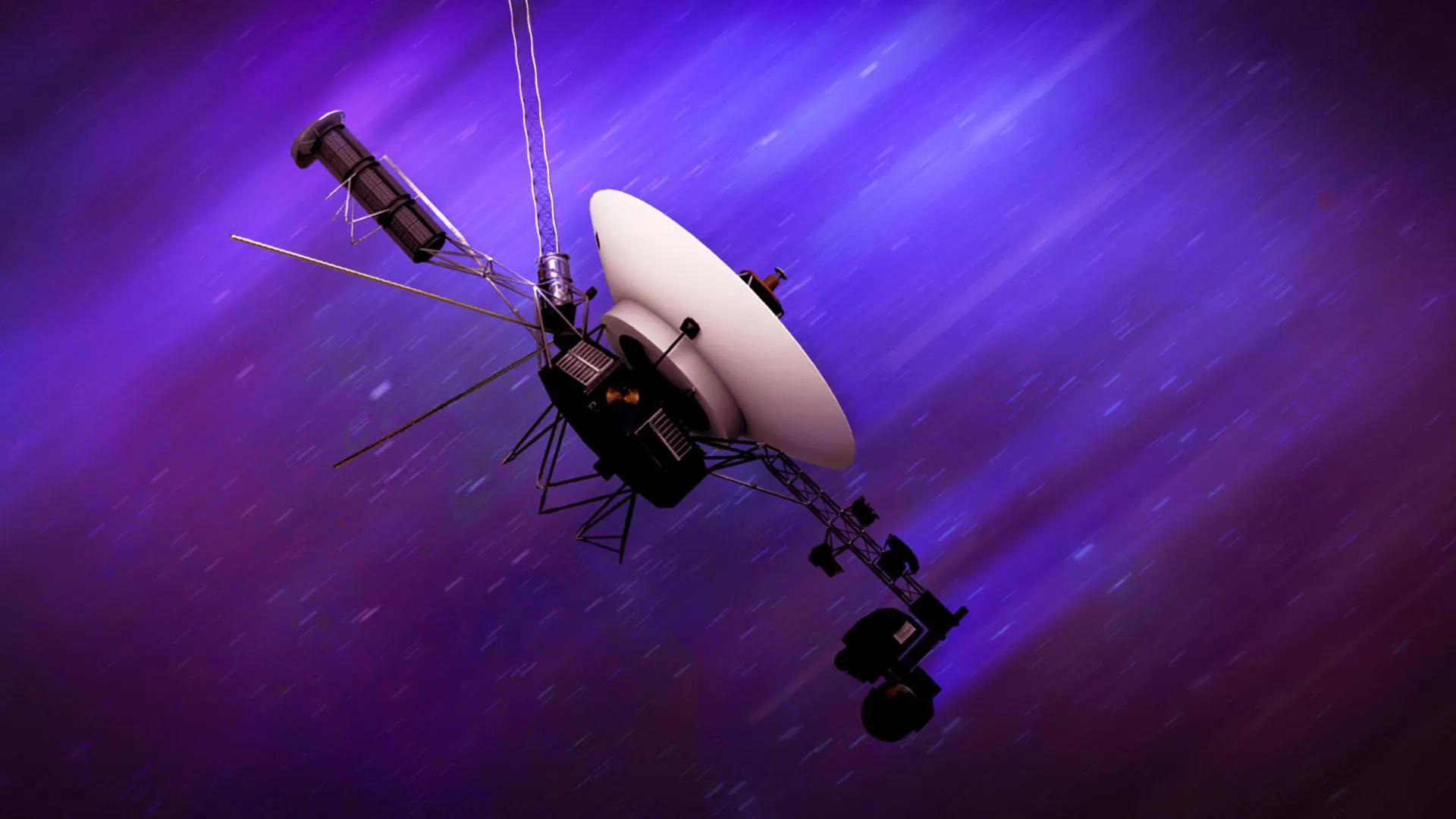
The "Big Bang" is more than just a clever name; it encapsulates the dramatic, synchronized nature of the power-saving maneuver. For a spacecraft traveling at immense speeds millions of miles from Earth, every command must be precisely timed and executed. The round-trip light time for signals to reach Voyager 2 and return is currently over 37 hours, meaning a command sent today will only begin to take effect more than a day and a half later, and confirmation of its success will arrive nearly two days after that. Such delays necessitate an extraordinary level of planning, foresight, and redundancy in the commands issued. The engineers had to account for potential anomalies and ensure the spacecraft could autonomously handle the transition, given the immense communication lag. The challenge was akin to performing complex surgery on a patient half a universe away, with only a limited set of tools and a significant time delay for every action.
The Precarious Balance of Power: Voyager’s RTGs
Both Voyager 2 and its twin, Voyager 1, are powered by radioisotope thermoelectric generators (RTGs). These ingenious devices are essential for deep space missions, particularly those venturing far beyond the Sun’s diminishing light where solar panels become impractical. RTGs generate electricity from the heat produced by the natural radioactive decay of plutonium-238. The heat is converted directly into electrical power through the Seebeck effect, a phenomenon where a temperature difference across a semiconductor junction creates an electrical voltage.
However, like any radioactive material, the plutonium-238 aboard the Voyagers has a finite half-life—approximately 87.7 years. This means that over time, the amount of decaying plutonium steadily decreases, leading to a corresponding decline in heat production and, consequently, a reduction in the available electrical power. For the Voyagers, this translates to a loss of about 4 watts of available power each year. While 4 watts might seem insignificant in everyday terms, for a spacecraft operating on an increasingly constrained budget, it represents a substantial portion of its remaining energy reserves. After nearly half a century in the unforgiving environment of deep space, the Voyagers are now running on an extremely limited power supply. To maintain critical operations and extend the mission’s lifespan, mission controllers have been forced into the difficult position of incrementally shutting down systems and scientific instruments that are no longer deemed absolutely essential for the primary mission objectives.
A History of Hard Choices and Unprecedented Discovery
Launched in 1977, the Voyager probes embarked on what was initially conceived as a "Grand Tour" of the outer solar system, capitalizing on a rare planetary alignment that occurs only once every 175 years. Voyager 2, launched on August 20, 1977, followed a trajectory that allowed it to visit all four gas giants: Jupiter (1979), Saturn (1981), Uranus (1986), and Neptune (1989). Its twin, Voyager 1, launched on September 5, 1977, took a faster route to Jupiter and Saturn, then received a gravity assist that flung it out of the plane of the ecliptic, setting it on a course to be the first spacecraft to enter interstellar space.
These missions revolutionized our understanding of the outer solar system, revealing volcanic activity on Jupiter’s moon Io, intricate ring structures around Saturn, the bizarre tilted magnetic field of Uranus, and the dynamic atmosphere of Neptune with its Great Dark Spot. Each encounter yielded unprecedented data and stunning imagery, forever changing textbooks and inspiring generations of scientists and engineers.
Upon completing their planetary encounters, the Voyagers transitioned into their Interstellar Mission, an extended phase dedicated to exploring the heliosphere—the protective bubble of plasma and magnetic fields created by our Sun—and the vast, uncharted territory of interstellar space beyond it. To achieve this, many of the instruments designed for planetary encounters, such as the imaging science subsystem, were powered down years ago to conserve energy for the instruments critical to studying the interstellar medium.
However, the continuous decline in RTG power has necessitated further difficult decisions. Since 2024, the dwindling power levels have compelled the team to switch off two science instruments on each Voyager spacecraft. Each spacecraft originally carried 10 scientific instruments, covering a range of investigations from plasma physics and magnetic fields to cosmic rays and planetary radio astronomy. The remaining instruments are crucial for understanding the properties of the heliosheath, the heliopause (the boundary where the Sun’s influence ends), and the true interstellar medium. These include instruments like the Plasma Science Subsystem (PLS), the Cosmic Ray Subsystem (CRS), the Low-Energy Charged Particle (LECP) instrument, and the Magnetometer (MAG), all vital for characterizing the environment beyond our solar system.
An Extra Year of Invaluable Science
The success of the "Big Bang" power-saving effort on Voyager 2 is profound. Without this ingenious intervention, the Voyager team would have been forced to turn off yet another critical instrument aboard Voyager 2 before the end of 2026. The newly liberated power is now expected to keep the spacecraft’s three remaining instruments operating for at least one additional year. In the realm of deep space exploration, where data collection is a painstakingly slow and resource-intensive endeavor, an extra year of scientific observation from a unique vantage point is an invaluable gift. It means another year of collecting data on cosmic rays, magnetic fields, and plasma waves, helping scientists piece together a clearer picture of the boundary between our solar system and the galaxy beyond.
"Every watt we save extends the mission," remarked a JPL engineer familiar with the operation, highlighting the cumulative impact of such efforts. "These spacecraft are living history, and every bit of data they send back is a treasure. To give them an extra year is a testament to the team’s ingenuity and dedication."
The implications of this success extend beyond Voyager 2. NASA plans to carry out the same power-saving swap on Voyager 1, which currently holds the record as the farthest human-made object from Earth. Voyager 1 entered interstellar space in 2012, with Voyager 2 following in 2018. While their paths through interstellar space are different, the power challenges they face are identical. The mission team expects to complete the analogous power-saving work on Voyager 1 in the coming months, promising a similar extension of its scientific lifetime.
The Enduring Legacy of the Voyager Missions
The Voyager missions represent an unparalleled achievement in space exploration, a testament to human curiosity and engineering prowess. Launched in an era of rudimentary computing by today’s standards, these spacecraft have far exceeded their initial design life of five years, enduring radiation, extreme temperatures, and the vacuum of space for nearly five decades. They operate with computers that have 8,000 times less memory than a modern smartphone, communicating across billions of miles using an 8-track tape recorder for data storage.
The continued operation of the Voyagers relies heavily on the Deep Space Network (DSN), a global array of massive radio antennas managed by JPL. The DSN’s 70-meter (230-foot) diameter antennas are essential for detecting the incredibly faint signals emitted by the Voyagers’ aging transmitters, which now broadcast at a mere 23 watts—the power of a refrigerator light bulb.
The "Big Bang" operation underscores the extraordinary commitment of the Voyager team, a group of engineers and scientists who have often devoted their entire careers to these distant explorers. They are custodians of an aging but still active scientific legacy, constantly devising innovative solutions to keep the missions alive. Their work ensures that the Voyagers can continue to provide unique insights into the heliosphere and the interstellar medium, answering fundamental questions about our place in the galaxy.
Ultimately, the Voyagers will fall silent when their power supply dwindles to a point where they can no longer maintain basic functions, such as heating critical components or transmitting data. However, even then, they will continue their silent journey through the cosmos, carrying their Golden Records—a message from humanity to any intelligent life they might encounter—for billions of years to come. The "Big Bang" intervention is a powerful reminder that even after nearly half a century, the spirit of exploration and innovation continues to propel these extraordinary spacecraft further into the unknown. Every additional year of data from Voyager 2, and soon Voyager 1, is another chapter written in humanity’s grand story of discovery, pushing the boundaries of what is possible and expanding our understanding of the universe we inhabit.
