
 By Rifan Muazin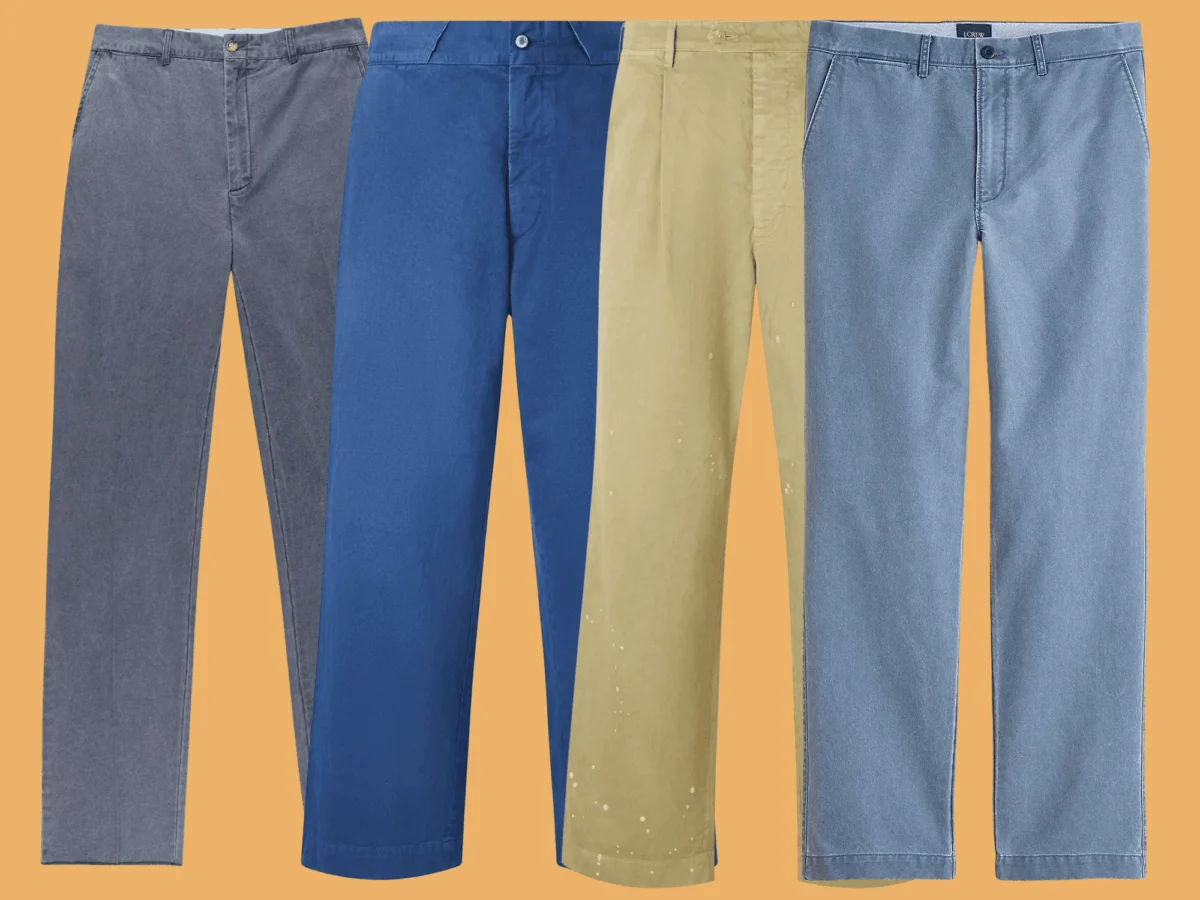
Faded chinos are the sartorial equivalent of a Summer Friday—off-duty, off the clock, and blissfully unresponsive to emails until Monday morning. Think of them as the khaki equivalent of distressed denim: in this niche of high-end casual wear, the more thrashed, frayed, and sun-bleached the fabric, the better. This aesthetic shift was perhaps best encapsulated a few years ago when former J.Crew designer Frank Muytjens shared a photo of his own "beat-to-hell" chinos. These were pants that had begun their life in a professional office setting, faded naturally with age, and eventually found a second career as gardening trousers. That transition—from the boardroom to the backyard—is the soul of the faded chino trend.

The appeal lies in the narrative of the garment. In an era of fast fashion and sterile, mass-produced clothing, there is a profound desire for items that show "character." This is not merely about looking unkempt; it is about the "wabi-sabi" of menswear—finding beauty in imperfection and the passage of time. Whether you are leaning into the heartthrobby, ex-lacrosse-player charm by pairing them with a sun-drenched polo and flip-flops, or opting for old-Hollywood cool with canvas sneakers and a denim jacket, the faded chino offers a level of comfort and personality that stiff, new cotton simply cannot provide. From the hallowed halls of Ivy League campuses to the meticulously distressed masterpieces coming out of Japanese workshops, the market is currently flooded with options for those looking to loosen up their style.
Here, we examine ten pairs of chinos that represent the pinnacle of this "lived-in" aesthetic, enriched with the historical and technical context that makes each one a worthy addition to your collection.

1. J.Press: Washed Canvas Cape Cod Pant
J.Press is a name synonymous with the American Ivy League aesthetic. Founded in 1902 on the Yale University campus, the brand has spent over a century perfecting the "preppy" look. Their Washed Canvas Cape Cod Pant is a direct nod to the coastal lifestyle of the Northeast—specifically the rugged, wind-swept beaches of Massachusetts. Unlike standard twill chinos, these are constructed from a hefty cotton canvas. Canvas is a plain-weave fabric known for its durability and resistance to tearing, historically used for sails and tents. By garment-dyeing this heavy material, J.Press ensures that the color is not uniform; it settles into the seams and high-friction areas, creating a beautiful, natural patina from day one. These pants come unhemmed, a traditional touch that allows for a custom fit. Pro tip: wash them several times before taking them to the tailor to account for the initial shrinkage common with heavy canvas, ensuring you achieve that perfect, slightly cropped "sweet little inseam."
2. Polo Ralph Lauren: The Big Patchwork Chino
Long before the rugged "RRL" line became a cult favorite among vintage enthusiasts, there was Polo Country. This sub-label focused on the grit and dust of the American West, and Ralph Lauren has recently revived the aesthetic through a small capsule collection. The Big Patchwork Chino is a masterclass in intentional distressing. Drawing inspiration from the baggier silhouettes of the 1990s, these pants feature a hardy fabric adorned with patchwork detailing and paint splatters. While some might shy away from pre-applied paint, these details are designed to look earned, mimicking the repairs a craftsman might make over decades. It brings the Japanese concept of "Sashiko"—functional embroidery used to reinforce points of wear—into the realm of American sportswear. These are proof that the artistry of repair and customization should not be reserved solely for blue jeans.

3. Save Khaki: The Weekend Chino
As the brand name suggests, Save Khaki is a company obsessed with the nuances of cotton trousers. Made in the USA, their Weekend Chino in "postal blue" is a standout for its relaxed, unpretentious vibe. The brand focuses on "washed" aesthetics, utilizing specialized laundering processes to break down the fibers of the cotton twill. This results in a pant that feels soft against the skin and drapes with a certain slouchy elegance. The "postal blue" shade is particularly effective here; it evokes the utilitarian uniforms of the mid-20th century while offering a refreshing alternative to the standard tan or navy. It is a pant designed for ease, embodying the "baggy and faded" trend that has reclaimed the streets of New York and Los Angeles.
4. A.Presse: Straight-Leg Cotton Twill Trousers
The Japanese obsession with "Ametora" (American Traditional) has often resulted in reproductions that surpass the originals in quality and detail. A.Presse is a prime example of this phenomenon. Their take on the faded chino is inspired by vintage French workwear, specifically the iconic "moleskin" or heavy twill trousers worn by laborers and artisans. The shade of blue used here is a direct homage to the "Bill Cunningham" blue—the signature hue of the legendary New York Times street photographer. A.Presse utilizes painstaking reproduction techniques to ensure the weight and texture of the cotton twill feel authentic to a mid-century garment that has seen years of use. At a premium price point, these are for the connoisseur who values the intersection of military history and high-fashion tailoring.

5. Cherry Los Angeles: Wide-Leg Cotton Twill Chinos
Cherry Los Angeles has built a reputation on "Americana mashups," blending the aesthetics of 1950s workwear with modern streetwear sensibilities. Their Wide-Leg Cotton Twill Chinos feature a subtle "sandpaper fade," a technique that mimics the natural abrasion that occurs on the knees and seat of trousers. The design incorporates flap back pockets—a detail borrowed from military fatigues—and a suede patch on the waistband, a feature usually reserved for premium denim. This hybrid approach creates a pant that feels rooted in Southern California culture: relaxed, durable, and effortlessly cool. The wide-leg silhouette is also a nod to the current trend of moving away from "slim-fit" everything in favor of more breathable, movement-friendly cuts.
6. Auralee: Pleated Paint-Splattered Cotton-Twill Chinos
Auralee, led by designer Ryota Iwai, is world-renowned for its obsessive focus on fabric development. These are not your average chinos; they are constructed from high-quality Egyptian cotton, known for its long-staple fibers that provide exceptional softness and strength. Auralee takes this luxury material and "turns it sideways" by adding paint splatters, deep pleats, and a Gurkha-style waistband. The Gurkha waist, characterized by its integrated buckled straps, has its roots in British military history and offers a sophisticated, tailored look that contrasts sharply with the "filthy" paint-splattered finish. It is a high-low juxtaposition that works perfectly when paired with "soft-boy" footwear like Birkenstocks or minimalist loafers.

7. Corridor: Wide Twill Pant
Based in New York City, Corridor is a brand that focuses on "New American Realism." Their Wide Twill Pant undergoes a complex double-dyeing process: pigment dyeing followed by garment dyeing. Pigment dyeing involves applying color to the surface of the fabric rather than saturating the fibers, which means the color will naturally "slough off" and fade over time, much like indigo on denim. By layering these techniques, Corridor creates a pant with incredible depth of color that evolves with every wash and wear. The sturdy cotton twill is built to withstand the rigors of city life, making these a long-term investment in your personal style.
8. J.Crew: Straight Pigment-Dyed Chino Pant
In the 1990s, J.Crew was the undisputed king of the "broken-in" chino. Under the current creative direction, the brand has reached into its own archives to bring back the pigment-dyed finishes that defined a generation of casual style. These chinos are designed to look like they were left out to dry in the sun after a day at the beach, with softened edges and a slightly desaturated palette. The "Bellport Blue" and other sun-baked hues offer a nostalgia hit that is hard to resist, especially considering the accessible price point. This is the democratization of the faded trend, proving that you don’t have to spend a fortune to get the "thrashed" look.

9. Khakis: Slub Common Pant
The term "slub" refers to a process where cotton is spun with slight irregularities, resulting in a fabric with a textured, "knobby" surface. Historically, slubbed fabrics were seen as a sign of low-quality manufacturing, but in the world of modern heritage menswear, they are highly prized for their tactile appeal and the way they hold dye. Khakis (the brand) uses this rugged texture to create the Slub Common Pant, adding pleats and a coin pocket for a touch of vintage sophistication. The distressing is executed with surgical precision, making the pants look like a rare find from a "secret menswear archive" in a relative’s attic. They represent the peak of the "found object" aesthetic.
10. Gap: Baggy Khakis
The Gap’s "Khakis Swing" commercials of the late 90s are legendary in the fashion world, and their current Baggy Khakis are a silent petition to bring that era back. These are the quintessential "easy" pants: baggy, soft, and featuring just a hint of stretch for modern comfort. In the sweltering heat of summer, a looser fit is not just a style choice; it’s a functional necessity. These chinos won’t cling to your legs, and the faded finish ensures they look better the more you sweat in them. They are a reminder that sometimes, the simplest version of a trend is the most effective.

In conclusion, the move toward faded, fraying, and "filthy" chinos is more than just a passing fad; it is a rejection of the overly-manicured, sterile perfection that has dominated menswear for the last decade. By embracing garments that show wear, repair, and the passage of time, we are investing in a wardrobe that feels human. Whether you choose the high-art reproductions from Japan or the nostalgic revivals from the American mall, the message is clear: stop worrying about the wrinkles and the stains. Your chinos are meant to be lived in.
