
 By admin
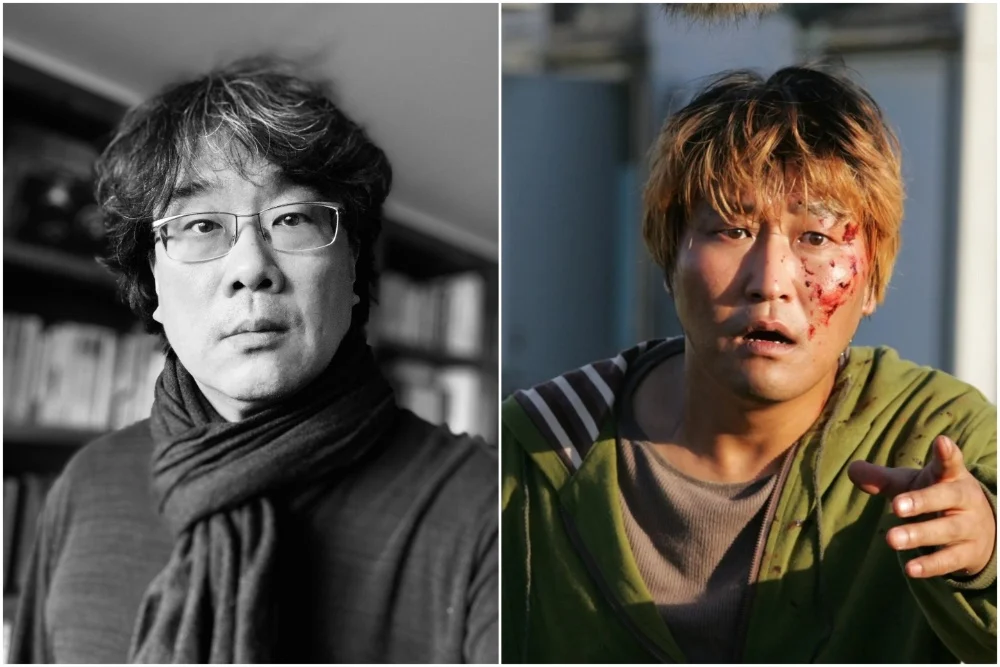
Two decades after its initial release, Bong Joon Ho’s critically acclaimed 2006 monster film, "The Host," is being brought back to the big screen in a meticulously crafted 4K restoration. The Oscar-winning director, renowned for his masterful storytelling and incisive social commentary, believes the film’s potent satire of official misinformation feels remarkably pertinent in today’s world. Magnolia Pictures will present the remastered "The Host" in theaters nationwide starting November 20th, with special screenings on November 21st and 23rd featuring an exclusive conversation between Bong and fellow filmmaker Edgar Wright.
Reflecting on the film’s enduring legacy, Bong expressed his disbelief at the passage of time: "I can’t believe it’s been 20 years since the release of the film. Time flies," he shared with Variety. "The Host" plunges audiences into a harrowing narrative centered around Gang-du, portrayed by the inimitable Song Kang-ho, a man whose inattentiveness at his snack kiosk by Seoul’s Han River leads to a devastating encounter. A monstrous creature emerges from the water, wreaking havoc and abducting Gang-du’s young daughter, Hyun-seo (Ko A-sung). In the ensuing chaos, authorities quickly label the creature a carrier of an unknown virus, a narrative that quickly spirals into confusion and fear. The film’s emotional core ignites when Gang-du receives a desperate call from his daughter, alive but trapped, compelling him to defy the sealed-off quarantine zone and embark on a perilous rescue mission. The ensemble cast is further bolstered by the talents of Byun Hee-bong, Park Hae-il, and Bae Doo-na, who portray the intricate dynamics of Gang-du’s family. The creature’s terrifying presence was brought to life through detailed models crafted by New Zealand’s esteemed Weta Workshop, with visual effects and animation handled by The Orphanage.
Bong Joon Ho’s trajectory in the filmmaking world has been nothing short of extraordinary. His 2019 Palme d’Or winner, "Parasite," achieved unprecedented global acclaim, culminating in a historic four Oscar wins, including Best Picture. This monumental achievement marked the first time a non-English-language film had ever secured the Academy’s highest honor, forever altering the landscape of international cinema.
The genesis of "The Host" can be traced back to the global anxiety surrounding the SARS outbreak. Bong meticulously woven into the narrative a scene where U.S. lawmakers acknowledge the absence of a virus spreading through Korea. This was a deliberate satirical jab at the misinformation that characterized the Iraq War, launched under the pretext of weapons of mass destruction that ultimately proved nonexistent. Bong observes that, in the intervening years, the world has experienced the profound impact of the coronavirus pandemic, adding a layer of chilling prescience to his earlier work.
"Now we’re in the thick of the Iran War and we’re still in the midst of an ongoing war, and whether it’s good history or bad history, it seems like we as a community, as a whole, are repeating our mistakes," Bong remarked, drawing a parallel between the film’s themes and contemporary events. "Although the film has stayed the same, the history is repeating itself and making the film relevant again." This cyclical nature of human error and the persistent influence of misinformation serve as a stark reminder of the film’s enduring power.
The meticulous 4K restoration of "The Host" was undertaken with a specific artistic vision: to meticulously recreate the immersive experience of viewing a fresh 35mm print, mirroring its premiere at Cannes in 2006. Bong recalled that the film was originally shot on Fuji stock, a departure from the more common Kodak. His primary objective for the restoration was to faithfully recapture the subtle color qualities he painstakingly developed with his cinematographer, Kim Hyung-ku, during the initial shoot. "Ironically, we were using digital technology to enhance the film look of the movie," Bong disclosed, highlighting the nuanced approach to achieving a classic aesthetic through modern tools.
Given that the visual effects for "The Host" were completed in 2005 and 2006, prior to the widespread availability of 4K technology, those specific shots required upscaling. Bong emphasized the team’s dedication to ensuring the creature seamlessly integrated with the actors and their environments, a testament to their commitment to visual fidelity. While he remains satisfied with the overall outcome, Bong admitted that he still occasionally notices minor flaws in the CGI and certain moments that leave him with a sense of mild dissatisfaction.
However, Bong’s artistic philosophy embraces the imperfections of his past work. "But I believe that the film is a record of what I was as a filmmaker at the time, and so I do not have any wishes to correct that," he stated. Drawing an analogy to personal history, he added, "Just like we don’t edit or rewrite our journals, I feel like it should just be left as it is." This sentiment reflects a profound respect for the creative process and the historical context of filmmaking.
Bong also drew a parallel to Ridley Scott’s re-release of the original "Alien" in 1979, where the director made minor edits. "I also had that kind of impulse, but luckily I was able to hold myself back," Bong confessed. He elaborated that it was only one or two shots that he considered altering, but ultimately, he resisted the urge. He playfully declined to reveal which specific moment he had in mind, keeping it a closely guarded secret.
The sound design of "The Host" also underwent a meticulous restoration. Bong collaborated with Livetone, a Seoul-based facility where he has maintained a consistent working relationship with the same sound supervisor for 25 years, a remarkable feat in an industry where crew members often change between projects. The studio continues to house the original sound library, a valuable resource for such restorations. Bong’s more recent films, including "Okja" and "Parasite," have been mixed in Dolby Atmos, and he indicated that "The Host" could potentially be upgraded to this advanced format, though confirmation regarding the North American release’s specific sound format is still pending.
A key focus of the original sound design was the creature’s distinctive voice. The team achieved this by recording and processing the sounds of a sea lion, then layering them with a vocal performance from Korean actor Oh Dal-su. This intricate blend of natural and human sounds created the chilling auditory experience that audiences heard in theaters.
Bong expressed that remastering his later works holds little appeal, as these films were shot in 4K and finished with Atmos sound, rendering them largely future-proof. However, he has explored alternate versions of his earlier films, creating black-and-white versions of "Mother" and "Parasite." These monochromatic adaptations have been showcased in limited theatrical runs and at film festivals, offering a fresh perspective on his acclaimed works. "I have great admiration for black-and-white films," Bong stated, underscoring his appreciation for the artistry and emotional depth that this format can evoke. "It’s a process that I enjoyed very much."
Looking ahead, Bong Joon Ho reiterated his commitment to a slate of crime and horror films, a plan he had previously shared with Variety. This ambition follows his upcoming animated feature, "Ally," and his foray into science fiction with "Mickey 17" under Neon. "I want to return home," Bong declared, suggesting a return to the genres that initially defined his distinctive cinematic voice. This anticipation of his future projects, coupled with the renewed appreciation for his past masterpieces, solidifies Bong Joon Ho’s enduring impact on the global film industry.
