
 By admin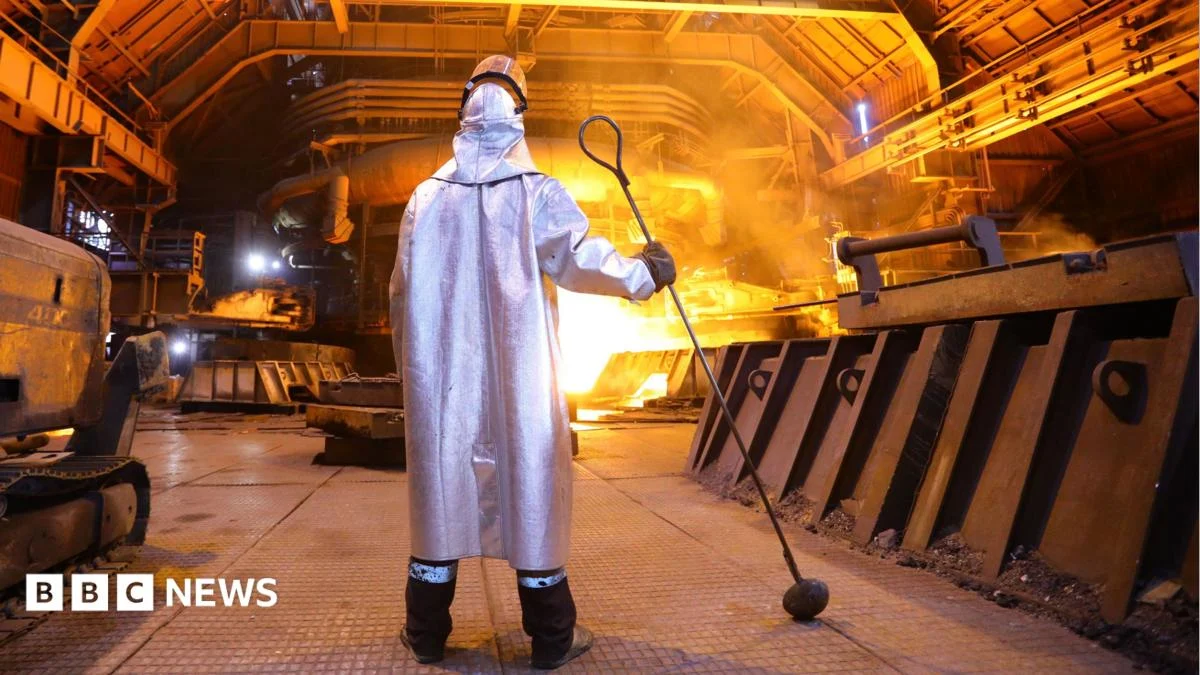
For generations, the colossal Zaporizhstal steel factory has been more than just an employer in the major Ukrainian city of Zaporizhzhia; it has been its very lifeblood. Denys Maksyshko, like thousands of his fellow residents, has dedicated years of his life to its humming furnaces and sprawling industrial complex. "Zaporizhstal is not just a big company, it’s the heart of the city," he states, his words resonating with the deep, ingrained connection between the workforce and their industrial anchor. Now, however, this vital organ has been dealt a devastating blow. Following a relentless barrage of Russian missile strikes, the heart of Zaporizhzhia has been silenced, its operations indefinitely suspended after four waves of attacks—two in August and two in September—left the factory in ruins.
The scale of the destruction is stark. "All the equipment has been almost completely destroyed. There are no windows left, and there are holes in the roofs. The blast furnaces have been almost completely ruined," Maksyshko laments, his voice tinged with despair. According to Oleksandr Myronenko, chief operating officer of Metinvest, the steelworks’ parent company, Russia unleashed a staggering 17 missiles upon Zaporizhstal. The human cost of these attacks is equally tragic, with eight workers killed and 31 wounded, leaving behind a trail of grief and devastation. "We’re now clearing rubble and trying to plan recovery," Myronenko tells the BBC, the enormity of the task ahead palpable in his statement. The grim reality is that the future of Zaporizhstal, and by extension, the livelihoods of its 8,500 employees, hangs precariously in the balance. "At the moment it is far from certain Zaporizhstal will ever start up again."
This assault on Zaporizhstal is not an isolated incident; it is part of a deliberate and sustained Russian campaign targeting Ukraine’s vital metallurgical sector, a strategy that began in August and has since impacted every major steel plant in the country, many of them multiple times. This sector, once a cornerstone of the Ukrainian economy, has become an attractive and vulnerable target for Russia’s war machine. Before the full-scale invasion in 2022, metallurgy and mining were indispensable pillars of Ukraine’s economic architecture, contributing approximately 10% of the nation’s GDP and accounting for a formidable third of its exports. The industry provided employment for over half a million people, with every thirteenth job in Ukraine directly or indirectly linked to its operations. The devastating impact of the recent Russian attacks has brought this crucial sector to a near standstill, its contribution to Ukraine’s GDP now "probably close to zero," according to Myronenko. Metinvest, until recently Ukraine’s largest producer of steel and iron, now finds all its steelworks idled.
Myronenko unequivocally identifies the strategic intent behind these attacks: "Clearly, they’re trying to stop Ukraine’s economy and stop Ukraine from getting [export] money from abroad, from paying taxes and wages, from ensuring that cities live and people have jobs. Their efforts have been very effective so far." The ripple effect of these industrial shutdowns extends far beyond the factory gates, impacting the very fabric of urban life. Oleksandr Vilkul, head of the Local Defence Council, issued an emergency address to the city’s residents, acknowledging the "very serious blow" that would reverberate through more than just the thousands of jobs lost. He admitted the situation was "very difficult," highlighting the critical role of industrial taxes in funding municipal budgets. "It is taxes feeding into our community’s budget," he stated, emphasizing their essential contribution to maintaining city infrastructure, repairing heating plants and their intricate pipe systems, and supporting vital services like nursery schools and social programs.
The financial dependency of local governments on these industrial giants is profound. Stanislav Zinchenko, head of the Kyiv-based consultancy GMK Center, reveals that taxes paid by metal-making companies have historically funded between 30% and 70% of local government spending in their host cities. "In other words, the physical survival of these cities depended on these companies," he told the BBC. He characterizes the current situation as "a catastrophic problem for Ukraine’s economy." Prior to the war, the mining and metallurgical industry was not merely a key sector; it was consistently the largest investor in the Ukrainian economy, injecting an average of $2 billion to $3 billion (£1.5 billion-£2.3 billion) annually.
The potential consequences of prolonged steelworks closures are dire, extending far beyond economic disruption. Zinchenko warns that if the steelworks remain shut, hundreds of thousands of people could face unemployment, triggering waves of migration that would extend well beyond Ukraine’s borders. "A humanitarian catastrophe is looming," he cautions. The cessation of steelmaking in Ukraine would also cripple its defense capabilities and hinder its reconstruction efforts. Steel is an indispensable material for the production of military equipment, the construction of protective shelters, and the repair of countless buildings ravaged by Russian aggression.
Russia, however, attempts to justify its attacks by alleging that the plants in Zaporizhzhia and Kryvyi Rih were actively producing military hardware. Despite these claims, the reality on the ground is one of widespread destruction and stalled production. Oleksandr Vodoviz of Metinvest recounted a desperate attempt to restart Zaporizhstal: "We attempted relaunching Zaporizhstal. We restarted a furnace, and it worked for 10 hours before there was another air strike." He expressed the futility of investing in recovery efforts given the ongoing uncertainty.
Even if production were to eventually resume, the path forward for Ukrainian steelmakers would be fraught with peril. Russian attacks on railway infrastructure have rendered the transportation of products within Ukraine perilous and unpredictable. Similarly, strikes against port facilities have transformed exports into a high-stakes gamble. "Ports have essentially been blocked," Myronenko explained. "Every ship is at risk of being attacked, and their chances are 50-50 – either you make it, or you don’t." Compounding these challenges, EU quotas on steel imports, introduced on July 1st, further complicate the export landscape for Ukrainian producers.
Amidst this grim panorama, the resilience and determination of workers like Denys Maksyshko offer a glimmer of hope. Despite the devastation, his colleagues are actively engaged in the arduous task of reviving the factory, clearing rubble and salvaging what can be repaired. "This is similar to what the military do in the trenches. Ordinary people are fighting to keep the factory alive like soldiers," he asserts, drawing a powerful parallel between the industrial workforce and the soldiers on the front lines, both engaged in a battle for survival and the future of their nation. Their efforts, though Herculean, underscore the deep-seated pride and unwavering commitment of Ukrainian workers to their industry and their country, even in the face of overwhelming adversity. The silent hum of Zaporizhstal is a stark reminder of the devastating economic and human cost of Russia’s aggression, a cost that echoes far beyond the city limits of Zaporizhzhia, reverberating through the heart of Ukraine’s national economy and its very soul.
